

Bali se trouve dans le Triangle de corail, la zone maritime la plus riche en biodiversité au monde. Elle abrite plus de 76 % des espèces de coraux du monde et plus de 2 000 espèces de poissons de récif. C'est pourquoi la plongée sous-marine à Bali est une expérience extraordinaire. Vous pouvez tout faire, de la plongée spectaculaire sur épave et la plongée dans la vase à l'observation des raies manta et du rare Mola mola.
Cet article présente les six principales zones de plongée de Bali : Nusa Penida, Tulamben, Amed, Padang Bai, l'île de Menjangan et les îles Gili, toutes considérées comme les meilleurs sites de plongée sous-marine à Bali. Il détaille les meilleurs sites de plongée, les certifications requises, les meilleures périodes de l'année pour plonger et les espèces marines que vous pouvez espérer observer. Ces informations sont utiles pour les plongeurs certifiés de tous niveaux, de l'Open Water au niveau avancé, qui prévoient des vacances de plongée en Indonésie.
Nusa Penida est le meilleur endroit pour faire de la plongée sous-marine à Bali, car vous pouvez y voir des raies manta et des Mola mola. Tulamben est idéal pour la plongée depuis le rivage et le célèbre Liberty Wreck. Amed est idéal pour la plongée relaxante sur les récifs et l'observation des créatures macro. Padang Bai offre un large éventail de sites, des baies pour débutants aux plongées à Shark Point. L'île de Menjangan et les îles Gili sont des endroits parfaits si vous souhaitez voir des murs de corail encore en bon état ou des eaux regorgeant de tortues. Elles sont également idéales pour les plongeurs qui sont déjà allés à Bali et qui veulent essayer quelque chose de différent.
Conseil de voyage : si vous aimez la plongée, Komodo est la meilleure alternative à Bali. Si vous souhaitez plonger et visiter le parc national de Komodo, contactez-nous pour séjourner dans notre société sœur, Komodo Resort ou Komodo Sea Dragon liveaboard.
Ce que vous apprendrez dans ce guide :
- Des suggestions de sites de plongée spécifiques avec des informations sur les profondeurs et les créatures marines que vous pourrez y observer
- Conditions préalables claires en termes d'expérience, telles que les certifications et le nombre minimum de plongées enregistrées
- Les périodes saisonnières offrant les meilleures conditions et permettant d'observer certaines espèces marines
- Les prévisions concernant la température de l'eau et la visibilité lors de la planification d'un voyage
- Conseils utiles pour trouver des sites adaptés à votre niveau
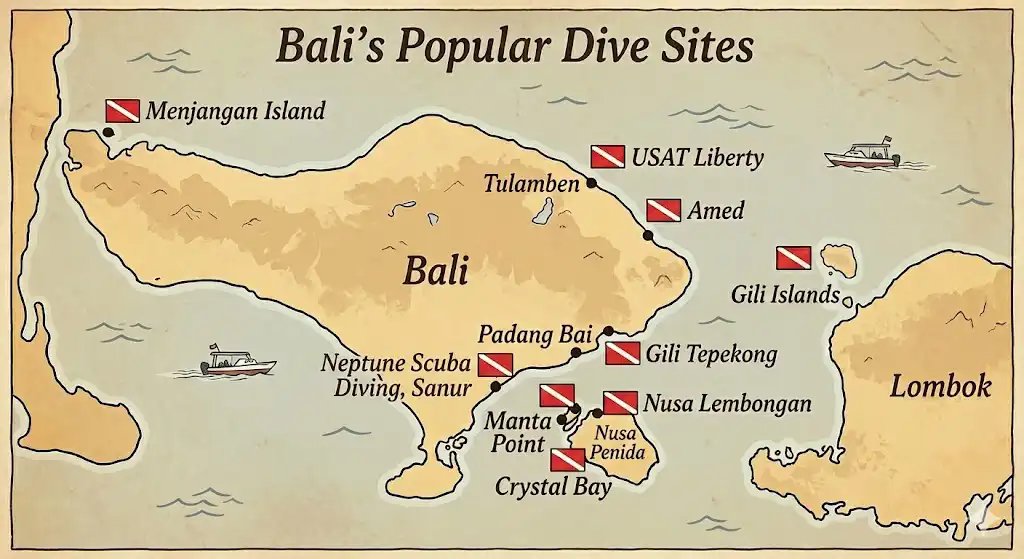
Comprendre les sites de plongée à Bali
Il existe différentes zones de plongée à Bali, chacune avec son propre environnement sous-marin. Voici ce que les plongeurs qui visitent Bali doivent savoir.
La côte nord-est de Tulamben et Amed est volcanique et présente des pentes de sable noir, des sites de plongée faciles depuis le rivage et des eaux calmes. Le paysage calcaire des îles du sud-est, Nusa Penida et Nusa Lembongan, est très spectaculaire, avec des courants forts et la possibilité de rencontrer de gros poissons. La côte est de Padang Bai combine des criques calmes et des chenaux à fort courant. L'île de Menjangan, au nord-ouest, est protégée par le parc national de Bali occidental et possède de magnifiques falaises coralliennes.
Sur les côtes nord et est de Bali, la température de l'eau se situe généralement entre 27 et 30 degrés Celsius. Cependant, dans les endroits touchés par les remontées d'eau profonde, comme autour de Nusa Penida, elle peut descendre jusqu'à 18 à 24 degrés Celsius pendant la saison sèche. Dans les zones de plongée dans la vase, la visibilité varie de 10 à 15 mètres, tandis que dans les sites emblématiques comme Crystal Bay, elle varie de 30 à 40 mètres.
Conditions de plongée et saisonnalité
D'avril à novembre, la saison sèche offre les meilleures conditions de plongée sur tous les sites de Bali. La mer est généralement plus calme, la visibilité est meilleure et les opérateurs de plongée peuvent accéder plus facilement à davantage de sites. Cette période de l'année correspond également à la saison des Mola mola à Nusa Penida, lorsque les remontées d'eau froide attirent ces poissons lune vers les stations de nettoyage. La haute saison s'étend généralement de juillet à septembre.
La saison humide, qui dure de décembre à mars, apporte plus de pluie, un ruissellement possible qui rend la visibilité plus difficile près du rivage et une mer parfois plus agitée. Mais les sites de la côte nord-est, à Tulamben et Amed, restent souvent très praticables même pendant les mois de mousson, ce qui en fait de bonnes alternatives.
Températures de l'eau prévues par région :
- Tulamben et Amed : 27-30 °C toute l'année
- Padang Bai : 26-29 °C, plus froid pendant la saison des Mola, de juillet à octobre
- Nusa Penida : 26-28 °C en surface, descendant à 18-24 °C en profondeur pendant la saison des Mola mola
- Menjangan : 27-30 °C toute l'année
Catégories de niveaux d'expérience
Afin d'uniformiser les recommandations relatives aux sites dans ce guide, les catégories d'expérience suivantes s'appliquent à la plongée sous-marine à Bali :
Sites pour débutants (certification Open Water, 5 à 20 plongées enregistrées) : conditions calmes, profondeurs inférieures à 18 mètres, courant minimal. Convient aux plongeurs récemment certifiés et à ceux qui souhaitent gagner en confiance.
Sites intermédiaires (certification Advanced Open Water, 25 à 50 plongées enregistrées) : courants modérés, profondeurs jusqu'à 30 mètres, nécessite un bon contrôle de la flottabilité et une certaine expérience de la plongée en dérive.
Sites avancés (spécialités Deep/Drift, plus de 50 plongées enregistrées) : courants forts, courants descendants potentiels, profondeurs supérieures à 30 mètres. Nécessite une excellente maîtrise de la flottabilité, des compétences en gestion des courants et une aisance dans des conditions difficiles.
Nusa Penida : capitale des raies manta et des mola mola
Nusa Penida est le meilleur site de plongée sous-marine de Bali pour observer de près des animaux géants. Cette grande île et ses voisines Nusa Lembongan et Nusa Ceningan se trouvent au sud du continent, de l'autre côté de canaux profonds. Les plongeurs viennent ici pour observer des raies manta, des mola mola, des requins de récif et de grands poissons pélagiques.
L'environnement sous-marin ici est très différent des autres sites de plongée de Bali. Les canaux sont soumis à de forts courants de marée et des remontées d'eau froide apportent des eaux riches en nutriments depuis les profondeurs. Le relief complexe forme des parois, des pentes et des stations de nettoyage. Ces conditions facilitent l'observation des animaux, généralement jusqu'à 25-40 mètres de distance, et attirent les espèces marines qui font la renommée de ce site auprès des plongeurs expérimentés.
Conditions générales :
- Température de l'eau : 26-28 °C en surface, 18-24 °C en profondeur pendant la saison des remontées d'eau
- Visibilité : 15 à 40 mètres selon le site et les conditions
- Courants : modérés à très forts, avec possibilité de courants descendants
- Expérience requise : niveau Advanced Open Water minimum, 25 plongées enregistrées recommandées pour la plupart des sites
Meilleurs sites de plongée à Nusa Penida
Manta Point
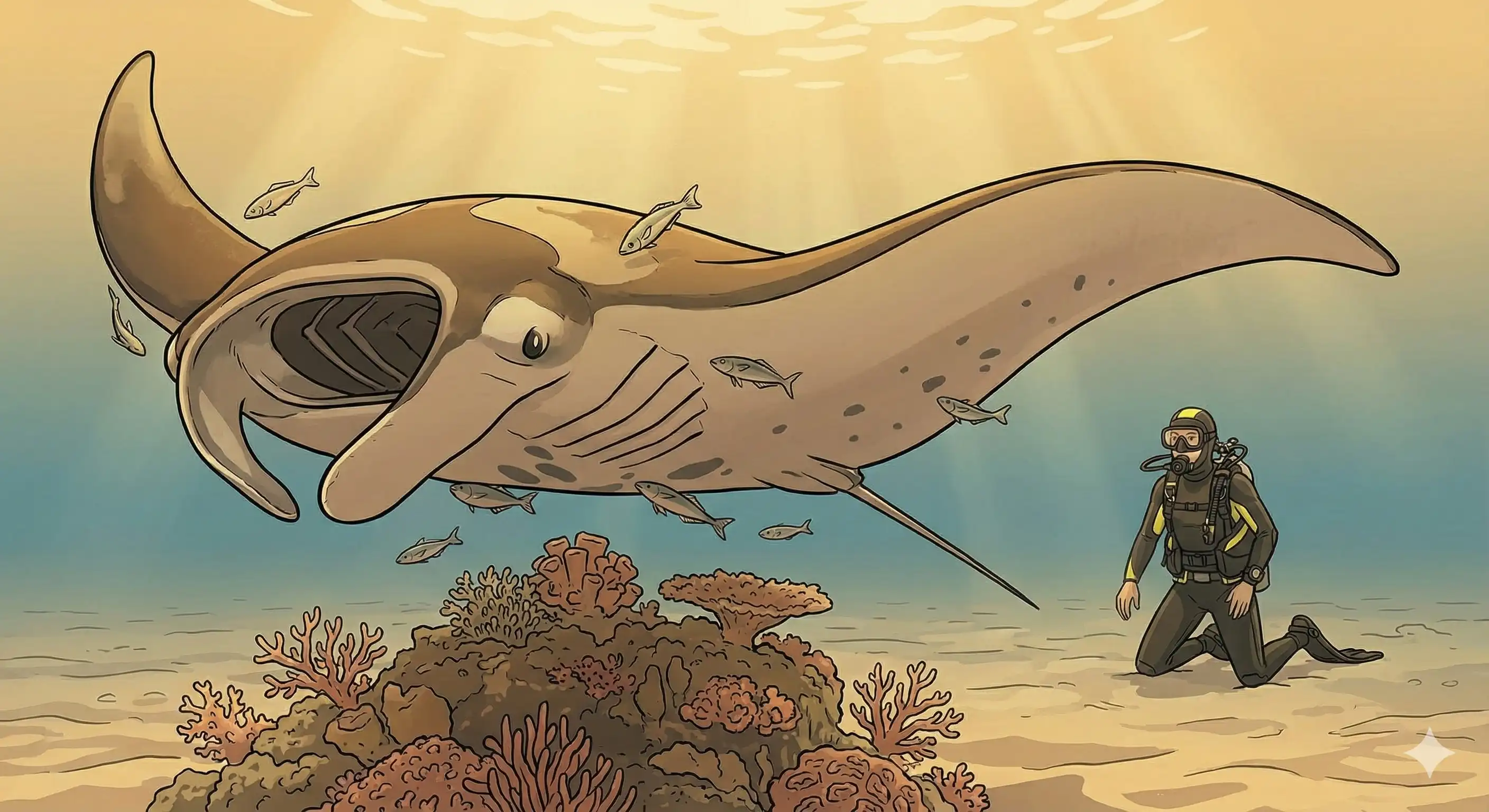
Cette station de nettoyage peu profonde située au large des falaises sud de Nusa Penida accueille des raies manta toute l'année. Les poissons nettoyeurs de la station éliminent les parasites des raies manta de récif. Ces raies nagent souvent en groupes de 5 à 6 lors d'une même plongée.
- Profondeur : 10 à 15 mètres
- Expérience requise : certification Open Water avec 10 à 20 plongées enregistrées et une certaine expérience des courants ; niveau Advanced recommandé
- Visibilité : 10 à 20 mètres, variable en fonction des niveaux de plancton
- Température de l'eau : 24-28 °C, nettement plus froide pendant la saison sèche et la saison des mola.
- Faune marine : raies manta de récif (attraction principale), raies pastenagues à taches bleues, requins bambou occasionnels, bancs de fusiliers et de poissons chirurgiens, tortues de mer
- Saisonnalité : présence de raies manta toute l'année ; les observations peuvent varier d'un jour à l'autre. Le site peut être inaccessible en cas de forte houle (fréquente de juin à août)
Crystal Bay
Crystal Bay est l'un des meilleurs endroits au monde pour observer les Mola mola en plongée. Ce canal entre Nusa Penida et Nusa Ceningan abrite une baie sûre qui descend vers des terrasses plus profondes où les poissons lune viennent se nettoyer.
- Profondeur : 18 à 40 mètres (les Mola mola sont généralement observés entre 18 et 30 mètres)
- Expérience requise : certification Advanced Open Water avec Deep, 30 à 50 plongées enregistrées, aisance dans les courants forts et l'eau froide
- Visibilité : 30 à 40 mètres pendant la saison des Mola
- Température de l'eau : 26 °C ou moins en profondeur pendant la saison sèche et la saison des Mola
- Faune marine : Mola mola (attraction principale), coraux durs et mous, anthias, poissons-chirurgiens, requins de récif occasionnels, tortues de mer, bancs de carangues et de fusiliers
- Saisonnalité : pic de Mola mola de juillet à septembre, s'étendant parfois de juin à octobre. Les remontées d'eau froide favorisent les observations.
Toyapakeh
Situé à l'extrémité nord-ouest de Nusa Penida, Toyapakeh possède une superbe couverture corallienne et constitue une excellente alternative lorsque les conditions à Crystal Bay sont trop difficiles. Plongée en dérive le long de structures récifales en bonne santé.
- Profondeur : 5 à 30 mètres
- Expérience requise : Advanced Open Water ou Open Water avec expérience de la plongée en dérive, 15 à 25 plongées enregistrées
- Visibilité : 15 à 30 mètres
- Température de l'eau : 24 à 28 °C pendant la saison humide, nettement plus froide pendant la saison sèche et la saison des Mola.
- Vie marine : jardins de coraux denses, bancs de carangues, poissons chauves-souris, tortues de mer, requins de récif occasionnels, Mola mola saisonniers en profondeur, petites créatures macro le long du récif
- Saisonnalité : plongée toute l'année ; conditions souvent plus calmes que sur les sites plus exposés
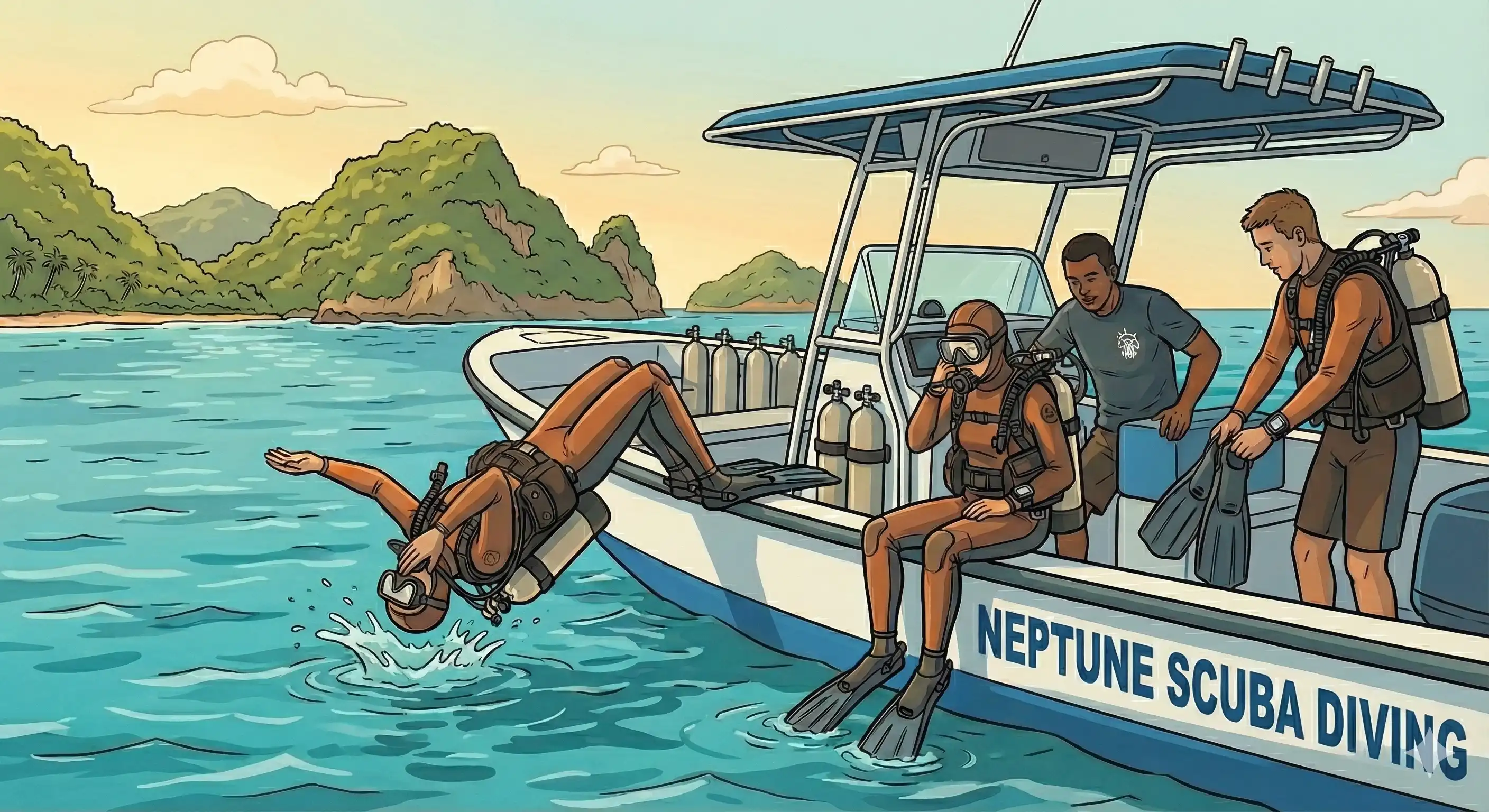
SD Point, Nusa Penida
SD Point est un site de plongée très populaire sur la côte nord de Nusa Penida. Il est connu pour ses conditions de plongée dérivante spectaculaires, qui attirent de nombreux plongeurs expérimentés à la recherche d'excursions sous-marines passionnantes avec une faune marine abondante.
- Profondeur : 15 à 30 mètres
- Expérience requise : Plongeurs intermédiaires à avancés en raison des forts courants et des conditions de plongée en dérive
- Visibilité : 15 à 30 mètres, généralement bonne mais pouvant varier en fonction des marées et des conditions météorologiques
- Température de l'eau : généralement plus chaude qu'à Crystal Bay et sur les autres sites de Nusa Penida, entre 26 et 29 °C
- Faune marine : grands bancs de poissons, notamment des vivaneaux et des fusiliers, des requins de récif, des tortues et, parfois, des raies manta
- Caractéristiques de la plongée : SD Point se caractérise par un récif en pente avec de forts courants qui créent une expérience de plongée en dérive exaltante. Les plongeurs peuvent profiter de formations coralliennes vibrantes et d'une grande diversité d'espèces marines le long du récif. Il est essentiel de savoir gérer correctement les courants.
- Meilleure période : Plongée possible toute l'année, avec des conditions optimales pendant la saison sèche, d'avril à novembre.
SD Point est une destination idéale pour les plongeurs, car elle offre de nombreux sites de plongée passionnants et variés.
Mangrove : un joyau de Lembongan près de Nusa Penida
Le site de plongée Mangrove se trouve au large de la côte de Nusa Lembongan, même s'il est généralement associé à Nusa Penida en raison de la proximité des deux îles. Les plongeurs l'apprécient car il est facile d'accès depuis Bali et Nusa Penida.
Mangrove est connu pour abriter l'un des récifs coralliens les plus riches de la région, qui abrite une grande variété d'espèces marines colorées qui fascinent les photographes sous-marins et les amoureux de la mer. La plongée se fait principalement en dérive et les courants peuvent changer rapidement, les plongeurs doivent donc savoir comment gérer différentes conditions aquatiques.
- Profondeur : 10 à 30 mètres
- Expérience requise : certification Advanced Open Water recommandée en raison des courants variables et des conditions de dérive
- Visibilité : 15 à 30 mètres, selon la marée et les conditions météorologiques
- Température de l'eau : 23 à 27 °C, généralement plus fraîche que les autres sites voisins en raison des remontées d'eau
- Vie marine : riches jardins de corail, poissons de récif, espèces pélagiques occasionnelles, macro-créatures et invertébrés colorés
Mangrove est un site incontournable à Bali pour les plongeurs qui recherchent à la fois un défi et la possibilité d'observer une faune marine abondante. L'expérience de plongée y est toujours différente et pleine de vie.
Blue Corner (Nusa Lembongan)
Blue Corner figure sur la plupart des itinéraires de plongée à Nusa Penida, même s'il se trouve techniquement au large de Nusa Lembongan. Ce site de plongée en dérive présente une pente raide qui descend rapidement, ce qui attire de grandes espèces pélagiques et parfois des Mola mola.
- Profondeur : 25 à 40 mètres
- Expérience requise : plongeurs avancés expérimentés uniquement, plus de 50 plongées enregistrées, bonnes compétences en gestion des courants, à l'aise avec les entrées négatives
- Visibilité : 20 à 30 mètres
- Température de l'eau : variable, peut baisser considérablement en profondeur
- Faune marine : requins de récif, raies manta, Mola mola, grands carangues, raies aigles, bancs de poissons pélagiques
- Saisonnalité : toute l'année, mais l'intensité des courants varie en fonction des marées
Tulamben : plongée sur épave et plongée côtière de classe mondiale
Tulamben est le centre de la plongée sous-marine sur la côte nord-est de Bali, au pied du mont Agung. Le sable volcanique noir rend le paysage sous-marin unique, et les plages de galets permettent aux plongeurs de tous niveaux d'accéder facilement au rivage. De nombreux magasins et centres de plongée situés le long de la plage louent du matériel et proposent des visites guidées.
Des milliers de plongeurs viennent chaque année à Bali pour voir l'épave de l'USAT Liberty, l'attraction principale. Tulamben offre des plongées sur tombants, des jardins de corail et certaines des meilleures plongées dans la vase de Bali pour observer de petites créatures, en plus de ce site célèbre. Les conditions sont très similaires toute l'année, c'est donc un bon endroit où aller même pendant la saison des pluies.
Conditions générales :
- Température de l'eau : 27-30 °C toute l'année
- Visibilité : 15 à 25 mètres, parfois plus les jours calmes
- Courants : généralement faibles à modérés, avec des vagues occasionnelles
- Plongée depuis le rivage : standard sur tous les sites principaux
Sites de plongée incontournables à Tulamben
Épave de l'USAT Liberty
L'épave du Liberty est l'un des sites de plongée sur épave les plus populaires et les plus faciles d'accès au monde. Ce cargo de l'armée américaine a été touché par une torpille en 1942, puis coulé par l'éruption du mont Agung en 1963. Aujourd'hui, il se trouve à seulement 25 mètres de la côte et est recouvert de coraux et regorge de vie marine.
- Profondeur : 5 à 30 mètres (le sommet de l'épave se trouve à 5 mètres, le fond à environ 28-30 mètres)
- Expérience requise : les plongeurs certifiés Open Water peuvent explorer les parties supérieures ; le niveau Advanced est recommandé pour les zones plus profondes et les passages sous-marins ; formation à la pénétration d'épaves pour l'exploration intérieure
- Visibilité : 15 à 25 mètres
- Température de l'eau : 27 à 30 °C
- Faune marine : grands bancs de carangues, poissons-perroquets à bosse (surtout tôt le matin), gaterins, poissons-chirurgiens, poissons-anges, tortues de mer, poissons scorpions à feuilles, hippocampes pygmées sur les gorgones voisines
- Meilleur moment : les plongées à l'aube permettent d'observer des bancs de poissons-perroquets à bosse ; les plongées de nuit permettent d'observer la chasse aux poissons-lions, aux danseuses espagnoles et aux crustacés
- Accès : plongée depuis le rivage sur une plage de galets ; environ 25 mètres à nager jusqu'à l'épave
Tulamben Drop Off
Cette impressionnante paroi, formée par la même coulée de lave qui a poussé le Liberty dans la mer, plonge de 3 à 5 mètres à environ 70 mètres de profondeur. La plupart des plongeurs récréatifs restent dans la zone de 5 à 30 mètres, tandis que les plongeurs techniques s'entraînent dans des zones plus profondes.
- Profondeur : 5 à 70 mètres (plongée récréative entre 5 et 30 mètres)
- Expérience requise : Open Water pour les sections peu profondes de la paroi ; Advanced Open Water pour l'exploration plus profonde ; populaire pour la formation spécialisée en plongée profonde
- Visibilité : 15 à 25 mètres
- Température de l'eau : 27-30 °C
- Vie marine : coraux mous, gorgones, éponges, bancs de poissons de récif, poissons-perroquets à bosse, requins de récif occasionnels, napoléons, nudibranches, crevettes, hippocampes pygmées
- Accès : entrée depuis le rivage depuis le village de Tulamben
Seraya Secrets
Seraya Secrets est l'un des meilleurs sites de Bali pour la plongée dans les fonds vaseux. Il se trouve entre Tulamben et Amed. Ses pentes de sable noir parsemées de rochers attirent d'étonnants animaux macro, ce qui en fait un site incontournable pour les photographes sous-marins.
- Profondeur : 5 à 30 mètres
- Expérience requise : Open Water avec un excellent contrôle de la flottabilité ; fortement orienté vers les amateurs de macro et les professionnels de la plongée
- Visibilité : 10 à 20 mètres
- Température de l'eau : 27 à 30 °C
- Faune marine : grande diversité de nudibranches, pieuvre mimétique, pieuvre merveilleuse, crevette arlequin, crevette Coleman, poisson-grenouille, poisson-fantôme, hippocampes
- Meilleur moment : excellent pour les plongées de nuit, lorsque de nombreuses créatures émergent
Jardin de corail
Cette zone récifale peu profonde entre l'épave Liberty et Drop Off est utilisée pour les plongées pédagogiques, les excursions Discover Scuba et les séances de macrophotographie. Des statues et autres structures artificielles contribuent à la régénération du récif.
- Profondeur : 3 à 15 mètres
- Expérience requise : convient aux plongeurs débutants, aux plongeurs Discover Scuba et aux snorkeleurs
- Visibilité : 15 à 20 mètres
- Température de l'eau : 27 à 30 °C
- Faune marine : poissons de récif, anguilles, poissons-clowns, parfois tortues de mer, crevettes, poissons-scorpions, poissons-grenouilles, nudibranches
- Meilleur moment : idéal pour les plongées de nuit ; le matin offre généralement les conditions les plus calmes
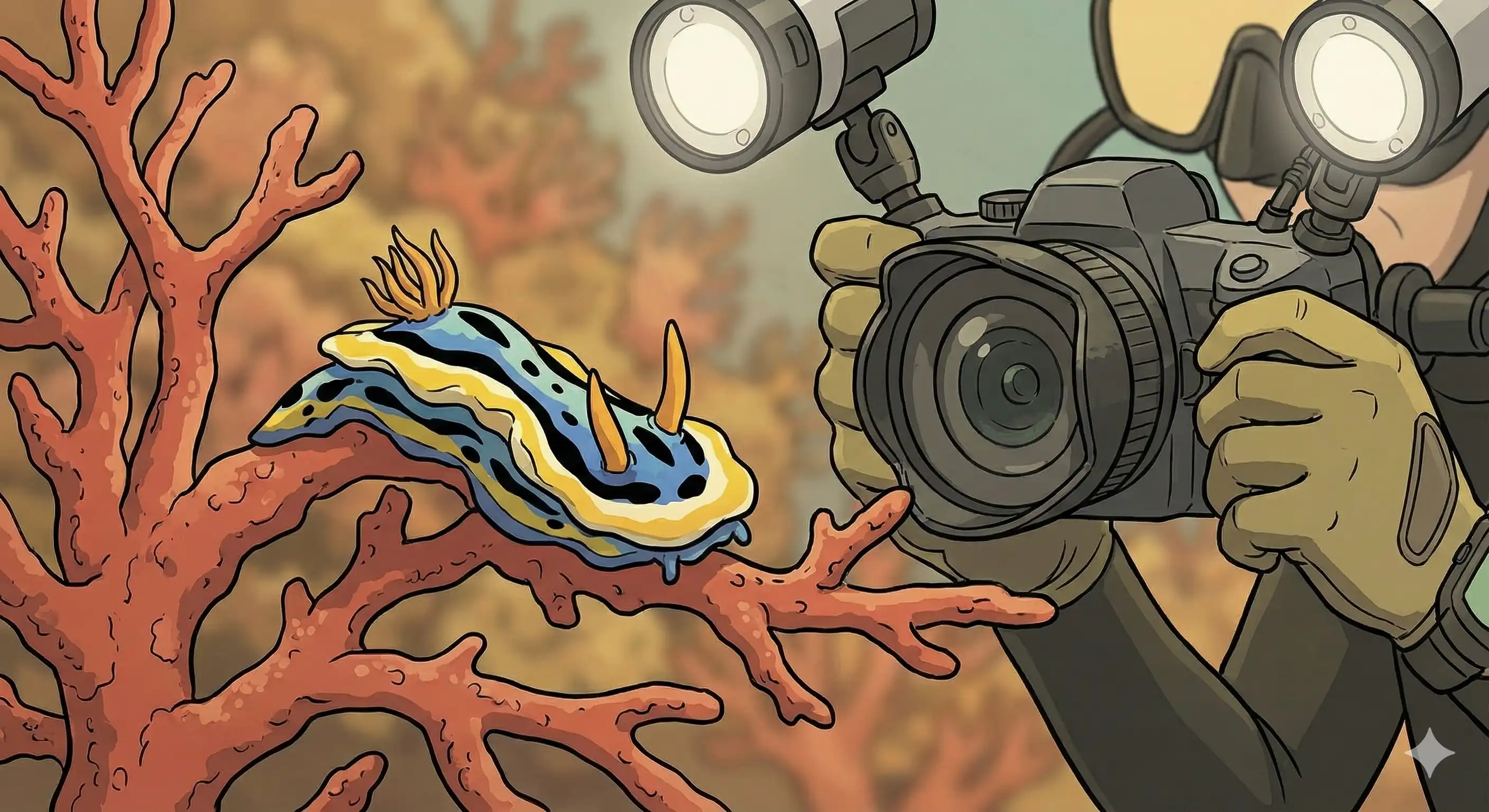
Amed : plongée depuis le rivage dans un village traditionnel
Amed est un groupe de villages de pêcheurs traditionnels situés le long de la côte nord-est de Bali. C'est un endroit plus calme que les autres sites touristiques. Il existe plusieurs endroits où vous pouvez plonger depuis des plages de sable noir ou prendre un canoë à balancier local (jukung) pour vous y rendre. Les plongeurs apprécient cette région car elle offre de nombreux récifs différents où plonger, sans la foule qui caractérise souvent les autres sites.
Les opérateurs de plongée d'Amed s'adressent à un large éventail de niveaux, des débutants aux spécialistes de la macro à la recherche de créatures rares. Plusieurs projets de récifs artificiels contribuent à la vie marine dans la région, et les murs naturels et les jardins de corail offrent un large éventail de possibilités de photographie sous-marine.
Conditions générales :
- Température de l'eau : 27-29 °C toute l'année
- Visibilité : 10 à 25 mètres selon les conditions
- Courants : généralement faibles, certains canaux présentent des courants plus forts
- Accès : plongée depuis le rivage et options traditionnelles en bateau
Sites de plongée incontournables à Amed
Baie de Jemeluk et mur d'Amed
Le site de plongée principal d'Amed est la baie de Jemeluk. Elle abrite des récifs coralliens peu profonds faciles d'accès et un mur qui attire les plongeurs de tous niveaux. Vous pouvez vous y rendre en partant du rivage ou en prenant un jukung pour un court trajet.
- Profondeur : 5 à 40 mètres (récif peu profond de 5 à 10 mètres ; mur commençant à 10-12 mètres)
- Expérience requise : Open Water pour les sections peu profondes ; Advanced pour l'exploration du mur profond
- Visibilité : 15 à 25 mètres
- Température de l'eau : 27 à 29 °C
- Faune marine : coraux durs et mous, gorgones, bancs de poissons de récif, tortues de mer, requins de récif occasionnels, nudibranches, crevettes, poissons scorpions
- Meilleur moment : idéal pour les plongées de nuit ; les plongées matinales offrent généralement des conditions plus calmes
Pyramides
Le projet de récif artificiel Pyramids consiste à installer des pyramides en métal et en béton sur le fond sableux. Ces structures servent de substrats coralliens et de dispositifs de concentration de poissons, ce qui facilite l'observation de la vie marine.
- Profondeur : 15 à 25 mètres selon l'emplacement de la structure
- Expérience requise : certification Open Water ; les groupes de pyramides plus profonds conviennent mieux aux plongeurs avancés
- Visibilité : 15 à 20 mètres
- Température de l'eau : 27 à 29 °C
- Faune marine : bancs de vivaneaux, poissons chauves-souris, gaterins, poissons-lions, anguilles ruban, crevettes-mantes, nudibranches, parfois tortues de mer et requins de récif
- Remarques : destination prisée pour la macrophotographie
Épave japonaise
Une petite épave peu profonde à Lipah/Banyuning est un endroit idéal pour les plongeurs débutants et les amateurs de snorkeling. La structure est recouverte de coraux, ce qui attire les poissons de récif et d'autres espèces de grande taille.
- Profondeur : 5 à 15 mètres
- Expérience requise : certification Open Water ; convient aux plongées de formation
- Visibilité : 10 à 20 mètres
- Température de l'eau : 27 à 29 °C
- Faune marine : coraux sur la structure de l'épave, poissons de récif, nudibranches, crevettes, anguilles
- Accès : entrée calme depuis le rivage ; excellente visibilité pour les débutants
Baie de Lipah
Ce site de plongée calme est réputé pour la présence constante de tortues de mer. Il présente des pentes douces et des coraux éparpillés.
- Profondeur : 5 à 25 mètres
- Expérience requise : certification Open Water
- Visibilité : 15 à 25 mètres
- Température de l'eau : 27 à 29 °C
- Faune marine : tortues de mer, poissons de récif, formations coralliennes colorées, raies occasionnelles
Selang
Selang propose des plongées en dérive pour les plongeurs expérimentés. Des requins-marteaux et d'autres grandes espèces pélagiques y ont été observés.
- Profondeur : 15 à 30 mètres
- Expérience requise : plongeurs avancés ayant déjà pratiqué la plongée en dérive, plus de 30 plongées enregistrées
- Visibilité : 15 à 25 mètres
- Faune marine : espèces pélagiques, bancs de poissons, requins-marteaux occasionnels
Padang Bai : porte d'entrée vers des écosystèmes marins diversifiés
Padang Bai est le principal site de plongée de la côte est de Bali. Il est facile d'accès depuis les sites touristiques du sud de Bali, notamment Sanur, Canggu et Ubud. Cette petite ville portuaire offre de nombreux sites de plongée variés, allant de plages calmes et peu profondes, idéales pour l'entraînement, à des sites difficiles dans des chenaux où l'on trouve des requins à pointe blanche et des courants forts.
Padang Bai est un endroit très prisé des plongeurs qui découvrent la plongée en Indonésie. Les opérateurs de plongée proposent tout type de services, des cours Discover Scuba aux sorties de plongée en dérive pour les plongeurs expérimentés.
Conditions générales :
- Température de l'eau : 26-29 °C, plus froide (18-24 °C) pendant la saison sèche et la saison des mola.
- Visibilité : 10 à 30 mètres selon le site et la saison
- Courants : variables, de minimes dans les baies protégées à forts au large
- Accès : courts trajets en bateau depuis le port
Meilleurs sites de plongée à Padang Bai
Blue Lagoon
Cette baie sécurisée à l'est du port de Padang Bai est parfaite pour les plongeurs débutants et les programmes de formation. Ses eaux calmes, son fond sableux et la diversité de sa faune marine en font un endroit idéal pour apprendre.
- Profondeur : 3 à 20 mètres
- Expérience requise : convient aux cours de certification Open Water, Discover Scuba et aux plongeurs débutants
- Visibilité : 15 à 25 mètres
- Température de l'eau : 26 à 29 °C, plus froide (18 à 24 °C) pendant la saison sèche et la saison des mola.
- Faune marine : diversité de poissons de récif, seiches, poulpes, poissons scorpions, poissons grenouilles, nudibranches, murènes, tortues de mer occasionnelles
- Meilleur moment : excellent pour les plongées de nuit avec crustacés et céphalopodes
Tanjung Jepun
Un autre site sûr proche du Blue Lagoon, qui fait souvent partie du même circuit de plongée. On y trouve des zones sablonneuses, des structures artificielles et des récifs coralliens.
- Profondeur : 5 à 18 mètres
- Expérience requise : certification Open Water ; convient aux plongeurs débutants
- Visibilité : 15 à 25 mètres
- Température de l'eau : 26 à 29 °C, plus froide (18 à 24 °C) pendant la saison sèche et la saison des mola.
- Faune marine : raies pastenagues à taches bleues, poissons-lions, poissons-scorpions, anguilles, seiches, requins de récif occasionnels, nudibranches, crevettes, syngnathes
Shark Point
Ce site plus avancé au large de la côte est de Padang Bai présente des courants plus forts qui nécessitent de l'expérience et où l'on rencontre régulièrement des requins à pointe blanche.
- Profondeur : 8 à 25 mètres
- Expérience requise : Advanced Open Water, 20 à 30 plongées enregistrées, à l'aise avec des courants modérés à forts
- Visibilité : 15 à 25 mètres
- Température de l'eau : 26 à 29 °C, plus froide (18 à 24 °C) pendant la saison sèche et la saison des mola.
- Faune marine : requins à pointe blanche (souvent en groupe), tortues de mer, barracudas, bancs de poissons, raies occasionnelles
- Saisonnalité : plongée toute l'année ; l'intensité des courants varie en fonction des marées
Gili Tepekong
Site insulaire au large avec de forts courants qui attirent les animaux pélagiques. L'un des sites de plongée les plus difficiles de Padang Bai, où l'on peut voir beaucoup de Mola Mola pendant la saison des Mola.
- Profondeur : 15 à 40 mètres
- Expérience requise : minimum 50 plongées enregistrées, bonnes compétences en plongée dérivante, à l'aise avec les courants descendants potentiels
- Visibilité : 15 à 30 mètres
- Température de l'eau : variable, peut baisser considérablement en profondeur
- Faune marine : espèces pélagiques, Mola mola occasionnels pendant la saison, requins de récif, grands bancs de poissons
- Saisonnalité : présence possible de Mola mola pendant la saison des remontées d'eau (juillet-octobre)
Gili Mimpang
Gili Mimpang est un site composé de plusieurs pics sous-marins, situé à proximité de Gili Tepekong. C'est un endroit idéal pour observer des bancs de poissons et, en saison, des Mola mola.
- Profondeur : 10 à 30 mètres
- Expérience requise : expérience de plongée en dérive requise, Advanced Open Water, plus de 25 plongées enregistrées
- Visibilité : 15 à 25 mètres
- Faune marine : bancs de poissons, Mola mola occasionnels, espèces récifales
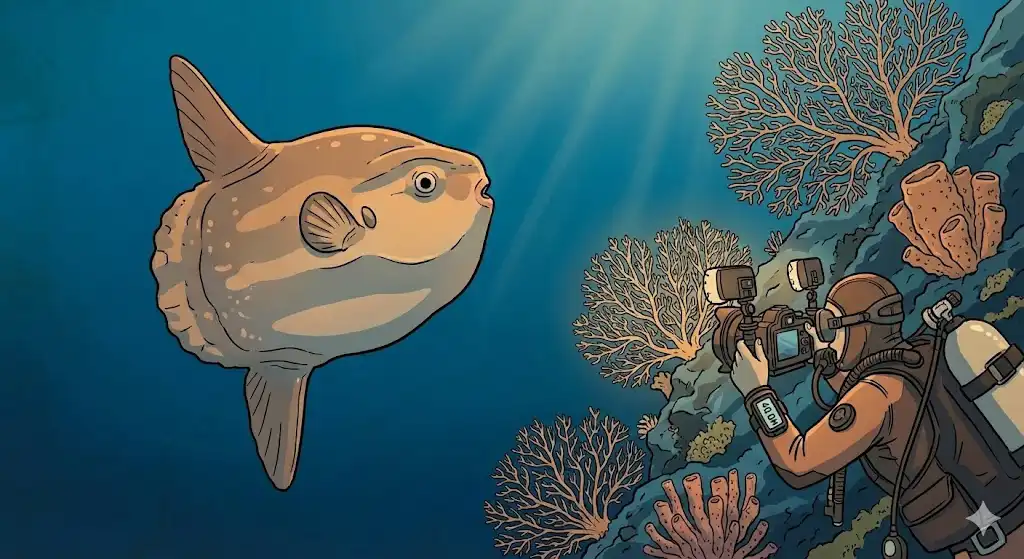
Gili Biaha (grotte des requins) : une plongée palpitante près de Mimpang et Tepekong
Gili Biaha, également appelée Shark Cave, est un site de plongée très prisé près des îles de Mimpang et Tepekong, au large de la côte est de Bali. Cet endroit est célèbre pour ses magnifiques paysages sous-marins et la possibilité d'observer plusieurs espèces de requins, en particulier dans la grotte où ils ont l'habitude de dormir. Pendant la saison des Mola, vous pourrez également y voir des Mola Mola.
Le site de plongée comporte de nombreuses cavernes et passages créés par des formations rocheuses volcaniques qui offrent un refuge aux requins de récif et à d'autres créatures marines. Les courants peuvent être forts, ce qui rend la plongée plus excitante et exige des plongeurs qu'ils sachent contrôler leur flottabilité et pratiquer la plongée en dérive.
Caractéristiques principales :
- Profondeur : 15 à 35 mètres
- Expérience requise : certification Advanced Open Water recommandée en raison des forts courants et de l'entrée de la grotte
- Faune marine : requins à pointe blanche, requins gris, Mola Mola, grands bancs de poissons, espèces pélagiques occasionnelles
- Caractéristiques de la plongée : exploration de grottes et de passages sous-marins avec possibilité d'observer des requins se reposant à l'intérieur des grottes ; les courants forts nécessitent une planification minutieuse et le respect des consignes de plongée
Gili Biaha est un site de plongée incontournable pour ceux qui souhaitent découvrir les sites de plongée les plus difficiles de Bali, car il offre un mélange unique de paysages sous-marins passionnants et de rencontres avec des requins.
Autres destinations de plongée
L'île de Menjangan, dans le parc national de Bali occidental, et les îles Gili, au large de Lombok, sont deux autres endroits que les plongeurs devraient envisager de visiter s'ils prévoient un séjour plus long ou souhaitent essayer quelque chose de nouveau.
Île de Menjangan : des murs de corail immaculés
L'île de Menjangan fait partie du parc national de Bali occidental, le premier parc national d'Indonésie, fondé en 1917. Ce statut protégé a permis de préserver la santé des murs de corail et de la vie marine, ce qui en fait l'une des meilleures destinations de plongée de Bali pour ceux qui sont prêts à se rendre sur la côte nord-ouest.
Pour s'y rendre, il faut généralement prévoir une excursion d'une journée entière depuis le sud de Bali ou séjourner plusieurs jours à Pemuteran. La récompense est une excellente visibilité, souvent de 25 à 50 mètres, et des conditions de plongée très calmes, idéales pour les plongeurs de tous niveaux, des débutants aux experts.
L'étonnant poisson mandarin est l'une des plus belles choses à voir lors d'une plongée à Menjangan.
Conditions générales :
- Température de l'eau : 27 à 30 °C toute l'année
- Visibilité : 25 à 50 mètres (l'une des eaux les plus claires de Bali)
- Courants : généralement faibles à modérés
- Expérience requise : certification Open Water ; convient à tous les niveaux d'expérience
Principaux sites de plongée de Menjangan :
Jardin des anguilles
- Profondeur : 10 à 40 mètres le long d'une paroi avec un plateau sableux
- Faune marine : Colonies d'anguilles jardinières, coraux en bonne santé, tortues de mer, poissons de récif, visiteurs pélagiques occasionnels
- Expérience : Open Water pour les zones peu profondes ; Advanced pour l'exploration des parois
Murs de Menjangan (POS 1, POS 2 et variantes)
- Profondeur : 5 à 30 mètres, plage récréative typique
- Vie marine : coraux durs immaculés, récifs coralliens colorés, gorgones, hippocampes pygmées, grands bancs de poissons, requins de récif occasionnels
- Expérience : convient aux plongeurs Open Water et Advanced
Bat Cave
- Profondeur : 5 à 25 mètres avec système de cavernes
- Expérience : certification Advanced avec formation à la plongée en grotte/caverne pour l'exploration intérieure
- Remarques : topographie spectaculaire pour les plongeurs qualifiés
Meilleure période : vous pouvez plonger toute l'année, mais c'est pendant la saison sèche que les bateaux peuvent accéder aux meilleurs sites et que la visibilité est la meilleure. Peu affecté par le ruissellement, car éloigné des zones côtières fortement développées.
Îles Gili : extension du paradis tropical
Les îles Gili (Gili Trawangan, Gili Air, Gili Meno) occupent une place importante dans les voyages de plongée à Bali, même si elles se trouvent au large de Lombok et non de Bali. Des bateaux rapides relient les îles depuis Padang Bai, ce qui facilite les visites d'une journée ou les aventures plus longues.
De nombreux plongeurs se rendent aux îles Gili car elles abritent de nombreuses tortues de mer. La plupart des plongées permettent presque toujours d'en rencontrer. C'est un endroit idéal pour les plongeurs de tous niveaux qui souhaitent prolonger leur séjour, car l'île est tranquille, il y a de nombreux centres de plongée et le temps est généralement calme.
Conditions générales :
- Température de l'eau : 27-29 °C toute l'année
- Visibilité : 15 à 30 mètres selon le site et la saison
- Courants : faibles à modérés sur la plupart des sites ; certains endroits exposés présentent des courants plus forts
Sites de plongée remarquables à Gili :
Shark Point (Gili Trawangan)
- Profondeur : 15 à 30 mètres
- Faune marine : requins de récif, tortues de mer, bancs de poissons
- Expérience : niveau Advanced Open Water recommandé
Turtle Heaven/Turtle Point
- Profondeur : 8 à 20 mètres
- Faune marine : forte densité de tortues vertes et imbriquées, jardins de corail
- Expérience : certification Open Water ; excellent pour les débutants
Halik Reef
- Profondeur : 5 à 25 mètres
- Faune marine : magnifiques formations coralliennes, diversité de poissons de récif, tortues marines
- Expérience : certification Open Water
Meilleure période : Plongée possible toute l'année ; visibilité généralement meilleure pendant la saison sèche.
Calendrier saisonnier des plongées et de la vie marine
Si vous connaissez les saisons à Bali, vous pouvez organiser vos vacances de manière à observer certaines espèces marines et bénéficier des meilleures conditions de plongée.
Saisons optimales pour la plongée par lieu
| Lieu | Haute saison | Hors saison Remarques |
|---|---|---|
| Nusa Penida | Avril-novembre ; Mola mola juillet-octobre | Mer agitée de juin à août à Manta Point |
| Tulamben | Toute l'année | Fiable même pendant la saison des pluies |
| Amed | Toute l'année ; avril-novembre optimal | Visibilité légèrement réduite de décembre à mars |
| Padang Bai | Avril-novembre | Certains sites affectés par la houle de mousson |
| Menjangan | Avril-novembre optimal | Plongée possible toute l'année ; accès en bateau préférable pendant la saison sèche |
| Îles Gili | Avril-novembre | Plongée possible toute l'année |
Saison sèche (avril-novembre) : conditions identiques dans toutes les zones la plupart du temps. La mer est plus calme, la visibilité est meilleure et il est plus facile de se rendre sur les sites. Pendant les mois de juillet et août, qui sont les plus touristiques, les tarifs augmentent et les sites de plongée sont bondés.
Saison humide (décembre-mars) : plus de pluie et visibilité potentiellement réduite le long du littoral. Les sites de la côte nord-est (Tulamben, Amed) restent très bons. Moins de visiteurs et prix plus bas.
Quelle que soit la période de l'année, Bali est un site de plongée unique au monde, car la plongée y est bonne toute l'année. Il ne pleut pas toujours, même pendant la saison des pluies. Ce n'est pas parce que le temps est mauvais pendant des semaines ou des mois qu'il le sera tous les jours.
Cycles saisonniers de la vie marine
Mola mola (poisson lune) :
- Période de pointe : juillet-octobre à Crystal Bay (Nusa Penida) et au large de Padang Bai
- Déclencheur : remontées d'eau froide faisant baisser la température de l'eau à 18-24 °C
- Meilleure visibilité : 30 à 40 mètres pendant les remontées d'eau froide
Raies manta :
- Présentes toute l'année dans les stations de nettoyage de Nusa Penida
- Restrictions d'accès : Manta Point peut être inaccessible en cas de forte houle, en particulier de juin à août
- Meilleures conditions : jours calmes avec une eau riche en plancton
Poissons-perroquets à bosse :
- Observations fiables : Liberty Wreck au lever du soleil, toute l'année
- Meilleur moment : plongées tôt le matin avant 7 h
Requins de récif :
- Toute l'année : requins à pointe blanche à Shark Point (Padang Bai), requins de récif à Menjangan
- Conditions : une meilleure visibilité pendant la saison sèche améliore la qualité des rencontres
Défis courants en plongée et solutions
Les sites de plongée à Bali sont variés, chacun présentant ses propres difficultés auxquelles une bonne préparation peut remédier.
Gestion des courants forts
Autour de Nusa Penida, Tepekong et Blue Corner, il existe des courants qui peuvent facilement emporter les plongeurs qui ne sont pas prêts. Des plongeurs inexpérimentés ont rencontré des problèmes à Crystal Bay en raison des courants descendants.
Solutions :
- Obtenir la certification spécialisée « Drift Diver » avant de s'aventurer sur des sites exposés aux courants.
- Suivez scrupuleusement les consignes du guide de plongée concernant les points d'entrée et les procédures d'abandon.
- Emportez l'équipement approprié : crochets de récif (là où cela est autorisé), bouées de signalisation, dispositifs de signalisation sonore.
- Consultez les tables des marées et discutez des prévisions de courant avec les opérateurs de plongée.
- Respectez les limites de profondeur prudentes lorsque les courants sont forts
Variations saisonnières de la visibilité
Les précipitations pendant la saison humide provoquent des ruissellements qui rendent la visibilité difficile près des côtes, en particulier dans le sud et l'ouest.
Solutions :
- Concentrez vos plongées pendant la saison des pluies sur les sites de la côte nord-est (Tulamben, Amed) moins touchés par le ruissellement
- Choisissez des sites au large, comme Menjangan, où la clarté de l'eau reste plus stable
- La flexibilité des horaires permet d'attendre que les conditions s'améliorent.
- Les plongées matinales offrent souvent une meilleure visibilité avant que le vent et les conditions météorologiques ne se développent.
Niveaux d'expérience incompatibles
De nombreux plongeurs sous-estiment les sites de plongée avancés à Bali, en particulier autour de Nusa Penida où les conditions changent rapidement.
Solutions :
- Évaluation honnête de son expérience actuelle et de ses activités de plongée récentes
- Commencez par des sites plus faciles (Tulamben, Padang Bai) avant de passer à des sites plus difficiles
- Suivez une formation spécialisée appropriée (plongée profonde, dérive, Nitrox) avant de vous aventurer sur des sites avancés
- Faites appel à des opérateurs de plongée réputés, tels que haha, qui imposent des exigences en matière d'expérience
- Développez vos compétences progressivement au fil de plusieurs jours de plongée plutôt que de vous précipiter vers des sites emblématiques
Eau froide en profondeur
Les thermoclines à Nusa Penida peuvent faire baisser la température de 28 °C à moins de 20 °C en quelques secondes. Cela peut provoquer un choc thermique et augmenter la consommation d'air. C'est un élément à prendre en compte. Nous vous recommandons également de plonger à Nusa Penida entre juin et octobre en portant une combinaison de 5 mm, un sweat-shirt et des gants.
Solutions :
- Portez une protection appropriée : combinaison intégrale de 5 mm minimum, 7 mm ou gilet à capuche pour les plongées Mola mola
- Emportez une protection thermique supplémentaire en cas de baisse de température imprévue
- Surveillez de près votre consommation d'air lorsque vous êtes exposé à l'eau froide
- Prévoyez des temps de plongée plus courts lorsque vous plongez en eaux froides profondes
Itinéraires de plongée suggérés par Neptune Scuba Diving Bali
Neptune Scuba Diving a soigneusement planifié des voyages pour les plongeurs de tous niveaux et de tous intérêts afin qu'ils puissent profiter au maximum de leur séjour à Bali :
3 jours de plongée à Bali : une escapade plongée rapide
Ce programme de trois jours, qui se concentre sur les meilleurs sites de plongée de Bali, est un excellent moyen de découvrir les merveilles sous-marines de l'île pour les personnes qui n'ont pas beaucoup de temps. Les plongeurs peuvent découvrir des sites célèbres comme l'épave de l'USAT Liberty à Tulamben, profiter de plongées colorées sur les récifs et d'une grande variété de vie marine tropicale à Padang Bai, et vivre des sensations fortes en observant les raies manta à Manta Point, à Nusa Penida. Cet itinéraire offre un bon mélange de sites de plongée faciles et riches en espèces marines, ce qui le rend idéal pour les plongeurs débutants et intermédiaires qui souhaitent passer un bon moment à plonger à Bali pendant une courte période.
7 jours de plongée avec macro-photographie ou focus sur les mola mola
Un programme d'une semaine permet aux plongeurs d'explorer plus en profondeur les nombreux écosystèmes sous-marins de Bali. Les amateurs de photographie macro peuvent se rendre à Seraya Secrets et Secret Bay pour faire de la plongée dans la vase, où ils pourront trouver de nombreux animaux rares et colorés. Le programme comprend plusieurs plongées à Crystal Bay et dans les sites voisins de Nusa Penida pendant la haute saison (juillet à septembre) pour ceux qui souhaitent augmenter leurs chances d'apercevoir le rare Mola Mola. Ce programme plus long permet aux plongeurs débutants et confirmés de se détendre, d'explorer le récif et d'observer de près de grands animaux.
Voyages prolongés : combiner Bali et Komodo Adventures
Nous suggérons aux plongeurs qui souhaitent faire un long voyage de plongée en Indonésie de combiner Bali avec le parc national de Komodo. Si votre voyage dure plus de sept jours, vous pouvez visiter les meilleurs sites de plongée de Bali, puis prendre un vol rapide d'une heure vers Komodo. Là-bas, vous pouvez séjourner dans le magnifique Komodo Resort ou participer à des excursions en bateau sur le Komodo Sea Dragon avec des organisations partenaires. Cette combinaison vous donne accès à certains des plus beaux récifs coralliens du monde, à des murs impressionnants et à de nombreuses espèces pélagiques, telles que les raies manta et les requins. C'est parfait pour les plongeurs expérimentés qui souhaitent découvrir toute la vie aquatique de l'Indonésie.
Ces itinéraires sont conçus pour s'adapter à différents niveaux de compétence et intérêts, de sorte que chaque plongeur qui se rend à Bali peut personnaliser son voyage à sa guise tout en ayant accès à certains des meilleurs sites de plongée au monde.
Conclusion et prochaines étapes de la planification du voyage
Bali offre certains des meilleurs sites de plongée au monde dans une grande variété d'habitats, le tout dans une petite région. Nusa Penida offre aux plongeurs expérimentés la possibilité de rencontrer de grands animaux, tandis que l'épave Liberty à Tulamben est idéale pour les débutants, car ils peuvent plonger depuis le rivage. Amed est une communauté décontractée qui offre de superbes opportunités de plongée macro, et Padang Bai est facile d'accès et dispose de nombreux sites différents. Menjangan et les îles Gili offrent davantage de choix aux personnes qui souhaitent admirer de magnifiques murs ou des tortues.
Étapes de planification immédiates :
- Évaluez votre niveau de certification actuel et le nombre de plongées enregistrées par rapport aux exigences du site.
- Identifiez vos principaux objectifs de plongée (grands animaux, épaves, macro, plongée détendue sur les récifs)
- Sélectionnez votre région principale en fonction de votre niveau d'expérience et de vos intérêts.
- Planifiez votre arrivée en fonction des priorités saisonnières en matière de vie marine (saison des Mola mola, le cas échéant).
- Réservez un hébergement à proximité de la zone de plongée choisie : la proximité réduit le temps de transfert et maximise le nombre de jours de plongée
Ressources supplémentaires
Considérations relatives à l'équipement :
- La plupart des centres de plongée proposent du matériel de location de qualité, y compris des ordinateurs
- Apportez votre masque, votre combinaison et votre équipement photographique personnels pour les voyages prolongés
- Combinaison de 5 mm minimum ; combinaison de 7 mm ou gilet à capuche recommandés pour les plongées pendant la saison des Mola mola à Nusa Penida.
Reconnaissance des certifications :
- Toutes les principales agences de certification (PADI, SSI, NAUI, BSAC) sont reconnues à Bali
- Cours de formation continue largement disponibles, du niveau Open Water au niveau Instructeur
- Cours spécialisés (plongée profonde, dérive, épave, nuit) particulièrement adaptés à la plongée à Bali
Identification de la vie marine :
- Les guides d'identification des poissons de récif indonésiens enrichissent les expériences de plongée
- Guides pratiques sur les nudibranches, très utiles pour la plongée dans les sites de type « muck diving » à Seraya Secrets et autres sites similaires
- Ateliers de photographie sous-marine proposés par de nombreux opérateurs de plongée
Bonne plongée dans l'une des destinations sous-marines les plus riches en biodiversité au monde.