

Diving Nusa Penida offers world-class diving that puts you face-to-face with manta rays and the hard-to-find oceanic sunfish (mola mola) in waters full of marine life. This Indonesian island, which lies southeast of Bali in Southeast Asia, is known among scuba divers for its reliable pelagic encounters, colorful coral reefs, and dive locations that range from gentle slopes to fast-moving drift diving channels.
This guide has everything you need to know to plan your diving trip to Nusa Penida, including the finest dive locations, the best times of year to go, what kind of certification you need, and how to choose the proper dive operators. This tour doesn't cover activities on land, like going to Kelingking Beach, Diamond Beach, or Broken Beach. However, the stunning cliffs and natural pools at these beaches are great places to visit while you're in Nusa Penida.
Diving Nusa Penida is a great deal compared to far-off places like Komodo or Raja Ampat for certified divers and diving fans who want to see big pelagic animals. Many divers of all skill levels may easily get to this place because it is close to Bali (only a short boat ride away) and has diving chances all year round.
Diving Nusa Penida is great all year round. Manta rays are always there at cleaning stations, and mola molas show up during the peak season from July to October when cold water upwellings bring these huge fish to diveable depths.
This guide contains information about:
- Complete understanding of Nusa Penida dive sites and their unique characteristics
- Optimal timing strategies for manta rays and mola mola encounters
- Certification requirements for different sites and conditions
- Practical guidance on selecting dive operators and planning logistics
- Solutions to common challenges like strong currents and crowded sites
All About Nusa Penida Diving Environment
An amazing combination of oceanic forces has created the diving environment in Nusa Penida. The island is at the edge of the Lombok Strait, where the Indonesian Throughflow Current moves around 15 million cubic meters of water every second. This creates nutrient-rich upwellings that support a wide range of life and draw in megafauna that filter feed.
Marine Protected Area Overview
The Nusa Penida diving partial Marine Protected Area (MPA) status was set up in 2019 and includes the seas of the Nusa Islands, which are Nusa Penida, Nusa Lembongan, and Nusa Ceningan. These conservation borders keep important manta ray cleaning stations and coral reefs safe. These are the main reasons people come to dive in the area.
The MPA designation immediately helps scuba divers by keeping the reefs healthy and safeguarding the pelagic species that bring people from all over the world to see them. Conservation measures have helped keep the region's population of reef manta rays stable at roughly 1,200. Surveys show that they are regularly seen at protected cleaning stations.
Diving Conditions and Environment
The surface layers of the water around diving Nusa Penida are usually between 24 and 29 degrees Celsius. However, during the mola mola season, thermoclines can drop to 16 to 20 degrees Celsius below 20 meters. This change in temperature is why good thermal gear, like 5mm wetsuits, is so important for deeper dives from July to October.
Depending on the weather, you can see 10 to 40 meters, but the dry season (November to June) usually has the clearest waters. Current-swept areas provide both chances and problems. The same forces that bring in nutrients and draw in pelagic species also need divers to be careful and have the right level of experience.
What Makes Nusa Penida Special for Divers
The island's location on the Wallace Line, which separates Asian and Pacific marine ecosystems, makes it a unique place. Cold, nutrient-rich water comes from deep channels, which supports high plankton densities that attract filter-feeders like manta rays and mola molas.
Healthy reefs in the area have coral coverage of 60–80%, which supports more than 1,000 fish species and 300 coral species. Because of this amazing biodiversity, scuba divers can see reef sharks, eagle rays, white tip reef sharks, blue spotted stingrays, and many other reef fish species even when they aren't diving with pelagic animals.
Knowing these environmental characteristics is the first step in finding specific dive sites where these conditions make for unique experiences.
Essential Dive Sites and Signature Marine Life
There are different types of diving sites in Nusa Penida, each with its own target species, depth profiles, and level of difficulty. Most people go diving on the northwest coast to see manta rays, while the mola mola spots are around Crystal Bay. The north coast is also a great place to drift dive over coral gardens because it is protected.
The area has more than 20 well-known diving spots, although just a few of them are popular with scuba divers looking for exciting encounters with big sea creatures.
Manta Ray Encounters (Year-Round)
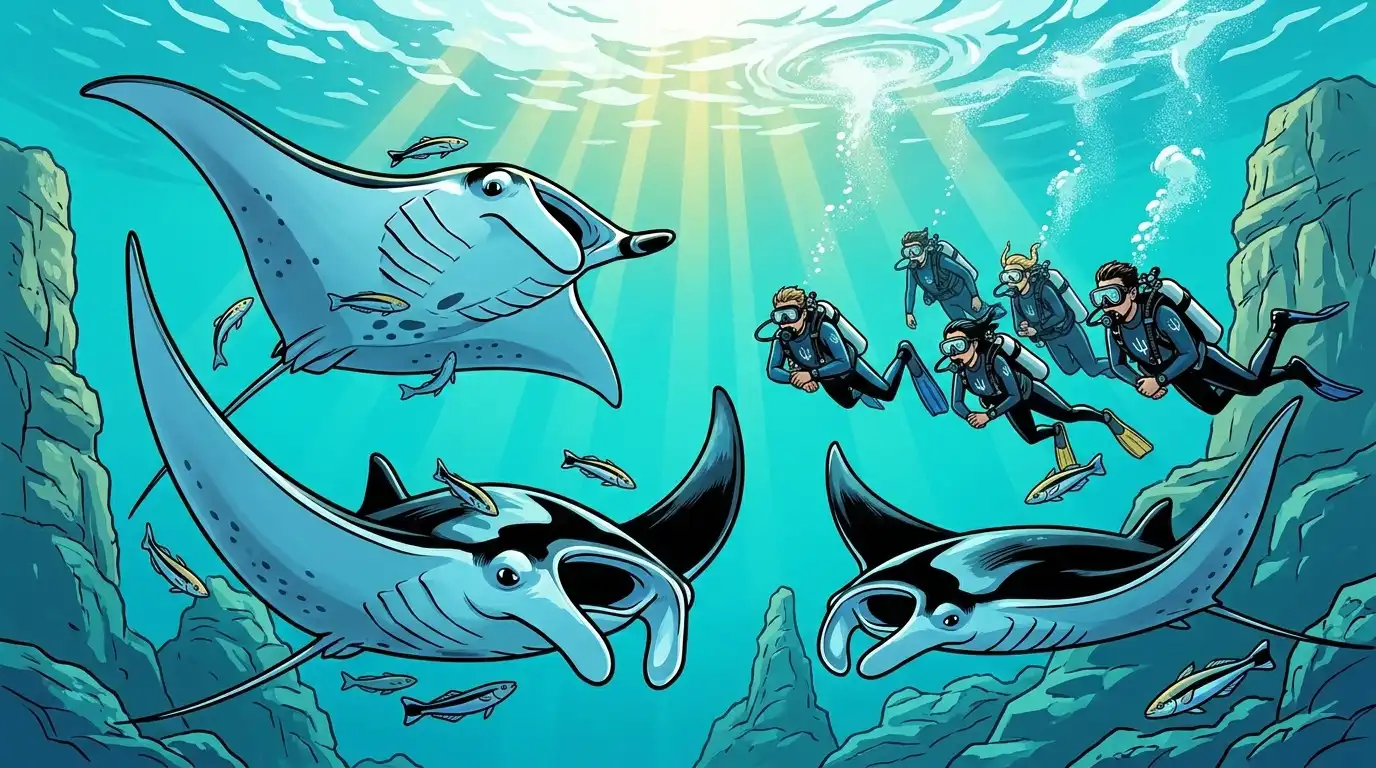
Manta Point is the best place to see manta rays. It has cleaning stations at depths of 5 to 20 meters where reef mantas with wingspans of up to 5 meters hover while cleaner fish get rid of parasites. The location of this diving site, Manta Point, guarantees encounters. Operators say they have a 70% success rate all year, with good days bringing 10 to 20 individuals into view.
Manta Bay offers a different kind of experience that focuses on feeding behaviors instead of cleaning stations. Manta rays do acrobatic barrel rolls while filter-feeding on plankton here, which makes for great photo possibilities in shallow water that is easy for divers of all levels to reach.
To be respectful at both sites, you need to do certain things: stay at least 3 meters away, don't move suddenly, never touch or chase mantas, and stay below the rays instead of directly in their path. These rules keep both the animals and the long-term health of these diving Nusa Penida encounters safe.
Mola Mola Sites (July-October Peak Season)
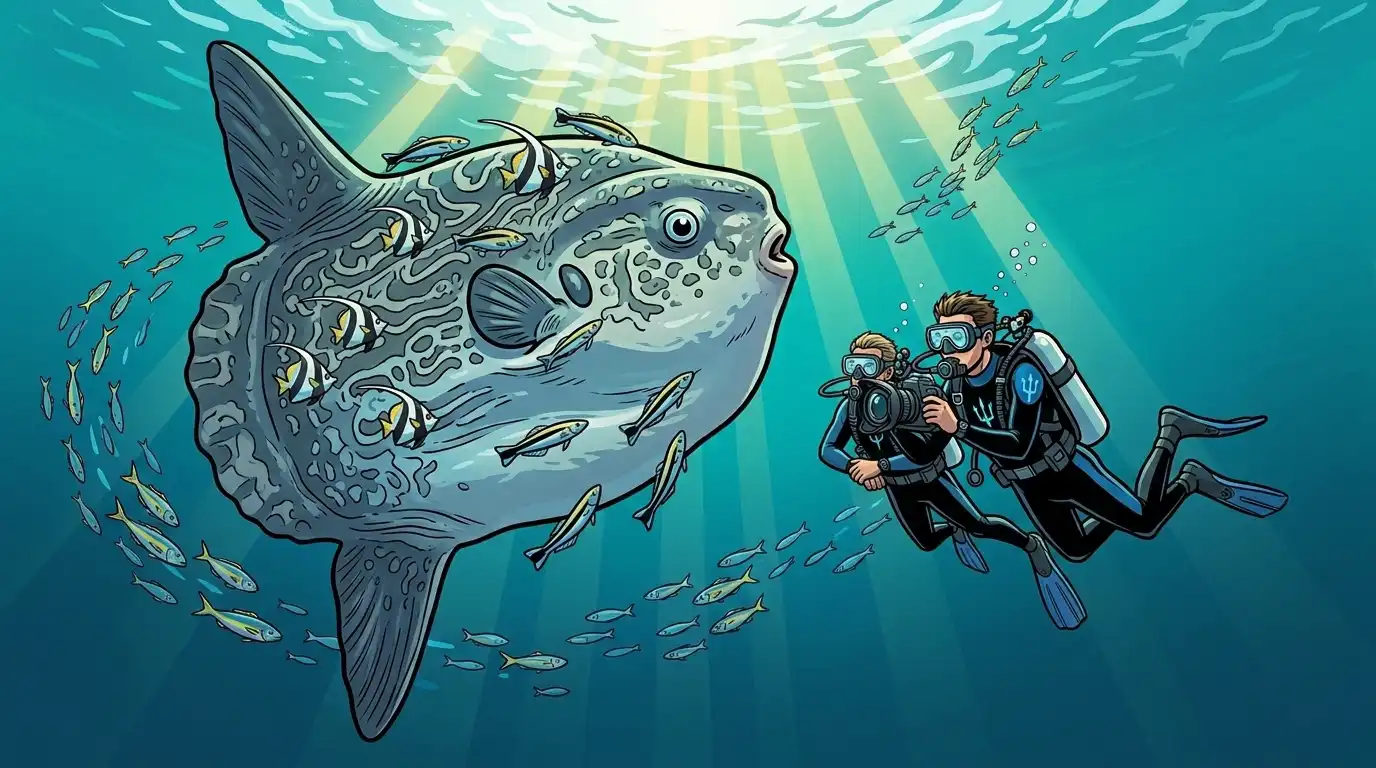
Crystal Bay is the best place to see mola molas. The lagoon is shallow and sandy, and it drops down steeply after 30 meters. Cold water upwellings at these depths, which can drop to 16°C, pull marine sunfish that are up to 3 meters tall and weigh more than 1,000 kg from deeper waters into diveable range.
During peak season, experienced divers with the right deep diving certifications have about a 1-in-3 chance of seeing something. According to dive operator data, September has traditionally had a 90% success rate. This site isn't good for newly qualified divers because the currents are erratic and the depth requirements are 30 to 40 meters.
Blue Corner and Toyapakeh are two other places where you can see mola mola, however they are different from each other. Toyapakeh starts at 6 meters over coral plateaus with soft corals and gorgonian fans up to 2 meters wide. It then goes deeper, where mola molas can show up with schools of barracuda, giant trevally, and bamboo sharks.
If you know how mola mola behave, you'll have better luck when you meet them. In the morning, these fish swim up to cleaning stations, stay still while they're being cleaned, and quickly swim down if someone approaches them aggressively. Waiting and being in the right place are better than chasing.
North Coast Drift Diving
The sheltered north coast of Nusa Penida diving and Nusa Lembongan has some of the greatest dive spots in the area for coral reefs and small animals. Sental, PED, and SD Point are some of the places where expert divers say they may do "lazy drifts" over infinite reef systems full of fusiliers, sweetlips, tuna, and many other types of reef fish.
Mangrove Point, which is close to Nusa Lembongan, has coral walls that are always full of tropical fish schools, moray eels, and other interesting macro subjects. The water stays around 28°C, and the currents only go one way, which makes drift diving predictable and fun for divers who are learning more advanced skills.
SD Point is a great place for divers who want to view colorful coral reefs and lots of marine life away from the busier southern spots. It is on the sheltered north coast of Nusa Penida. This dive location is known for having calm drift diving conditions, which makes it a good choice for experienced divers who are used to strong currents yet want to go at a slower speed than the southern channels.
The underwater terrain at SD Point has slope reefs covered with healthy hard and soft corals. This makes it a natural home for many types of reef fish, such as schools of sweetlips, fusiliers, and butterflyfish. Diving here is much more fun because you can see other marine creatures including hawksbill turtles, bamboo sharks, and beautiful nudibranchs. This makes it a great place for underwater photographers and marine aficionados.
SD Point is on the north shore, which means it has crystal clear waters and more steady circumstances. This makes it easy to see things that are more than 20 meters away. The currents here are reasonable, but they still give divers the sensation of drift diving, letting them float over the colorful coral gardens with ease.
These north coast spots are directly related to the drift diving skills and current management techniques that are necessary for making the most of your time on Nusa Penida.
Planning Your Nusa Penida Diving Experience
To turn dive site knowledge into successful excursions, you need to pay attention to timing, getting your certification, and choosing the right operator. These practical things frequently decide whether a diving trip has amazing experiences or annoying near-misses.
Optimal Timing and Seasonal Considerations
Planning for the seasons has a big effect on both marine life encounters and dive conditions. Knowing how things change from month to month will help you make the most of your visit.
Dry Season (May-October): Mola mola season (July to October) is the best time for experienced divers to see oceanic sunfish since the seas are calm and the visibility is clear. Upwellings lower the temperature of the water, so you need to wear the right thermal protection, but the trade-off is that Nusa Penida has the best diving.
Rainy Season (November-April): The benefits of fewer people and greater water temperatures are canceled out by the possibility of boat cancellations in bad weather. Manta rays are active all year, so now is a great time for divers who want to see them without worrying about mola mola.
Peak Considerations: During the peak season of August to September, Crystal Bay sees more than 100 divers per day. Planning daily visits that leave early or choosing different places to go will help you avoid the busiest times.
Certification Requirements and Safety Protocols
To dive in Nusa Penida, you need to have the right certifications for the conditions at the location. The strong currents and deep contacts that make for unique experiences also come with genuine requirements.
Minimum qualifications: Most signature sites prefer that you have an Advanced Open Water certification. Many dive shops will let Open Water divers dive in safe places like Manta Bay and Lembongan Bay, but the finest dive spots usually demand more experience.
Drift diving experience: Important for northern sites with strong currents, where uncontrolled drifts might remove divers from their groups. You need either a drift diving specialized certification or proof of expertise to be able to navigate safely.
Deep diving preparation: Good for seeing mola mola at Crystal Bay below 30 meters. Knowing about the dangers of nitrogen narcosis (instructors especially warn about this below 30m) and having done 50 or more dives makes you ready.
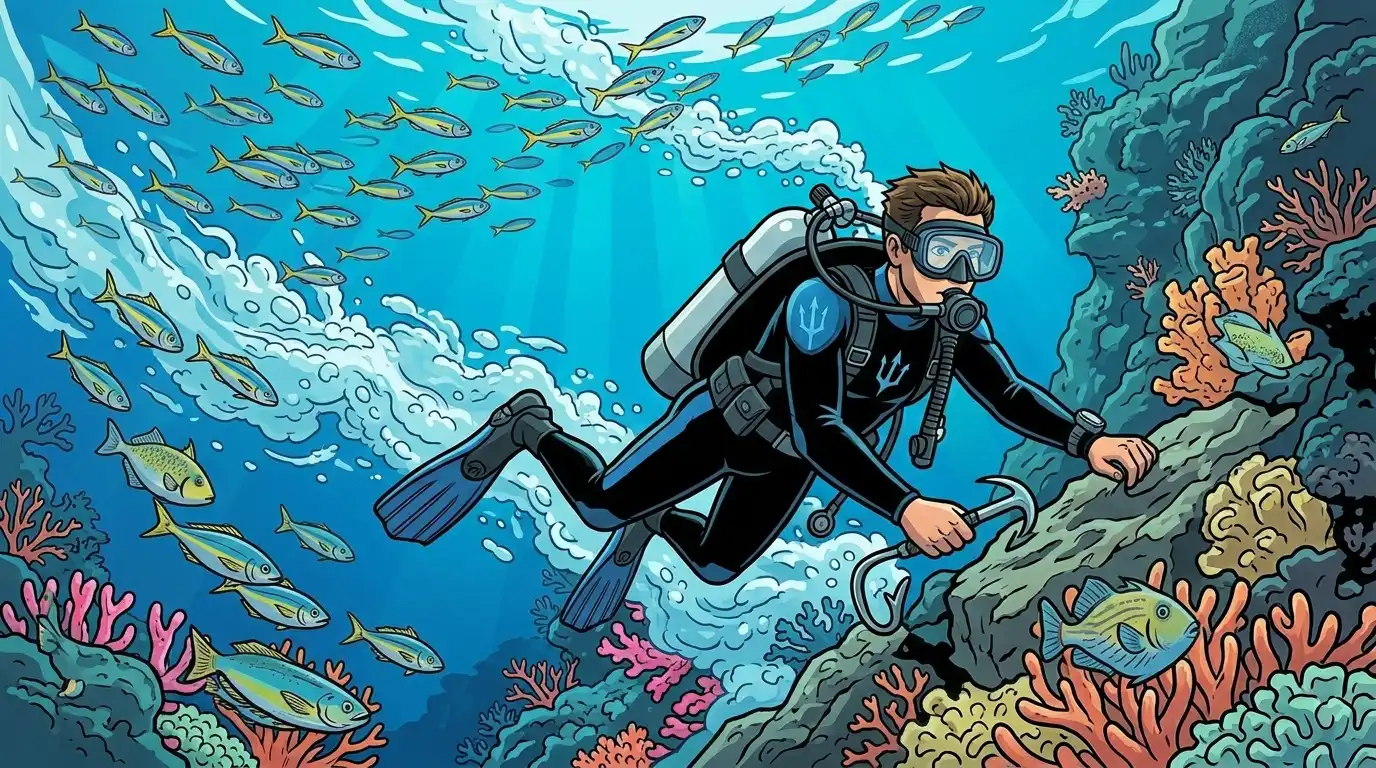
Safety equipment: Because of the current conditions that can produce separations, it is necessary to deploy SMBs (surface marker buoys). Many experienced divers bring reef hooks for mola mola dives so they can stay still as the current moves.
Selecting Dive Operators
The choice of operator has a direct effect on safety, the quality of encounters, and the entire experience. There are more than 20 dive centers in the area, and the quality of the equipment, the size of the groups, and the ease of getting to the sites vary a lot.
| Factor | Budget Operators | Mid-Range Operators | Premium Operators |
|---|---|---|---|
| Group Size | 8-10 divers | 4-6 divers | 2-4 divers |
| Instructor Ratio | 1:8 | 1:4 | 1:2 |
| Boat Quality | Basic dive boats | Comfortable vessels | Purpose-built boats |
| Rental Gear | Standard BCDs | Well-maintained equipment | Premium gear |
| Pricing (2-dive) | IDR 800,000 (~$50) | IDR 1,000,000 (~$65) | IDR 1,200,000+ (~$75+) |
Some of the best options are established dive centers that offer smaller groups, high-quality rental gear, and experienced local divemasters who know how marine life behaves and how to spot patterns in the water. Look at current evaluations that talk about safety practices and success rates instead of just prices.
You can stay at a dive resort and dive for several days at a time. There are places to stay and dive at nearby Nusa Penida and Nusa Lembongan. These packages usually include daily dives to several sites, which gives you the most diving time during your short stay.
Most of the well-known dive shops provide PADI courses for divers who want to get certified while enjoying the waters of Nusa Penida.
Common Challenges and Solutions
Even the best-planned diving trips to Nusa Penida run into problems that are easy to see coming. Getting ready for these situations makes things safer and more enjoyable.
Managing Strong Currents and Advanced Conditions
When there are strong currents at places like Crystal Bay and the northern drift areas, you need more than just basic certification training to be safe. When drift diving, you need to know how to stay neutrally buoyant while traveling with the current, use reef hooks to stay still while watching mola mola cleaning stations, and read down current signs.
Thermoclines at deeper locations make things even harder. Rapid temperature drops can cause mask tightness, make you use more air, and make you lose your sense of direction. Most problems can be avoided by carrying the right thermal protection and keeping a close eye on the depth when mola mola approaches.
Dealing with Crowded Dive Sites
Early morning departure times, usually between 6:30 and 7:00 AM, let divers get to Manta Point before the busiest times for tourist boats. This hour is when mantas are most active at cleaning stations, which makes for better encounters and more calm experiences.
Choosing a different location during the hot season gives you more choices than just the most popular dive sites. Gamat Bay, the east coast sites (Malibu, Semaya, Batu Abah), and Ceningan Wall are all great places to dive with fewer people. However, they may not have the famous pelagic encounters that other places do.
Weather and Seasonal Limitations
Conditions at sea might suddenly close primary locations, especially during the rainy season and when the monsoon season changes. Knowledge of backup sites makes ensuring that diving stays fruitful. When southern coast sites close, protected north coast sites are frequently still diveable.
Planning your itinerary in a flexible way helps you get the most out of your dive. Adding extra days to visits, especially during peak season when the focus is on mola mola, makes it more likely that you will see them, even when the weather changes.
Conclusion and Next Steps
Diving Nusa Penida lives up to its reputation as a world-class diving spot. It has reliable manta ray sightings all year long, seasonal mola mola sightings that are better than anywhere else on Earth, and colorful coral reefs that sustain an incredible range of marine life. The fact that it's easy to get to from Bali, that there are experienced dive operators, and that the marine life is so amazing all make it a great place for certified divers of all skill levels.
- Verify your certification level against target site requirements (Advanced Open Water recommended)
- Research and contact dive operators 4-6 weeks before travel during peak season
- Consider drift diving specialty or additional logged dives if you’re early in your diving experience
- Book accommodation near dive departure points on Nusa Penida or Nusa Lembongan
Related topics worth exploring: Komodo diving lets you see more sharks in similar current conditions. Raja Ampat excursions offer the best coral diversity for long liveaboard cruises. Technical diving courses let you see deeper mola mola for serious divers.