

Bali, Indonesia, is the best place to travel in the globe from 2026 and beyond. It has a wide variety of activities, from sacred Hindu temples to sunrise hikes up volcanoes. This guide to things to do in Bali covers the greatest things to do on every part of the island, whether you're planning your first vacation or coming back to see more of this Indonesian paradise.
This article covers cultural landmarks, adventure activities, beautiful beaches, real eating, and one-of-a-kind experiences in all parts of Bali. It's for people who want to have real experiences, people who want to get their heart racing, people who love Balinese culture, and digital nomads who want to find their next home in Southeast Asia.
Things to do in Bali has more than 35 things you have to do, from visiting ancient temples and lush rice terraces to scuba diving Bali with manta rays and hiking to the top of Mount Batur to see the dawn. You could spend a week or perhaps a few months exploring Bali island..
When you visit Bali, you’ll discover:
- Cultural immersion through temple ceremonies and traditional Balinese dance performances
- Natural wonders including volcanic landscapes and cascading waterfalls
- Adventure sports from world-class surfing to wreck diving
- Culinary experiences featuring authentic Indonesian food
- Wellness activities rooted in centuries-old Balinese culture

Understanding Bali’s Diverse Regions and What They Offer
Bali is Indonesia's Hindu island, and more than 87% of the people who live there profess a syncretic faith that combines Hinduism with animism and ancestor worship. This spiritual base gives each area its own personality, from daily offerings at temples to rice paddies that are kept alive by hallowed water temple systems. Geography shapes different experiences: volcanic peaks in the north, stunning cliffs in the south, and cultural heartlands in the middle.
Cultural Heart: Ubud and Central Bali
Ubud sits in the middle of Bali, where the subak irrigation system cut rice terraces. This method has been acknowledged by UNESCO since the 9th century. People come to this area to view the Sacred Monkey Forest Sanctuary, which is home to more than 1,000 long-tailed macaques in a 12-hectare jungle that surrounds 19th-century temples.
Some of the most important features are the Tegalalang Rice Terrace, which has steep fall of 100 meters, yoga retreats that draw 500 schools from around the world, and art communities that were inspired by Dutch colonial interactions in the 1930s. There is a strong link to local culture here. Daily ceremonies, gamelan music, and temple festivals called odalan provide for a unique experience for people who want to experience real Balinese culture.
Beach Paradise: Seminyak, Canggu, and Southern Coast
The southern coast has several types of beaches that are good for different types of travelers. Seminyak has trendy beach clubs with infinity pools that gaze out over cool surf waves. Canggu's 10-kilometer length of black sand combines rice field cafes with nightlife that goes on until 3 AM. Every year, 1 million surfers travel to Kuta Beach to ride its easy waves.
Water activities, watching the sunset at famous places like Tanah Lot, and world-class surfing are some of the most popular things to do. Twenty surf schools give 50,000 lessons a year. These places add to the cultural experiences of central Bali. Many tourists spend time in both Ubud, which is laid-back, and the southern shore, which is full of vitality.
Must-Do Cultural and Spiritual Experiences
Bali has a lot of Hindu history, so the temples aren't just tourist attractions; they are also spiritual centers where ceremonies happen every day. There are more than 20,000 temples on the island, ranging from small family shrines to huge structures that host thousands of pilgrims. When you understand this context, going to the temple becomes more than just a chance to take pictures; it becomes a chance to learn about the culture.
Ancient Temple Exploration
Top 5 temples to visit:
- Tanah Lot – A 16th-century holy spring site perched on an offshore rock formation, ideal for sunsets viewed by 800,000 yearly. The temple erodes 2cm annually from waves, adding urgency to visits.
- Uluwatu Temple – One of Bali’s six directional guardian temples built in the 10th century atop 100-meter limestone cliffs. Evening Kecak dance performances here combine 50 bare-chested men chanting Ramayana verses amid torchlit flames.
- Besakih (Mother Temple) – Bali’s largest complex with 35 shrines on Mount Agung’s slopes, hosting the island’s most sacred ceremonies. Strict dress codes and entry fees apply following 2018 earthquake reinforcements.
- Ulun Danu Beratan Temple – A stunning lakeside complex with multi-tiered meru pagodas reflecting on crater lake waters, representing one of Bali attractions featured on the 50,000 rupiah note.
- Gunung Kawi – Ancient rock-cut shrines carved into cliffs in the 11th century, accessed via 300 steps through rice fields.
To avoid crowds, come to the main temples before 9 AM or after 4 PM. Always wear sarongs and sashes (which are often available at the entryway), and never stand higher than priests or offerings.
Traditional Arts and Crafts Experiences
The Kecak dance at Uluwatu Temple is Bali's most famous performance. It was created in the 1930s by combining old sanghyang rituals with Ramayana chants. Kecak is different from other Balinese dances that use gamelan orchestras since it only has 50 men making rhythmic vocal sounds while dramas play out in the firelight.
The settlement of Celuk is known for creating silver jewelry, and workshops teach ancient methods that have been passed down through the years. Visitors make their own items in sessions that last 2 to 3 hours, while artists show them how to do complex filigree work. In Ubud, batik workshops teach people how to color fabric with wax. In Mas, a hamlet known for wood carving, people make the masks that are used in traditional Balinese dance performances.
Spiritual Wellness Activities
The water purifying ceremonies of Tirta Empul Temple are quite mystical. Every year, 500,000 people visit this site, which dates back to 962 AD, to use its 30 spring-fed immersion basins, which are thought to cleanse karma. As Balinese Hindus worship and make gifts, visitors go into the pools one at a time.
Ubud is where most yoga and meditation retreats are held. The wellness industry expects to increase by 15% by 2025. Many spas use oils and techniques that have been used for hundreds of years in traditional Balinese massage, which includes acupressure, reflexology, and aromatherapy.
These spiritual activities help tourists grasp the island's holy bond with its landscape and get ready to appreciate Bali's natural wonders.
Natural Wonders and Adventure Activities
Bali has a wide range of scenery, from beautiful beaches at sea level to volcanic peaks that rise more than 3,000 meters. You can travel to any of them in a few hours. This geographical compression implies that morning treks up volcanoes can turn into afternoon dips in waterfalls. This makes it important for travelers with limited time to arrange their trips well.
Iconic Landscapes and Scenic Spots
Jatiluwih Rice Terraces offer UNESCO-recognized subak irrigation views across 600 hectares, with fewer crowds than Tegalalang. The terraced rice fields produce up to three crops annually using water temple-based distribution.
Tegalalang Rice Terrace delivers the iconic Bali Instagram shot—undulating green expanses best photographed during June-to-August dry season when golden hues peak. A 2023 revitalization project planted 5,000 native trees to combat erosion from 2 million annual visitors.
Campuhan Ridge Walk in Ubud provides a gentle 2-kilometer trek along a narrow ridge between two valleys, ideal at sunrise when mist blankets the lush rice terraces below. No entrance fee required.
Handara Gate presents the famous split gateway framing misty mountains—arrive before 8 AM to avoid hour-long queues for photos.
Waterfalls and Natural Pools
Sekumpul Waterfall ranks as Bali’s most spectacular—a 80-meter curtain of water accessible via 300 steps and river crossings. The 45-minute descent deters casual visitors, rewarding adventurous travelers with uncrowded natural pools.
Tukad Cepung hides inside a canyon where sunlight streams through a cave opening, illuminating the falls in ethereal beams between 9-10 AM.
Tegenungan Waterfall offers easiest access from Ubud—just 20 minutes by scooter with developed facilities including changing rooms and warungs.
Swimming safety tips: Stick to designated swimming areas, wear water shoes on slippery rocks, and avoid waterfalls during rainy season when currents strengthen dangerously.
Volcano Hiking and Mountain Adventures
Mount Batur delivers Bali’s most popular sunrise trek. This active stratovolcano rises 1,717 meters within a caldera enclosing Lake Batur, Bali’s largest freshwater body. Guided hikes ascend 700 meters over 2 hours starting at 4 AM, culminating in panoramic views of Mount Agung’s dome and geothermal breakfasts cooked by volcanic hot springs bubbling at 50°C.
Mount Agung challenges serious trekkers with a 3,031-meter summit requiring 6-8 hours of steep climbing. This sacred peak hosts spiritual ceremonies and offers breathtaking views across Bali and neighboring Lombok.
Difficulty levels: Batur suits moderately fit beginners; Agung demands excellent fitness and mountain experience. Licensed guides are mandatory for both—expect costs around $50-80 for Batur, $100-150 for Agung.
Best seasons: April through October during dry season minimizes cloud cover and slippery trails. Book guides 2-3 days ahead during peak periods.

Ocean and Island Adventures
Bali has a wide range of aquatic sports, from quiet snorkeling in protected harbors to diving with oceanic manta rays in strong currents. The Nusa Islands and Gili Islands, which are close by, give more chances to explore underwater. Each island has its own unique marine life, making the boat ride to Bali worth it.
Diving and Snorkeling Hotspots
Step-by-step guide to best dive sites:
- Tulamben – USAT Liberty Wreck: This American cargo ship torpedoed in 1942 rests just 30 meters offshore at depths from 5-30 meters. Wreck diving here reveals coral-encrusted structures sheltering over 400 fish species. Shore entry makes it accessible for all certification levels.
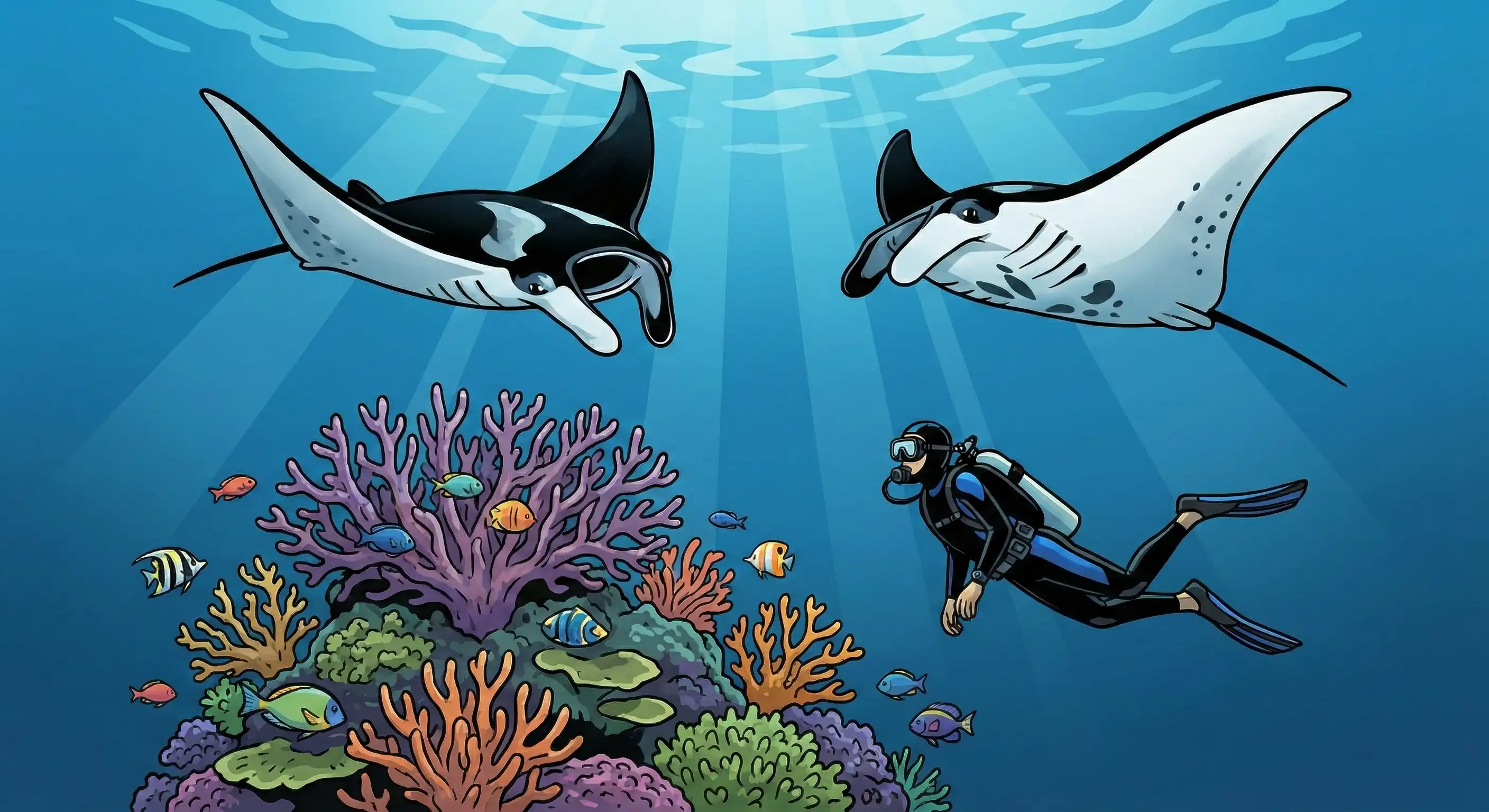
- Nusa Penida – Manta Point and Crystal Bay: The main attraction for scuba diving—manta rays with 5-meter wingspans glide through cleaning stations year-round. Crystal Bay adds encounters with rare mola mola (ocean sunfish) from July to October. Strong currents demand intermediate experience.
- Amed diving – Traditional Jukung Boat Diving: This East Bali coast offers colorful macro life and Japanese shipwreck exploration via traditional outrigger boats. Calm conditions suit beginners while diverse marine life satisfies experienced divers.
- Menjangan Island: Pristine coral reefs with 30-meter visibility attract snorkelers and divers to this protected northwest island. Wall dives drop dramatically with 250 fish species hovering in currents. The Menjangan Dynasty Resort area offers convenient access.
Water temperatures average 27°C year-round, eliminating wetsuit requirements for most divers.
Island Hopping Experiences
| Island | Best For | Travel Time from Bali | Key Activities |
|---|---|---|---|
| Nusa Penida | Dramatic cliffs, Instagram spots | 45 minutes from Sanur | Kelingking Beach, Angel’s Billabong, manta rays |
| Nusa Lembongan | Relaxed beach vibes | 30 minutes | Mangrove tours, surfing, seaweed farms |
| Nusa Ceningan | Adventure sports | 30 minutes + bridge from Lembongan | Cliff jumping, Blue Lagoon swimming |
| Gili Islands | Diving and nightlife | 2.5 hours via fast boat | Snorkeling, party scene, turtle encounters |
Nusa Penida is Bali's Instagram hotspot. Kelingking Beach is a 150-meter cliff shaped like a T-Rex that surrounds blue lagoons. The 45-minute trek down is dangerous and needs ropes to help. Broken Beach is a 50-meter natural arch made by lava tubes that fell down, and Angel's Billabong has an emerald infinity pool that changes with the tides.
Choosing your island: Lembongan Island is a good choice for families and couples who want to go away to a tiny island with calm waves. People who want to have fun can jump off cliffs up to 5 meters high in Nusa Ceningan. The Gili Islands are great for party-goers, but they are farther away from Bali's mainland.
A day excursion will show you the best of Nusa Penida, but you should stay overnight in Nusa Lembongan to savor the laid-back vibe.
Culinary Experiences and Local Food Culture
Ceremonial dishes, indigenous ingredients, and cooking methods passed down through generations show how Hindu culture has influenced Balinese food. Many travelers like discovering local food, from warungs on the street to trendy eateries.
Traditional Balinese Dishes to Try
Babi Guling, or roasted suckling pig, is the most famous meal in Bali. Whole pigs are rubbed with turmeric and spices and then slow-roasted over coconut husks for 8 hours. Ibu Oka in Ubud provides the famous version, but you can also find similarly authentic dishes at local warungs all across the island.
Before being wrapped in banana leaves and smoked for 12 hours, Bebek Betutu (slow-roasted duck) is marinated in Balinese spice paste. The effort is worth it for the nuanced flavors—look for it at Men Tempeh in Giantar.
Steamed rice with tiny amounts of meat, vegetables, peanuts, and sambal is the finest way to begin to know Indonesian food. Every warung makes its own unique combinations.
Gado-Gado (vegetables with peanut sauce) and Urab (coconut vegetable salad) are two vegetarian dishes. Tourist regions have a lot of plant-based options on their menus, but traditional eateries need more specific requirements.
Cooking Classes and Market Tours
In Ubud, hands-on cooking classes usually start at sunrise with trips to the market to get the materials. Before explaining how to grind sambal correctly, the instructors talk about spices that are new to the students, like galangal, candlenuts, and kaffir lime.
There are classes that last three hours in the morning ($30–50) and full-day immersions ($80–100) that include tours of the property and family-style meals. Casa Luna and Paon Bali are two of the best cooking schools with English-speaking teachers who explain how Balinese customs relate to the meals.
Modern Dining and Cafe Culture
Seminyak and Canggu have become real dining hotspots where chefs from several countries put their own spin on local foods. Locavore in Ubud is the first restaurant in Bali to provide food from local farms. Their tasting menus highlight the diversity of Indonesian food.
Potato Head, Finns, and La Brisa are some of the beach clubs on the southern coast that have infinity pools, sunset vistas, and fine cuisine. Most of them need you to spend at least $30 to $50 to reserve a daybed during busy times.
As digital nomads moved to Canggu, the healthy cafe culture grew quickly, with smoothie bowls, kombucha bars, and organic stores popping up all over tourist areas.
Trips Between Bali and Komodo: Exploring Komodo Dragons and Underwater Wonders
If you want to view a lot of wildlife and have amazing aquatic experiences, you should go to Bali and then Komodo National Park. The flight time is only one hour, so this is a great alternative. A lot of people stay in Bali for three to four days before going to Komodo to view the legendary Komodo dragons and go diving and snorkeling in some of the best spots in the world.
Komodo National Park Highlights
The Komodo dragons, the largest reptiles on Earth, live in Komodo National Park, which is a UNESCO World Heritage site. You may see these ancient animals in their native habitat on Komodo Island and adjoining Rinca Island. Guided hikes let you get up close and personal with them in a safe way. The park has some of the cleanest coral reefs in Southeast Asia, which are home to a wide range of marine life, including as manta rays, turtles, reef sharks, and colorful coral gardens.
Diving and Snorkeling Adventures
The waters around Komodo are famous for being very clean and having strong currents. This makes them a great place for experienced divers and snorkelers. Batu Bolong, Castle Rock, and Manta Alley are some of the most popular dive locations. They are home to big pelagics and beautiful reef ecosystems that are sure to thrill. At authorized cleaning stations, snorkelers can swim with beautiful manta rays and explore shallow coral reefs.
How to Combine Bali and Komodo
The majority of people that go to Komodo National Park fly from Ngurah Rai Airport in Bali to Komodo Airport in Labuan Bajo, Flores. A flight that lasts only an hour. Liveaboard boats and day tours leave often from Labuan Bajo or Komodo Resort. These tours last for many days and involve island hopping, diving, snorkeling, and trekking.
Visitors can enjoy Bali's rich culture, beautiful beaches, and lively food scene by spending a few days there before or after their vacation to Komodo. This mix gives you a well-rounded holiday that includes both cultural experiences and exciting animal and underwater adventures.
Travel Tips
- Book flights and liveaboard tours in advance, especially during peak seasons.
- Prepare for variable weather and strong currents in Komodo’s waters; diving experience is recommended.
- Combine your Komodo trip with a stay in Labuan Bajo for easy access to tours and local amenities.
- Don’t miss the chance to explore Bali’s best beaches and cultural sites before heading to Komodo for a complete Indonesian experience.
Common Travel Challenges and Solutions
Planning things to do in Bali might be hard because of the logistics that trip up many people. Knowing how transit works, how the weather usually is, and what people expect from you in different cultures will help you avoid wasting time and having embarrassing situations.
Transportation Between Activities
Private drivers offer the most convenient transport between distant attractions. Full-day hire costs $60-80 and eliminates navigation stress on unfamiliar roads. Apps like Grab provide cheaper point-to-point rides but face restrictions in some tourist areas where taxi mafias operate.
Scooter rental ($10-20 daily) provides maximum flexibility but demands experience navigating chaotic traffic—over 1,000 accidents occur annually on Nusa Penida alone. International driving permits are technically required, though enforcement varies.
Realistic time planning: Add 30-50% to Google Maps estimates for actual travel times. The journey from Ngurah Rai Airport to Ubud takes 90 minutes with moderate traffic, 3 hours during peak periods.
Weather and Seasonal Planning
Dry season (April-October): Optimal for Mount Batur sunrise treks, diving at Crystal Bay, and outdoor temple visits. Peak tourism inflates prices 20-40% in July-August.
Rainy season (November-March): Morning activities often proceed uninterrupted before afternoon downpours. Waterfalls run fuller and greener, rice paddies glow emerald, and crowds thin considerably.
Site-specific timing: Mola mola appear at Nusa Penida July-October only. Rice terraces photograph best during planting (golden stalks) or mid-growth (bright green) phases.
Rainy day backups: Indoor activities include cooking classes, spa treatments, museum visits (Neka Art Museum in Ubud), and coffee plantation tours with covered processing facilities.
Cultural Sensitivity and Temple Etiquette
All Hindu temples have dress standards that say everyone must wear sarongs and sashes that cover their knees and shoulders. A lot of temples rent things out, but carrying your own is the best way to be sure you have everything you need.
There are rules on taking pictures at some temple interiors, religious events, and cremations. When in doubt, watch how people act before you raise your camera. Never stand higher than priests, shrines, or offerings. Don't climb on things to take pictures.
Nyepi, or Day of Silence, shuts down the whole island for 24 hours every March. There are no flights, the beaches are closed, and people stay inside their hotels. This is a one-of-a-kind event, but you need to plan what to do on the days before and after.
Conclusion and Trip Planning Next Steps
Bali has a lot of different things to see and do. There are sacred temples where ceremonies have been held the same way for hundreds of years, and there are manta point dives that show you 5-meter rays in clear water. This island has something for every type of traveler, from Ubud's rich artistic traditions to the thrill of hiking up Mount Batur at daybreak to the peace and quiet of Nusa Dua's beautiful beaches.
Immediate actionable steps:
- Choose your base region(s) based on priorities—Ubud for culture and rice fields, Canggu for surf and digital nomad vibes, Seminyak for beach clubs and dining
- Book accommodation early during peak seasons (July-August, December-January)
- Arrange private drivers for day tours to distant sites like East Bali temples or Mount Batur
- Reserve popular activities in advance—Manta diving, Mount Agung treks, and top cooking classes fill quickly
For related planning, look into visa requirements (many nationalities can get a 30-day free visa), get travel insurance that covers scuba diving if you plan to do it, and pack layers for volcano treks and sarongs for temple visits.
Additional Resources
Recommended tour operators and booking platforms:
- GetYourGuide and Viator for verified day tour bookings
- Local dive shops certified through PADI or SSI for marine activities
- Bali Safari & Marine Park for ethical wildlife encounters (40 hectares, 400 animals)
Useful mobile apps:
- Grab for transportation and food delivery
- Google Maps offline downloads for navigation without data
- XE Currency for real-time exchange rates (avoid money changers offering rates too good to be true)
Emergency contacts:
- Nearest hyperbaric chamber for diving emergencies: Sanglah Hospital, Denpasar
Use this guide to find things to do in Bali, and you'll see why this island is known as one of the best places to visit in South East Asia—there's something great to do at every turn.