科莫多
灯塔礁
Lighthouse Reef is one of Komodo’s more approachable reef dives: a steep coral wall, generally manageable currents, and reef fish that make a strong first taste of the park—without the intensity of Komodo’s most famous surge-and-current sites.

Overview: a beginner-friendly wall with Komodo flair
The name comes from a lighthouse on a nearby islet; underwater the draw is the reef wall—a steep face from shallows into blue water, with ledges, overhangs, and hard and soft coral. Next to Komodo’s exposed pinnacles and surge-heavy swim-throughs, it often feels more predictable, so newer divers can work on buoyancy and fish ID while still feeling Komodo’s vertical scale.
Experienced divers still get plenty: schooling fish, small predators, and seasonal visitors from the open ocean. Plan a simple profile along the wall inside your certification depth, watch current direction, and reserve gas for a calm safety stop. Lighthouse Reef is a confidence-building stop before or after heavier sites in the park.
Marine life: mantas, reef fish, and coral gardens

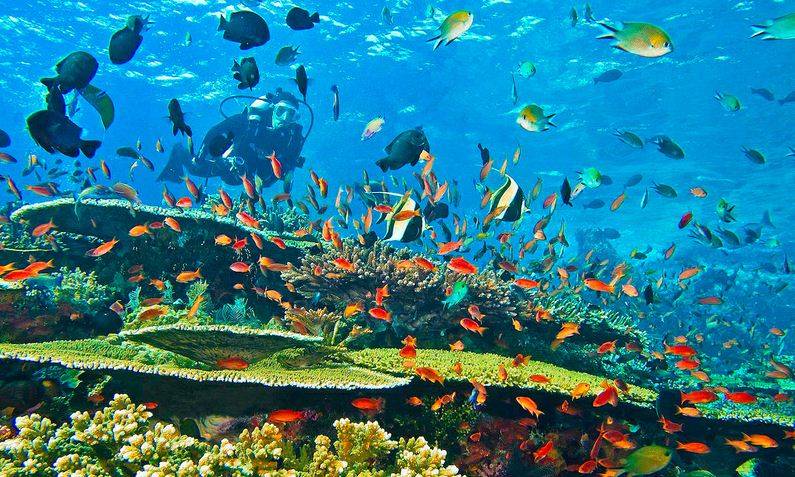
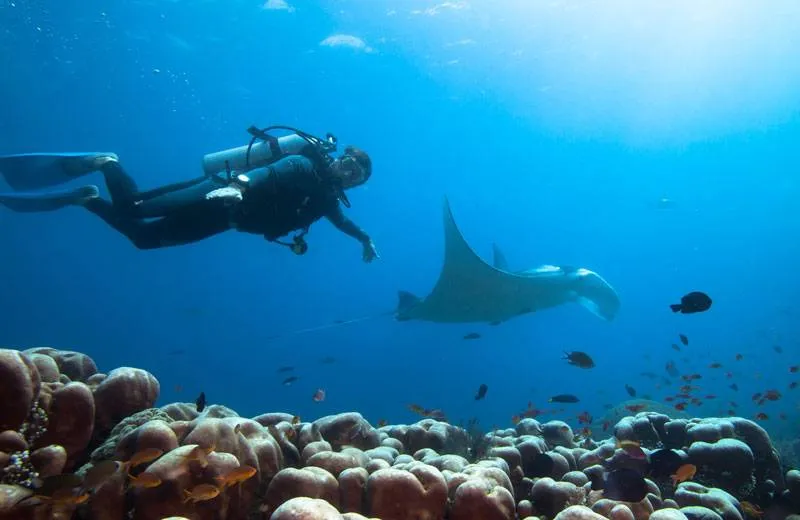
This is not a “manta only” dive, but manta rays do show up—often as silhouettes in the blue or at cleaner patches. If plankton is thick, treat mantas as a bonus: slow down, do not chase, and let them set the distance. Expect Indo-Pacific reef fish—anthias, butterflyfish, angelfish, snapper, trevally—with wrasse and damselfish tight to the coral.
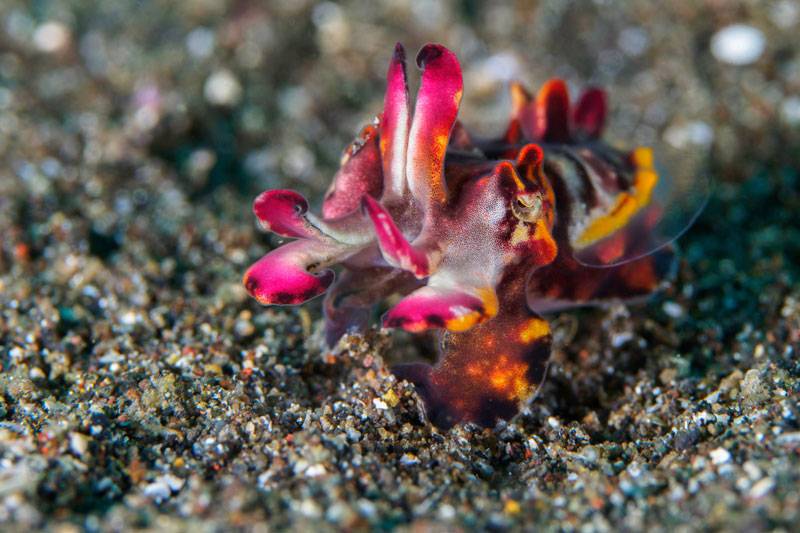
Coral shifts with depth and light: hard coral in the sun, sponges and soft corals in shade, bommies that stack fish when current runs. Look for nudibranchs and gobies on a slow pass; wide-angle shots lean on the wall, beams, and schools. In Komodo, tide and season rewrite the cast list every dive.
Dive conditions: currents and who it suits
Lighthouse Reef usually has easier currents than Komodo’s famous channel drifts, but “easy” is relative in a tidal park—any wall can run when the tide does. Many divers stay roughly 10–25 metres along the wall; depth and route follow the briefing, visibility, and rules of the day.
That makes the site suitable for many levels, from newer Open Water divers with solid skills to guests who want a relaxed wall with space to look. Surge or sudden current still happens—stay grouped, follow the plan, adjust trim. It is a good place to practise calm movement on a vertical reef before harder drifts.
Best time to dive Lighthouse Reef
The dry season (often April–November) tends to bring calmer seas and simpler day-trip planning from Labuan Bajo, though wind and squalls still appear. The wet season can mean fewer boats topside and mixed underwater clarity.
Lighthouse Reef has no single “magic month.” Mantas follow food and currents; reef scenery is year-round. On a multi-day visit, spreading dives across tides beats betting everything on one week—local tide reads beat generic calendars.
Getting there from Labuan Bajo
Most people fly into Labuan Bajo (Flores), often via Bali. Lighthouse Reef and other park sites are reached by day boat or liveaboard; ride length depends on routing and sea state—calm days feel quick, rough days feel long.
National park rules and fees apply. Boat briefings cover entry, no touching coral or wildlife, and how the group runs splash to pickup. If you get seasick, prepare for Flores Strait—it can chop even when the reef below is peaceful.
What to expect: ideal for first-time Komodo divers
If you expect only adrenaline, Lighthouse Reef balances the story: settle into the rhythm of clear water, a dramatic wall, and life that rewards attention without constant crisis. First-time Komodo divers often like the space—room to hover, tune buoyancy, and read the wall beside you.
Stay realistic: wild ocean, not an aquarium. Mantas may or may not appear; drift may be mild or stronger. What stays reliable is structure—a clear face, a sensible path, and many days when the site feels absorbing rather than overwhelming—then pinnacles and channels make more sense when you step up.