水肺潜水
水肺潜水
A comprehensive beginner's guide to scuba diving. Learn about equipment, techniques, certification, and everything you need to start your underwater journey.

Brief Explanation of Scuba Diving

Scuba diving is an underwater activity that allows people to explore the fascinating world beneath the water's surface. With the help of specialized equipment, divers can breathe underwater and experience the beauty of coral reefs, marine life, and underwater geological formations. The term 'scuba' stands for Self-Contained Underwater Breathing Apparatus, which refers to the essential gear used during a dive.
This comprehensive guide will introduce you to scuba diving equipment, skills, and various types of diving, as well as addressing safety concerns and conservation efforts.
Essential Equipment for Scuba Diving
Scuba Tank and Regulator

A scuba tank is a high-pressure cylinder that contains compressed air or a mixture of gases like Nitrox or Trimix, providing a breathable gas supply for the diver. The standard scuba tank used internationally is 12 liters while divers who consume air quicker prefer the larger 15 liters scuba tank.
Scuba tanks are now manufactured from aluminum, making them light and easy to handle compared to the older steel tanks.
The regulator reduces the pressure of the air coming from the tank, allowing the diver to breathe comfortably underwater. It consists of a first stage (connects to the tank) and a second stage (the part the diver breathes from). Some of the best regulators are from Aqua Lung, Apeks, Scuba Pro and Mares.
Buoyancy Compensator Device

The buoyancy compensator device (BCD) helps divers control their buoyancy underwater, allowing them to maintain a constant depth and ascend or descend easily. The BCD is an inflatable vest or backplate and wing setup connected to the air supply.
For recreational diving, dive centers prefer a basic vest-style BCD. As divers become more advanced they typically prefer a wing-style BCD.
Dive Computer

A dive computer monitors depth, time, and decompression requirements during a dive. It helps divers plan their dives and avoid decompression sickness by providing real-time information about dive profile, ascent rates, and no-decompression limits. Some dive computers also offer integrated air management through a wireless connector.
The most popular brands are Suunto, Mares, and Shearwater.
Wetsuits and Drysuits

Wetsuits are made of neoprene and work by trapping a thin layer of water between the suit and the diver's body, heated by body warmth. Drysuits are watertight and maintain a layer of air around the diver's body, offering better insulation.
Both suits are available in various thicknesses and styles. The most popular wetsuit manufacturer is Fourthelement.
Fins and Masks

Fins are essential for efficient underwater propulsion. They come in open-heel and full-foot, as well as split or paddle designs. The best fins are from the Mares Avanti series such as the Avanti Quattro.
Masks provide clear vision underwater and should create a watertight seal. Some masks have corrective lenses. The best masks are manufactured by the Japanese company Gull, mask series Vader.
Safety Equipment

Safety equipment is crucial for every diver. Essential safety items include:
- Surface marker buoy (SMB) to signal position to boats and other divers
- Dive knife or cutting tool for emergencies such as entanglement
- Whistle or surface signaling device for attracting attention
- Dive light for low-visibility situations or night dives
Basic Skills and Training

Almost everyone can do scuba diving but some basic skills and training should be conducted for safety. Dive certification is not needed for trying scuba diving as almost all dive centers provide introductory diving under the strict supervision of a private dive instructor.
Basic Skills for Safe Scuba Diving

Before diving into open water, it is vital to learn fundamental scuba diving skills, such as clearing a flooded mask, recovering a lost regulator, and equalizing ear pressure.
Additionally, divers must learn proper buoyancy control, underwater navigation, and efficient finning techniques.
Buddy System

The buddy system is a fundamental safety practice where two divers act as partners and look out for each other during the dive, providing assistance in case of equipment failure, entanglement, or other emergencies.
The number one rule divers learn during scuba diving courses: Never dive alone!
Dive Planning and Communication

Divers should discuss dive objectives, depth and time limits, emergency procedures, and hand signals before entering the water.
Effective communication helps prevent misunderstandings and ensures both divers are on the same page. Practicing hand signals with your dive buddy prior to the dive is highly recommended.
Types of Scuba Diving
Recreational Scuba Diving

Recreational scuba diving is the most common form, typically conducted for enjoyment and exploration. It covers reef diving, drift diving, and wall diving. Recreational diving adheres to no-decompression limits and usually does not exceed 130 feet (40 meters).
Technical Scuba Diving

Technical diving involves going beyond recreational limits, including deeper depths, extended bottom times, and specialized gas mixes such as Trimix. It requires additional training, equipment, and a higher level of expertise.
Technical diving is considered highly dangerous and is not typically conducted for the pleasure of seeing marine life.
Cave Diving

Cave diving takes divers into underwater caves, requiring specialized training and equipment, including guidelines, reels, and redundancy in lighting and breathing gas sources.
Cave diving is as dangerous as technical scuba diving but significantly different altogether.
Wreck Diving
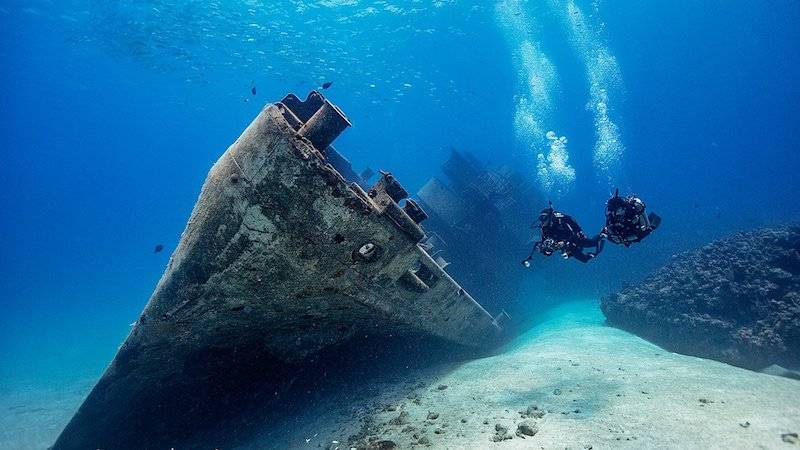
Wreck diving involves exploring sunken ships, airplanes, or other structures. Divers can enjoy the historical and archaeological aspects, as well as observing unique marine life attracted to these artificial habitats.
Wreck diving can also be conducted by recreational divers with the basic PADI Wreck Diver Specialty.
Night Diving

Night diving offers a different perspective on the underwater world, as marine life behavior changes and bioluminescent organisms create a mesmerizing display. Night dives require dive lights and additional safety precautions.
Night diving can be conducted by recreational divers with the basic PADI Night Diver Specialty.
Risks and Safety Measures
Physical Risks and Hazards

Scuba diving involves certain physical risks, such as barotrauma from improper equalization techniques and hypothermia in cold water without adequate thermal protection.
Most common physical risks happen to divers who ignore standard safety measures such as managing decompression time. Because of such negligence, most scuba diving accidents happen to advanced divers.
Decompression Sickness

Decompression sickness (DCS), also known as 'the bends,' occurs when nitrogen bubbles form in the body's tissues due to rapid pressure changes during ascent. To prevent it, divers must follow their dive computer's recommendations, adhere to no-decompression limits, and maintain a slow, controlled ascent rate.
Dive computers assist perfectly with decompression calculations — all divers must do is follow the dive computer, which is already designed to be conservative.
Emergency Procedures and Rescue Techniques

Divers should be familiar with emergency procedures such as sharing air with a buddy, performing controlled emergency swimming ascents (CESA), and deploying surface marker buoys (SMBs).
Learning rescue techniques and becoming certified in first aid and CPR can significantly increase safety. See our PADI Rescue Diver and Emergency First Response course.
Conservation and Preservation of Marine Ecosystems
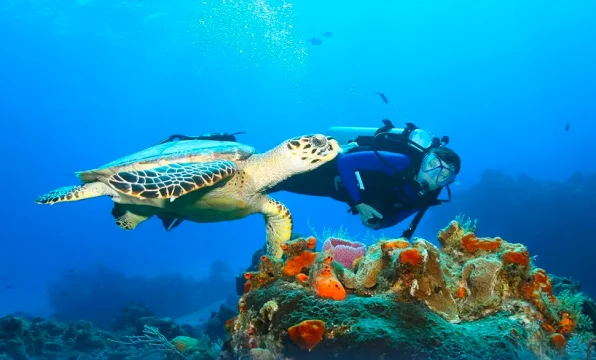
Scuba divers have a unique opportunity to witness the beauty and fragility of marine ecosystems firsthand. With this privilege comes the responsibility to protect and conserve these environments for future generations.
The minimum divers can do is practice neutral buoyancy and significantly limit touching coral or marine life.
Responsible Diving Practices
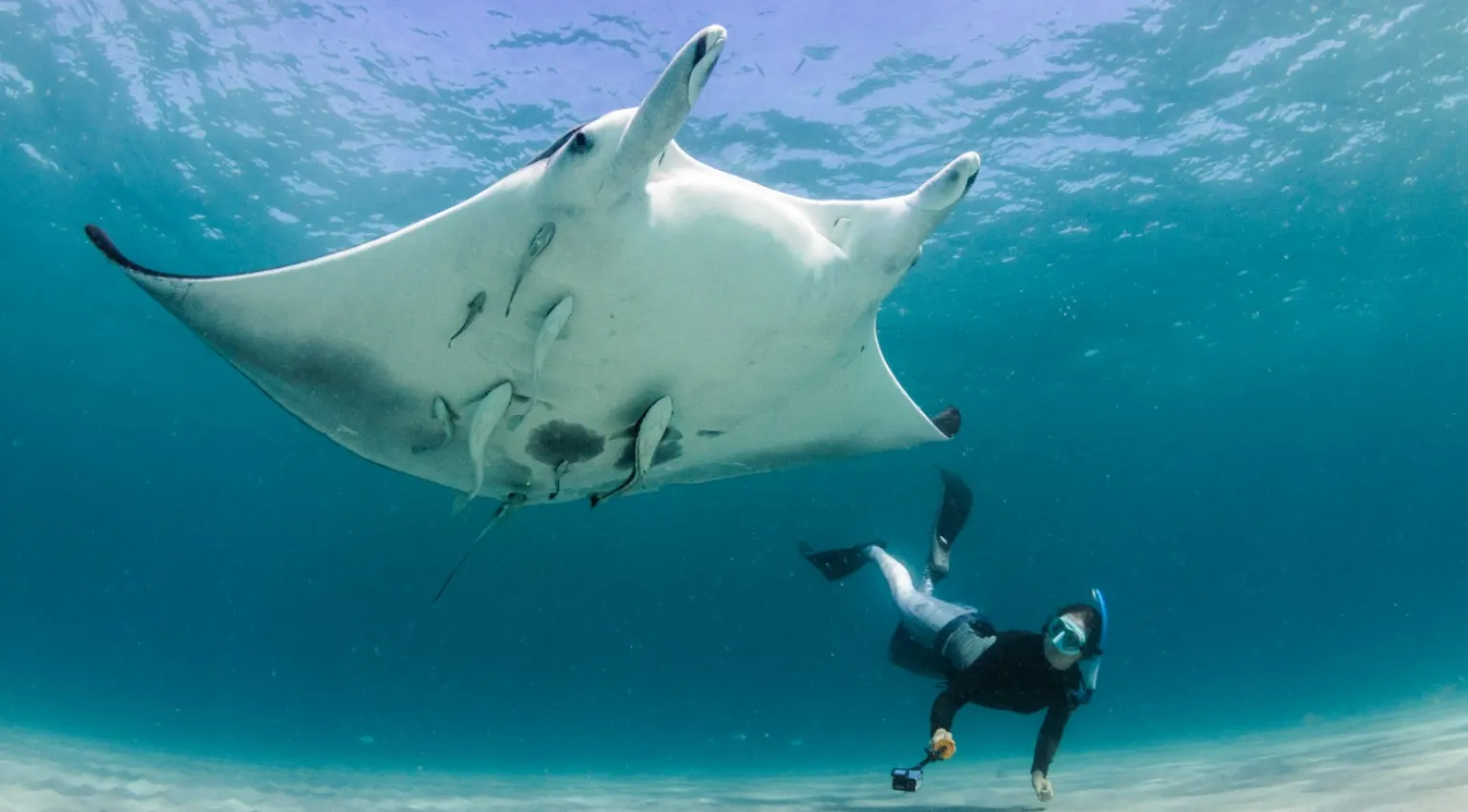
Divers should follow the "leave no trace" principle: avoid contact with coral reefs and delicate habitats, do not feed or disturb marine life, and remove trash when encountered underwater.
Participating in conservation initiatives, such as reef clean-ups and citizen science projects, can also contribute to preserving the underwater world.
%25201.webp&w=3840&q=75)

