Komodo travel guide
Parque Nacional de Komodo
Komodo National Park protects a rare mix of dry Indonesian islands and some of the most biodiverse tropical seas on Earth. This guide explains what the UNESCO-listed area includes, how its land and marine environments connect, and what visitors should know before planning a responsible trip.

Overview: a UNESCO World Heritage landscape
Komodo National Park lies in Indonesia’s Lesser Sunda chain, between the islands of Sumbawa and Flores. Established in 1980 primarily to safeguard the Komodo dragon, the reserve was inscribed on the UNESCO World Heritage List in 1991 in recognition of both its terrestrial and marine values. Today it is widely cited as a global benchmark for island conservation that pairs iconic wildlife with coral-rich seas.
The park covers roughly 1,700 square kilometers of land and sea, though exact boundaries and zoning have evolved as management has tightened around tourism pressure and fishing. What visitors experience is not a single “destination point” but a mosaic of savannah-covered hills, secluded bays, and submerged reefs that function as one interconnected ecosystem. That dual identity—dragon country above water, megadiverse reef country below—is what defines Komodo in guidebooks and scientific literature alike.
Because the area blends strict protection with regulated public access, understanding the park’s purpose helps set expectations: you are entering a working conservation landscape where rules exist to reduce disturbance to wildlife, reefs, and local communities that depend on sustainable use of the surrounding waters.
Geography and main islands
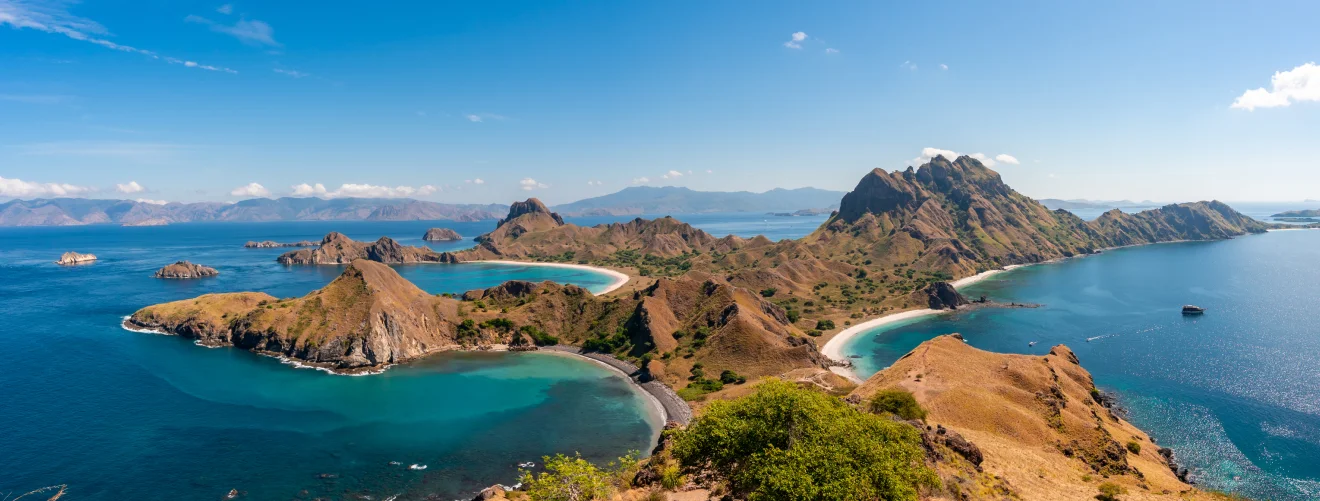
The best-known landmasses inside the park are Komodo, Rinca (Rincah), and Padar, along with numerous smaller islets and rocky outcrops. Komodo and Rinca are the main strongholds of the Komodo dragon; both offer rugged coastlines where dragons hunt along beaches and ridges. Padar is famous for its sculpted ridges and viewpoints overlooking multiple bays—often photographed at sunrise—while its slopes illustrate how dry-season grasses and scrub give the archipelago an almost savannah-like appearance.
Smaller islands and channels matter ecologically as much as the big names. Narrow passages concentrate tidal currents, which in turn deliver nutrients to reefs and attract schooling fish, sharks, and rays. From a visitor’s perspective, “Komodo” is therefore both a cultural label and a shorthand for a wider nautical geography: most exploration happens by boat, hopping between landings, viewpoints, and snorkel or dive sites that may sit kilometers apart.
Elevations are modest compared with volcanic peaks elsewhere in Indonesia, but the terrain can still be steep and exposed to sun; comfortable footwear, water, and sun protection matter on treks. Understanding this geography also explains why weather and tide—not only the calendar month—shape daily plans on the water.
Wildlife on land and at sea

The Komodo dragon (Varanus komodoensis) remains the park’s terrestrial symbol: the largest living lizard, an apex predator that hunts deer, boar, and other prey and scavenges when opportunity allows. Populations are monitored on Komodo and Rinca, and sightings are typically conducted with trained rangers who understand animal behavior and safety margins. Visitors should never approach dragons independently; distance and quiet movement are part of responsible viewing.
Beyond dragons, the islands support birds, reptiles, and mammals adapted to seasonal dryness. Coastal mangroves and scrub transition into coral systems offshore, so the “wildlife story” of Komodo is inherently split between what you scan for on trails and what you discover with a mask or camera underwater.
Marine biodiversity is extraordinary even by Indonesian standards: hundreds of coral species, very high fish diversity, sea turtles, cetaceans in deeper passages, and seasonal aggregations of manta rays in certain bays. Listing species could fill pages; what matters for travelers is that protection status and local rules exist precisely because these assemblages are fragile and heavily visited.
Marine ecosystems: reefs, mantas, sharks, and tropical fish

Komodo’s underwater scenery ranges from gentle coral gardens suited to snorkeling to current-swept pinnacles and channels favored by experienced divers. Hard corals build the structural foundation for dense schools of anthias, butterflyfish, and snappers; predators such as trevally, barracuda, and reef sharks patrol edges where blue water meets the reef.
Manta rays draw international attention at cleaning stations and feeding areas when seasonal conditions align; sightings are memorable but never guaranteed. Shark populations reflect both healthy habitat and ongoing conservation challenges, which is why some areas emphasize no-fishing zones and careful boating practices around reefs.
Current is a defining variable: it transports larvae, shapes coral morphology, and concentrates nutrients, but it also demands solid water skills for divers and clear briefing for snorkelers. Many of the park’s famous underwater landmarks are small seamounts or narrow reefs where water movement is part of the ecosystem’s engine—beautiful to observe when conditions are appropriate and potentially hazardous when they are not.
Conservation efforts and park regulations

Komodo’s management balances habitat protection, scientific monitoring, and tourism that funds enforcement but can also strain reefs and wildlife if unmanaged. Zoning separates areas with different allowed activities; some zones prioritize strict protection, while others accommodate regulated visitation. Rangers conduct patrols, and rules may change as authorities respond to carrying capacity, illegal fishing, and climate impacts on coral.
On the water, regulations typically address anchoring, waste, wildlife approach distances, and where boats may station relative to sensitive sites. On land, sticking to designated trails, following ranger instructions, and avoiding feeding or disturbing animals are non-negotiable basics. Drones, if permitted at all, usually require prior approval; assume restrictions unless you have written confirmation.
Responsible tourism here means more than personal safety—it is part of the conservation toolkit. Choosing operators who brief environmental etiquette, avoid reef contact, and schedule trips to reduce crowding helps align visitor behavior with the park’s long-term goals.
How to visit: fees, permits, and responsible travel

Most international visitors reach the region via Labuan Bajo on Flores, which has become the main gateway for boat trips into the park. Entry requires payment of conservation fees (sometimes referred to as retribution or entrance fees) that support management; amounts and categories—foreign versus domestic, single-day versus multi-day—are set by authorities and should be confirmed close to your travel date because they can be updated.
Permits are usually arranged through licensed tour or boat operators who register passengers and pay fees on your behalf; independent travelers still need valid tickets for park access and should carry identification. If your itinerary includes dragon habitat treks, those visits are conducted under ranger supervision with clear safety rules.
Responsible travel extends to plastics, sunscreen choice (reef-safe where possible), respecting local communities, and realistic scheduling that avoids rushing sensitive sites. Supporting businesses that employ local crews and invest in waste management reinforces the economic case for protection beyond headline tourism numbers.
Best time to visit Komodo National Park
Broadly speaking, April through November aligns with the drier southeast monsoon period, when seas are often calmer and visibility underwater tends to be more predictable—factors that matter for boat comfort, photography, and snorkeling. That window is the most popular for mixed land-and-sea itineraries, though peak months can also mean busier anchorages and viewpoints.
The wetter months can bring heavier rain and wind on some days, yet marine life remains active; certain manta aggregations have been associated with seasonal plankton patterns that do not neatly match “ideal beach weather.” In practice, local guides weigh daily forecasts, tide tables, and site-specific knowledge more than calendar stereotypes alone.
If your priorities split between trekking for dragons and maximizing underwater clarity, build flexibility into your schedule. A well-planned Komodo trip acknowledges that this is a dynamic marine park: the same site can feel gentle or challenging depending on tide phase and swell, which is why experienced local leadership remains central to safe, rewarding visits year-round.
Preguntas Frecuentes
Explora mas en Komodo


Únete a más de
1,000+ huéspedes al mes
De todo el mundo nos visitan para buceo, cursos PADI, snorkel y apnea.