Komodo
Shotgun & The Cauldron
Shotgun—often paired with The Cauldron—is one of Komodo National Park’s most talked-about drift dives: a fast-moving ride along reefs and walls that can deliver mantas, sharks, trevallies, and dense coral gardens when the tide is right. This guide explains what makes the site unique, who it suits, and how to dive it safely.

Overview — Komodo’s most famous drift dive
Ask experienced divers to name a Komodo drift that sticks in the memory, and Shotgun often tops the list. The site is less a single “pin on the map” than a sequence: you typically begin in rich shallows or along a coral-studded slope, then move into a more open, current-swept arena before the dive culminates in the narrow, high-energy passage that gave Shotgun its name. The sensation is pure drift diving—minimal kicking, maximum awareness—as the water carries you past bommies, walls, and blue-water edges where pelagic life gathers.
Reputation matters here: Shotgun is famous because the combination of topography and tidal flow can be dramatic. That same fame is a reminder that this is not a relaxed, check-out dive for novices. It belongs in the conversation with Komodo’s other advanced sites—planned carefully, briefed honestly, and executed with solid buoyancy and situational awareness.
The Cauldron and Shotgun channel — what makes this dive unique

The Cauldron is the name many divers use for a broader, amphitheatre-like area—often a rounded basin or bowl ringed by reef and wall—where water masses meet and life concentrates. Visibility and mood can shift quickly: one moment you are over coral gardens with anthias in the light; the next you are on the edge of stronger flow, watching trevallies and jacks work the water column. It is a natural staging ground before the dive tightens into the faster line of travel toward Shotgun proper.
The Shotgun channel is where the site earns its nickname. As the reef pinches and the current accelerates, divers may feel a pronounced push through a defined gap or funnel—sometimes described as being “shot” through the passage. The geometry of the reef turns ambient tidal energy into something unmistakable: faster drift, steeper gradients of speed from one side of the channel to the other, and a need for crisp communication and team positioning. Understanding that transition—from Cauldron to channel—is central to enjoying the dive without being surprised by it.
Marine life — mantas, sharks, GTs, coral gardens

Shotgun and The Cauldron sit in one of the world’s richest tropical seascapes. Coral gardens in the calmer sections can be extraordinarily dense: hard corals, sea whips, and bommies that shelter sweetlips, snappers, and clouds of reef fish. Macro enthusiasts may pick out nudibranchs and crustaceans when the current allows slower passes.
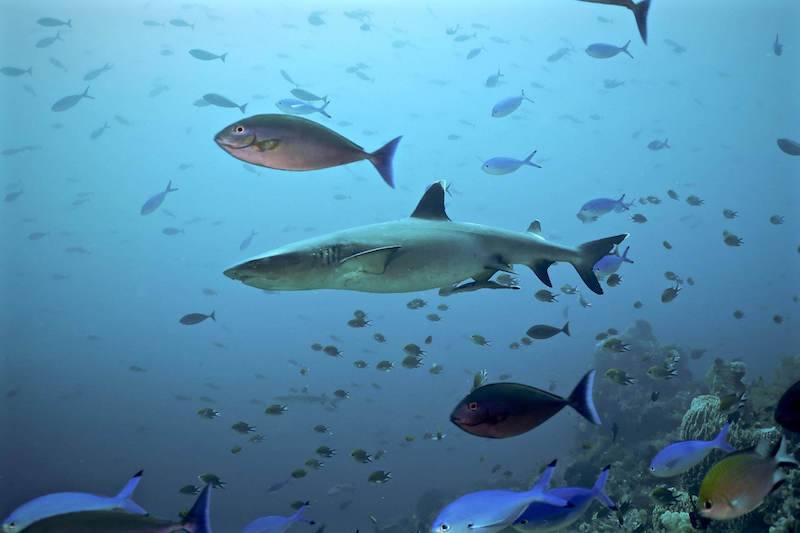
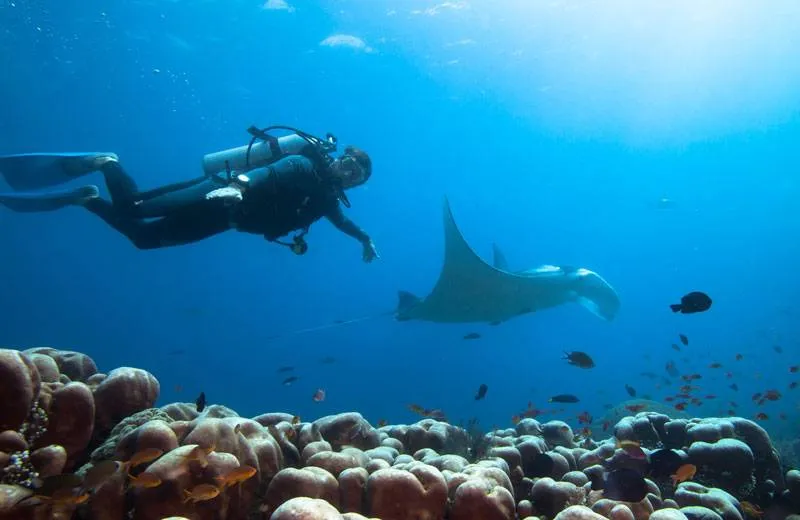
Where the water opens or where upwellings concentrate nutrients, expect pelagic action. Reef sharks—including species such as white-tip—may patrol along walls or in the blue. Giant trevallies (GTs) and other large jacks often hunt in the current, sometimes in loose packs. Season and conditions permitting, manta rays may appear on the same itinerary or in nearby Komodo sites; while never guaranteed on a single dive, the park’s manta-friendly habitats mean Shotgun is frequently discussed alongside Komodo’s classic manta addresses. The takeaway: bring a wide-angle mindset, keep an eye into the blue, and be ready for fast subjects.
Dive conditions — expert-level, strong currents, drift techniques
Shotgun is widely regarded as an expert-level Komodo dive. Currents can be powerful and changeable; vertical water movement and eddies are possible depending on tide, moon phase, and how the flow wraps around the reef. Operators and guides assess conditions on site; a “no-go” or reroute decision is part of normal, responsible park diving.
Solid drift skills are essential: streamlined trim, minimal contact with the reef, and the ability to hold position briefly without silting or damaging corals. Many teams use surface-marker protocols suited to blue-water or channel exits; some itineraries may involve reef-hook techniques where local rules and guides allow—always as a tool for low-impact pauses, not reef damage. Nitrox may be used where certified and available, but it is never a substitute for conservative planning in strong flow.
Best time to dive Shotgun
Komodo’s dry season, roughly April through November, is the most popular window for liveaboards and day boats: generally calmer seas at the surface and reliable access to northern and central park sites. Within that window, the best moment on any given day is tide-dependent—Shotgun is a site where slack is rarely the whole story; instead, teams chase favourable stages of the tidal curve so the drift is energetic but manageable.
The wet season can still offer excellent underwater conditions on many days, but rainfall and wind patterns may affect comfort and boat logistics. Because Shotgun is current-first, prioritise operators who schedule dives around tides rather than only clock time. A well-timed Shotgun beat is often worth more than an extra hour of sleep.
Getting there and what to expect
Most visitors base in Labuan Bajo on Flores, the gateway to Komodo National Park. Day boats and liveaboards reach Shotgun’s sector after a run across water that can range from glassy to sporty; sea conditions vary by season and wind. Expect a full-day commitment when Shotgun is bundled with other iconic sites—surface intervals, park regulations, and multiple dives are part of the rhythm.
On arrival, guides brief the sequence: entry point, intended path relative to the Cauldron, signals for regrouping, and abort criteria. You should expect a brisk pace in the channel, possible blue-water stretches, and a focus on awareness over sightseeing—the scenery is spectacular, but Shotgun rewards divers who stay ahead of the dive mentally. After the run, many itineraries swap stories over coffee while the boat moves to the next highlight; Shotgun tends to be the one people still describe years later.
Preguntas Frecuentes
Artículos relacionados


Únete a más de
1,000+ huéspedes al mes
De todo el mundo nos visitan para buceo, cursos PADI, snorkel y apnea.