

Bali is one of the most visited destinations in Southeast Asia, welcoming millions of international travelers every year. Yet the question keeps appearing in travel forums, group chats, and search bars: is it safe in Bali?
The short answer is yes. Bali is a safe place to visit. It is no more dangerous than popular destinations in Europe, North America, or Australia. Like any major tourist destination anywhere in the world, Bali has certain risks that visitors should be aware of, but none of them are unique to Bali, and none of them should discourage you from visiting. The same common sense you would apply walking through Barcelona, New York, or Bangkok applies here.
This guide covers every safety topic a traveller might wonder about, from health and traffic to natural disasters and local laws, so you can make informed decisions and enjoy your trip with confidence.

Bali's Safety Reputation vs. Reality
Bali has occasionally made international headlines for volcanic eruptions, isolated security incidents, or traveller mishaps that go viral on social media. These stories create an outsized impression of danger that does not reflect the daily reality of life on the island.
The truth is that Bali remains one of the most welcoming, tourist-friendly destinations in the world. The Balinese people are famously warm and hospitable. The tourism industry is mature, well-established, and represents the economic backbone of the island. The Indonesian government and local authorities invest heavily in the safety and satisfaction of foreign tourists because tourism is vital to the island's economy.
Millions of people visit Bali every year and return home with nothing but extraordinary memories. The risks that do exist are manageable, predictable, and no different from the risks you would encounter at any popular travel destination on earth.
Personal Safety in Bali
Is Violent Crime a Concern?
Violent crime against foreign tourists in Bali is extremely rare. Bali is not a destination where you need to worry about muggings, armed robbery, or violent confrontations. The vast majority of visitors never experience any form of crime during their stay.
Tourist areas like Seminyak, Canggu, Ubud, Uluwatu, and Nusa Dua are well-patrolled and generally very safe, even late at night. Bali's culture is deeply rooted in Hindu-Balinese traditions of community, respect, and spiritual practice, which contributes to a social environment that is overwhelmingly peaceful.
Sexual Assault
As with any destination in the world, it is important for all travellers to take standard personal safety precautions. Avoid walking alone in poorly lit, isolated areas late at night. Be cautious about accepting drinks from strangers. Travel in groups when possible after dark. These are universal travel tips that apply equally in London, Sydney, or Los Angeles, not specific warnings about Bali.
If you ever feel unsafe or need assistance, contact local authorities or reach out to your country's embassy or consulate in Bali. Emergency services are accessible, and tourist police units operate in major visitor areas.
Tourist Scams
Tourist scams exist in Bali, just as they exist in every popular travel destination worldwide. The most common ones are minor and easily avoided:
Money exchange scams. When you exchange money at small, unofficial currency exchange booths, you may encounter rigged calculators, sleight-of-hand tricks, or unfavourable rates presented as competitive ones. The solution is simple: use reputable exchange offices with clear signage, ATMs from major Indonesian banks, or exchange money at your hotel or bank. Avoid street-side booths that advertise rates that seem too good to be true, because they usually are.
Taxi drivers. Most taxi drivers in Bali are honest and friendly. However, some unlicensed drivers at airports or tourist hotspots may refuse to use meters or quote inflated prices. Use ride-hailing apps like Grab or Gojek for transparent pricing, or choose Bluebird taxis, which are widely considered the most reliable metered taxi company on the island.
Overcharging at markets. Bargaining is expected at Bali's markets and small shops. Starting prices are often marked up significantly for tourists. This is not a scam, it is simply how market commerce works in much of Southeast Asia. Negotiate politely, know roughly what items should cost, and enjoy the process.
Tour and activity overcharging. Some street vendors or unlicensed tour operators may charge significantly more than the going rate for activities, transfers, or day trips. Book through your hotel, a reputable online platform, or established local operators to ensure fair pricing and proper safety equipment.
None of these scams are unique to Bali. You will encounter identical situations in Rome, Marrakech, Bangkok, or Cancun. Awareness is your best defence, and a little research before your trip goes a long way.
Health and Medical Safety
Bali Belly
The most common health complaint among visitors to Bali is "Bali belly", a colloquial term for gastric distress caused by consuming contaminated food or water. Symptoms typically include stomach cramps, nausea, and diarrhoea, and most cases resolve within 24 to 48 hours.
Bali belly is not a reflection of Bali's food being inherently unsafe. It is simply what happens when your digestive system encounters unfamiliar bacteria, spices, and preparation methods. Travellers from Western countries often experience the same issue in India, Mexico, Thailand, or Morocco. If you have a sensitive stomach, the adjustment period may be a day or two.
To minimise the risk:
- Drink bottled water rather than tap water. Bottled water is cheap, widely available, and used by locals and tourists alike.
- Eat at busy restaurants with high turnover, as the food is more likely to be freshly prepared.
- Be cautious with raw salads, unpeeled fruits, and ice in very small, off-the-beaten-path warungs if you have a particularly sensitive stomach.
- Wash your hands frequently, especially before eating.
- Carry basic stomach medication as a precaution.
Most travellers eat adventurously across Bali without any issues whatsoever. Balinese cuisine is one of the highlights of visiting Indonesia, and avoiding it out of excessive caution means missing one of the island's greatest pleasures.
Food Poisoning
Serious food poisoning cases are uncommon in Bali's established restaurants and cafes. The island's tourism industry depends on its food scene, and most establishments maintain good hygiene standards. As anywhere in the world, avoid eating seafood or meat that looks like it has been sitting out unrefrigerated for extended periods, and trust your instincts about cleanliness.
Medical Assistance
Bali has several international-standard hospitals and clinics, particularly in the southern tourist areas. BIMC Hospital in Kuta and Nusa Dua, and Siloam Hospital in Denpasar, offer 24-hour emergency care with English-speaking doctors and modern facilities. For more serious medical situations, medical evacuation to Singapore or Australia is available, which is one of the many reasons why travel insurance is essential.
Pharmacies are common throughout tourist areas and stock both local and international medications. Many common drugs that require prescriptions in Western countries are available over the counter in Bali, though you should always consult a medical professional before self-medicating.
Stray Dogs and Rabies
Bali has a significant population of stray dogs, and rabies is present on the island. This is a legitimate health consideration, but one that is easily managed. Avoid petting, feeding, or approaching stray dogs, especially those that appear agitated or unwell. If you are bitten or scratched by any dog in Bali, seek medical assistance immediately. Post-exposure rabies treatment is available at major hospitals and clinics.
Some travellers choose to get a pre-travel rabies vaccination before visiting Bali. While not mandatory, it provides an extra layer of protection and simplifies treatment if an exposure occurs. The dogs in Bali are a visible part of street life, and many are genuinely friendly, but maintaining a respectful distance from strays is sensible advice.
Traffic and Road Safety
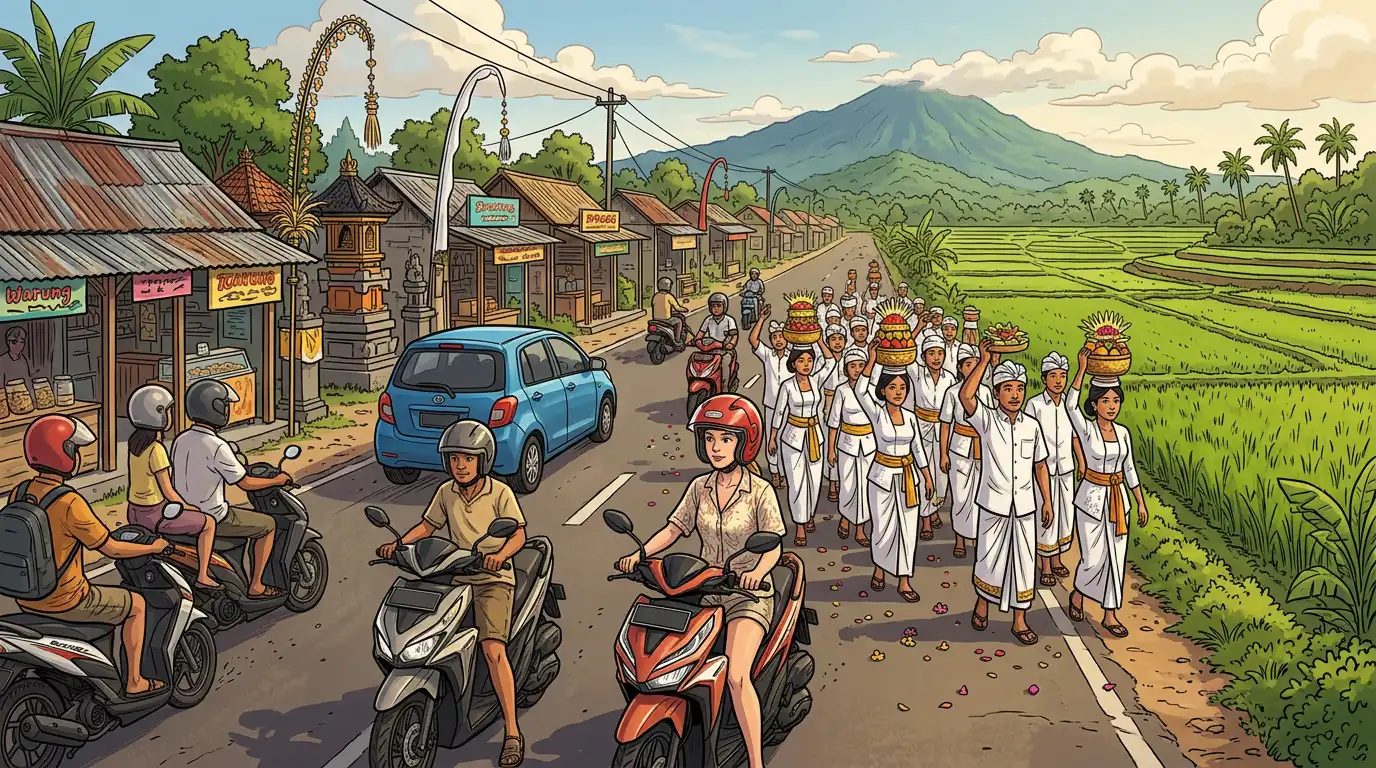
If there is one area where Bali genuinely requires extra caution, it is traffic. Bali's roads are busy, often narrow, and the traffic can feel chaotic to visitors accustomed to strict traffic rules and well-marked lanes.
Scooter Safety
Renting a scooter is one of the most popular ways to get around Bali, and for good reason, it gives you freedom to explore at your own pace. However, scooter accidents are the single most common cause of injury among foreign tourists in Bali.
Before renting a scooter, honestly assess your riding experience. Bali's traffic includes trucks, cars, other scooters, dogs, ceremonial processions, and unpredictable road surfaces, sometimes all at once. If you have never ridden a scooter before, Bali's busy roads are not the place to learn.
If you do ride:
- Always wear a helmet. This is non-negotiable, both for your safety and because it is required by Indonesian law.
- Carry your international driving permit (IDP) along with your regular licence.
- Avoid riding at night on unfamiliar roads.
- Do not drink and ride. This seems obvious, but alcohol-related scooter accidents are unfortunately common among tourists.
- Wear closed-toe shoes and long pants for protection.
- Check that your travel insurance covers scooter use, as many basic policies exclude motorcycle and scooter claims.
Driving in Bali
Traffic rules in Bali exist and are enforced, but the driving culture is different from what many Western visitors are accustomed to. Lanes are treated as suggestions, overtaking happens on both sides, and the horn is used as a communication tool rather than an expression of frustration. If you are not comfortable with this style of driving, use ride-hailing apps, hire a private driver for the day (an affordable and very common option in Bali), or arrange transfers through your hotel.
Natural Disasters
Active Volcanoes
Bali is home to Mount Agung, an active volcano that last erupted in late 2017 and into 2018. Indonesia sits on the Pacific Ring of Fire, and active volcanoes are a natural feature of the Indonesian archipelago.
Mount Agung's eruptions in 2017-2018 caused temporary flight disruptions and localised evacuations, but the tourist areas in southern Bali, over 60 kilometres from the summit, were not directly affected. The volcano is continuously monitored by Indonesian authorities using modern seismic equipment, and alert levels are publicly communicated through official channels and local media.
The presence of active volcanoes does not make Bali unsafe any more than the presence of volcanoes makes Hawaii, Iceland, or Japan unsafe. These are well-monitored geological features, and the systems in place to warn residents and visitors are robust and well-tested.
Earthquakes
Indonesia experiences earthquakes regularly due to its position on major tectonic plate boundaries. Most earthquakes are minor and go unnoticed, but significant seismic events can occur with little or no warning.
The practical advice is straightforward: familiarise yourself with basic earthquake safety (drop, cover, hold), know the evacuation routes from your hotel, and be aware that earthquakes near coastal areas can potentially generate tsunamis. If you feel a strong earthquake while near the coast, move to higher ground immediately without waiting for an official warning.
Tsunamis
Tsunamis are a risk in any coastal region within earthquake zones. Bali's southern coast faces the Indian Ocean, and while tsunami events affecting Bali are extremely rare, the risk exists. Hotels and beach areas in Bali have improved their warning systems and evacuation signage significantly in recent years. Pay attention to warning signs posted on beaches, and know which direction leads to higher ground from your accommodation.
Rainy Season Weather
The rainy season in Bali runs roughly from November to March. During this period, heavy afternoon downpours, occasional flooding in low-lying areas, and rougher seas are normal. The rainy season does not make Bali unsafe, but it does require some common sense. Avoid swimming at unpatrolled beaches during rough conditions, be cautious on wet roads, and check weather reports before booking boat transfers to islands like Nusa Penida or the Gili Islands.
Local Laws and Regulations
Illegal Drugs
This is one area where Bali's safety conversation becomes very serious. Indonesia has extremely strict drug laws, and penalties for drug offences are severe, including lengthy prison sentences and, in the most serious cases, the death penalty.
Do not buy, carry, use, or traffic illegal drugs in Bali. This applies to all substances, including marijuana, which may be legal or decriminalised in your home country but is firmly illegal in Indonesia. Undercover operations targeting drug use among tourists do occur, and local law enforcement takes drug offences extremely seriously.
This is not a grey area and not a matter of cultural interpretation. Indonesian drug laws are strict, consistently enforced, and apply equally to Indonesian citizens and foreign tourists.
Local Customs and Respect
Bali is a deeply spiritual island, and respecting local customs is both a matter of courtesy and, in some cases, law. When visiting temples, cover your shoulders and knees. Sarongs are usually available for rent or loan at temple entrances. Do not touch offerings placed on the ground, do not climb on sacred structures for photographs, and behave respectfully during ceremonies.
Balinese people are extraordinarily tolerant and welcoming of tourists, but this generosity should be met with basic respect. Learning a few Indonesian words, dressing appropriately at religious sites, and observing local etiquette will enrich your experience and earn you genuine warmth from the communities you visit.
Stay Permit and Visa Requirements
Entry and exit requirements for Indonesia have evolved in recent years. As of 2026, most international travelers can obtain a visa on arrival (VOA) valid for 30 days, which can be extended once for an additional 30 days. Longer stays require specific visa categories.
Ensure your passport validity extends at least six months beyond your intended stay, as this is a strict requirement enforced at immigration. Overstaying your visa results in fines and potential detention, so monitor your stay permit dates carefully and arrange extensions well before expiry.
Check the latest entry and exit requirements through your government's travel advice page or the Indonesian government's official immigration website before departure, as visa policies can change.
Travel Insurance
If there is one piece of advice in this entire guide that you should treat as non-negotiable, it is this: purchase comprehensive travel insurance before visiting Bali.
Travel insurance covers medical treatment (which can be expensive for foreign nationals), medical evacuation, trip cancellation, lost luggage, and other unforeseen events. Given that scooter accidents and medical evacuations are the most common serious expenses tourists face in Bali, having insurance is not optional, it is essential.
When choosing a policy, verify that it covers:
- Motorcycle and scooter use (many standard policies exclude this unless you add it)
- Medical evacuation to Singapore or Australia
- Natural disasters and trip disruption
- Adventure activities like surfing, diving, and hiking
- COVID-related medical treatment if still applicable
The cost of travel insurance is trivial compared to the potential cost of an uninsured medical emergency. Every year, crowdfunding pages appear online from travellers who skipped insurance and now face medical bills they cannot pay. Do not be one of them.

Water Safety
Ocean Conditions
Bali's beaches are beautiful, but the ocean conditions vary dramatically depending on location and season. Southern beaches like Kuta, Legian, and Seminyak have strong currents and powerful shore breaks that catch inexperienced swimmers off guard. Always swim between the red and yellow flags where lifeguards are on duty, and respect any warning signs or closures.
Beaches on the Bukit Peninsula, including Uluwatu and Padang Padang, can have strong rip currents and rocky entries. If you are not a confident swimmer, stick to calmer areas or hotel pools.
Diving Safety
Bali is a world class scuba diving destination, and the dive industry is well-established with reputable operators across the island. Always dive with a licensed, insured dive centre such as Neptune Scuba Diving. Verify that your dive guide holds valid certifications, that safety equipment is in good condition, and that the operator carries emergency oxygen and a first aid kit. Do not book dive trips based solely on the lowest price, as safety standards vary.
Staying Informed During Your Trip
Monitor Local Media
Staying informed is one of the simplest and most effective safety measures. Monitor local media and official channels for any developments that might affect your travel plans, whether volcanic activity, weather events, or public safety notices.
Useful sources include:
- Your country's embassy or consulate in Bali
- The BMKG (Indonesia's meteorology and geophysics agency) for earthquake and weather alerts
- Local English-language news outlets
- Your hotel's reception or concierge, who will be aware of any local developments
Registering with your embassy's travel notification service before departure ensures you receive alerts relevant to your location.
Emergency Numbers
Save these numbers in your phone before arriving:
- Emergency services: 112
- Tourist police: +62 361 224 111
- Ambulance: 118
- Search and rescue: 115
Comparing Bali's Safety to Other Destinations
Here is some perspective. Bali receives roughly six million international visitors per year. The overwhelming majority experience no safety issues whatsoever. The most common problems, scooter scrapes, mild stomach upsets, and sunburn, are the same minor inconveniences tourists experience in Thailand, Greece, Mexico, or Portugal.
Bali does not have higher crime rates than major European cities. It does not have more natural disaster risk than Japan, California, or the Caribbean. It does not have worse food hygiene than most developing-world tourist destinations. The risks in Bali are normal travel risks, and they are manageable with the same basic precautions you would take anywhere.
What Bali does have, in abundance, is genuine warmth, extraordinary culture, stunning landscapes, world-class food, and a community that has built its identity around welcoming visitors. The question is not whether Bali is safe. The question is how soon you can go.
Practical Safety Checklist for Bali
Before you travel:
- Purchase comprehensive travel insurance that covers scooter use and medical evacuation
- Check passport validity (minimum six months remaining)
- Review entry and exit requirements for your nationality
- Register with your embassy's travel notification service
- Consider pre-travel vaccinations (rabies, hepatitis A, typhoid)
- Download ride-hailing apps (Grab, Gojek)
During your trip:
- Drink bottled water
- Wear a helmet on scooters, always
- Use reputable money exchange offices or ATMs
- Swim between lifeguard flags
- Respect temple dress codes and local customs
- Avoid illegal drugs entirely
- Keep copies of your passport and travel insurance details on your phone
- Monitor local media for weather or volcanic activity updates
- Use licensed, insured operators for diving, tours, and adventure activities
Final Thoughts
Is it safe in Bali? Yes. Bali is a safe, welcoming, and well established travel destination that millions of people enjoy every year without incident. The risks that exist are the same everyday travel risks you would encounter in any popular destination around the world, and they are easily managed with basic awareness and preparation.
Do not let sensationalised headlines or anxious forum posts discourage you from experiencing one of the most beautiful, culturally rich, and genuinely friendly places on earth. Pack your travel insurance, bring your common sense, respect the local culture, and go. Bali is waiting, and it is absolutely worth the trip.