

The PADI Divemaster course Bali turns certified recreational divers into dive professionals who can lead certified dives, help PADI instructors, and start a diving career in one of the world's most biodiverse marine settings. This complete guide has all the information you need to get your first professional diving level certification in Indonesia's best diving spot.
This guide has information on the whole PADI Divemaster course, including the different lengths of the course, the prerequisites, the dive locations in Bali where you will train, the requirements for passing the course, and the best dive centers to employ. This website has all the knowledge you need to make smart choices about your professional training, whether you're a rescue diver eager to move up or someone who wants to go from zero to hero.
The PADI Divemaster course Bali usually lasts 4 to 8 weeks, requires PADI Rescue Diver certification (or something similar), includes more than 60 training dives at famous sites like Tulamben, Amed, and Nusa Penida, and combines in-depth dive theory with real-world tests of underwater leadership and emergency response.
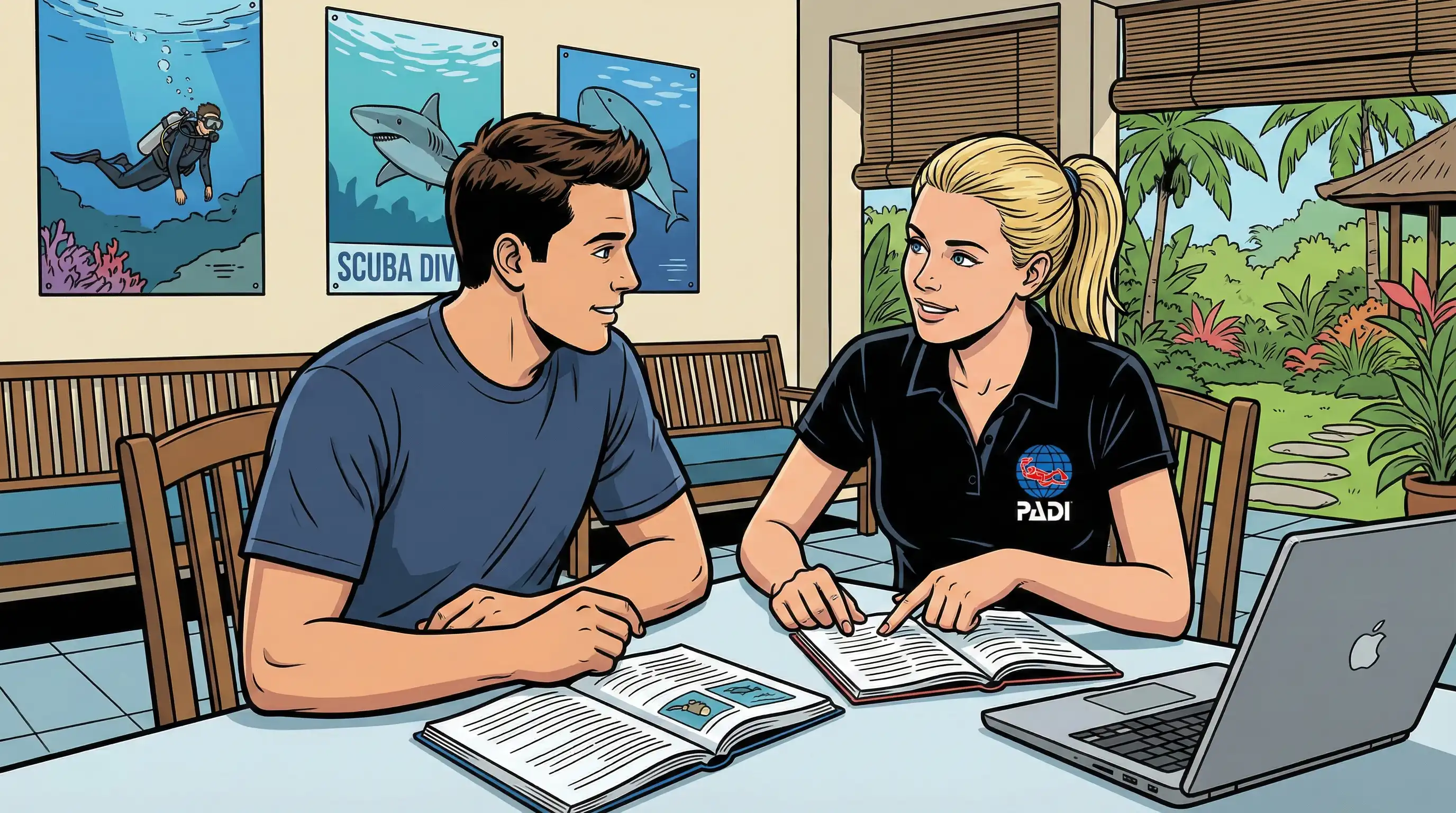
Understanding PADI Divemaster Course Bali Certification
Getting your PADI Divemaster certification in Bali is the first step toward becoming a professional diver. It means that you are moving from recreational scuba diving to being a leader in the diving industry. When you become a qualified divemaster, you become a role model for scuba divers all around the world. You combine technical knowledge with the leadership abilities needed to make sure that everyone has safe and memorable underwater experiences.
Professional Responsibilities
A PADI Divemaster has a lot of important duties at any dive center. You will lead qualified divers on underwater trips, making sure they are safe and showing them the best marine species at each dive site. You also help PADI instructors during open water diver courses, discover scuba diving programs, and advanced training sessions.
In addition to helping others, divemasters teach some PADI courses on their own, such as Discover Local Diving experiences, scuba review sessions for returning dives, and skin diver courses. You will be in charge of scuba diving activities, give competent dive briefings, and take care of the logistics of diving equipment. All of this will be done while following rigorous environmental rules that safeguard the marine environment.
Bali is a great place to prepare for these skills. The island has a wide range of dive locations, from calm bays to tough drift dives, so divemaster candidates can get a taste of all the conditions they would face as dive professionals around the world.
Career Opportunities
When you finish your divemaster training, you can work in dive centers, resorts, and liveaboards all around the world. The certification is recognized all over the world, therefore the skills you learn as a divemaster in Bali can be used in jobs all over the world, from the Caribbean to Southeast Asia.
Many people who want to become divemasters see this qualification as the first step toward their dream employment in the dive business. The next step is to get your PADI Instructor certification, which will let you teach and certify more new dives. In Bali, trained divemasters with more than 70 logged dives can get skilled worker visas, which might double their earning potential compared to entry-level jobs.
Knowing these career paths helps you understand why the training requirements are so high: you're not only gaining skills; you're also laying the groundwork for a career in diving.
PADI Divemaster Course Curriculum in Bali
The PADI divemaster course Bali improves on what you learned as a rescue diver by giving you more academic study, more time in the water, and more hands-on experience with real guests and pupils. Bali has great diving conditions all year round and a wide range of dive sites. This makes it easy to finish all of the PADI divemaster course Bali components while also getting to know different marine settings.
Knowledge Development
There are nine chapters in the PADI Divemaster manual that explain important dive theory that all dive professionals need to know. With the help of professional teachers, you will learn about the physics of diving, such as pressure, buoyancy, and gas laws; human physiology, which includes gas narcosis and decompression theory; and how to use and care for diving equipment.
A lot of time is spent on dive planning, which teaches you how to evaluate conditions, handle group logistics, and make emergency action plans for diverse dive locations. You'll learn about PADI rules for how professionals should act, how many students can be in a class with one instructor, and what kinds of activities you can monitor on your own.
Marine ecology courses that are specific to Indonesian seas can help you identify animals, explain underwater habitats to guests, and promote awareness about protecting the ocean. This expertise turns regular enjoyable dives into learning experiences that tourists will remember long after they leave Bali.
Water Skills Development
The most important part of divemaster training is physical fitness. You will show off 24 PADI dive abilities at a level that is good enough for students to learn by watching you. This means that your performance will be seamless and controlled. These include basic abilities like clearing a mask and recovering a regulator, as well as more advanced rescue skills and emergency procedures.
Swimming tests check to see if you are fit enough to do professional diving work:
- 400 meters of swimming nonstop with any stroke and no help
- 800-meter swim with a mask, snorkel, and fins
- 15 minutes of treading water, with the last two minutes with hands above water
- 100-meter exhausted diver tow with all of their scuba gear
These criteria make sure you have the physical strength to deal with emergencies, help tired divers, and keep your energy up on long dive days.
Practical Application Training
What makes a good divemaster stand out from the rest is their ability to use their skills in real life. You'll make precise maps of dive sites that show where to enter, what features are underwater, how deep the water is, and any possible dangers. Emergency action plans that are particular to certain places in Bali get you ready to respond quickly and efficiently if something goes wrong.
Practice dive briefings that cover site orientation, marine life highlights, safety rules, and equipment checks help guests learn how to communicate with others. You'll learn how to be an underwater guide, including how to manage groups, use communication signals, and position yourself in ways that keep divers safe and make their experience the best it can be.
Key practical training components:
- Dive site mapping and navigation exercises
- Emergency action plan creation for multiple sites
- Guest briefing practice with instructor feedback
- Underwater guiding with certified divers
- Assisting actual PADI courses under instructor supervision
These hands-on parts are closely related to the unique features of Bali's dive sites, so you'll be ready for the situations you'll face during training dives.

Course Requirements and Duration in Bali
You can plan your divemaster internship in Bali better if you know the particular eligibility requirements and time obligations that come with the whole program. Bali has a lot of different program arrangements that work for people with varied levels of experience and schedules.
Prerequisites and Certification Requirements
PADI sets the same criteria for divemaster candidates all over the world. You must meet these conditions before you can start your course:
- Minimum age: 18 years old
- Certification level: PADI Rescue Diver or equivalent from recognized training organizations
- Emergency training: Emergency First Response course (CPR and first aid) current within 24 months
- Medical clearance: Physician-signed statement within 12 months confirming fitness for diving
- Logged dives: Minimum 40 dives before certification
Some Bali diving schools that are also PADI Career Development schools will accept candidates who have only 20 recorded dives when they arrive. They will then work toward the 40-dive certification minimum through intensive training schedules. The length and format of the course depend a lot on how much experience you have.
Course Duration Comparison
| Program Type | Entry Requirements | Typical Duration | Total Dives |
|---|---|---|---|
| Standard Divemaster | Rescue Diver + 40 dives | 4-6 weeks | 60+ |
| Express Divemaster | Rescue Diver + 45 dives | 2-3 weeks | 60+ |
| Comprehensive Package | Rescue Diver + 20 dives | 6-8 weeks | 80-100 |
| Zero-to-Hero | Open Water Diver start | 4-5 months | 100-120 |
Express alternatives are good for experienced divers who want to get their certification quickly, while comprehensive programs offer more marine biology training, coral identification, and longer practical sessions. Over the course of several months of limitless diving and increasing instruction, zero-to-hero courses guide total beginners through the Open Water Diver, Advanced Open Water, Rescue Diver, and finally the Divemaster certification.
Bali Dive Sites During Training
Bali's different underwater landscapes are used in divemaster training to make well-rounded experts. Each facility has its own training benefits:
The USAT Liberty wreck, a World War II cargo ship, is located in Tulamben at a depth of 5 to 30 meters. The wreck is at a depth that is easy to get to, making it great for skill circuits, navigation exercises, night dives, and practice for deep diving. Bumphead parrotfish and garden eels are examples of marine species that live in the area and make for good animal encounters for practice.
Amed and Seraya have wall dives, sandy slopes, and traditional jukung boats to help you stay on the surface. These places are great for practicing macro diving, identifying species, and learning how to use natural landmarks and compass bearings to find your way.
Nusa Penida has tough conditions that push and improve expert skills. Crystal Bay and Manta Point put divemaster candidates in strong currents, teach them how to drift dive, and let them see manta rays and sometimes mola molas. Blue Corner and other places near Nusa Lembongan and Nusa Ceningan provide more training in how to control currents.
Padang Bai and Sanur are better places for restricted water sessions, beginner skill development, and student assist experiences during discover scuba diving programs since they are calmer.
This variety of sites makes sure that graduates can comfortably lead qualified divers in a wide range of situations, from calm bays to fast-moving drift dives. This is important for getting a job in the dive industry.
Assessments and Certification Process
To get a professional certification, you have to show that you can do well on a variety of tests. Bali's established dive centers have strict testing criteria to make sure that their graduates fulfill PADI's global professional standards.
Written Examinations
The PADI Divemaster final exam tests comprehensive understanding of dive theory, PADI standards, and professional responsibilities. To work as a diving professional, you need to know at least 75% of the material. Questions address things like physics, physiology, gear, planning a dive, and what to do in an emergency.
Knowledge reviews during training check how well you comprehend each chapter of the PADI Divemaster guidebook. These formative exams help students figure out what they need to study further before the final exam. Most candidates who do all of the knowledge reviews well pass the final test with no problems.
Practical Skill Assessments
Instead of one big test, the divemaster program has water skills evaluations throughout the program. Instructors watch you demonstrate 24 skills and give you comments and chances to become better until the quality of your demonstrations meets the standards.
Because divemasters are responsible for safety, rescue exercise performance is very important. Under the watchful eye of your instructor, you will show that you know how to handle emergencies by going through missing diver procedures, underwater problem management, and surface rescue tactics.
Real-world scenario management assesses your ability to deal with problems that can happen during a dive, like broken equipment, nervous guests, shifting weather, and surprise wildlife encounters. These hands-on seminars help you learn how to solve problems, which is an important skill for professional diving.
Professional Development Requirements
To get a divemaster certification, you need to show that you can lead in operational situations as well as have technical skills. You'll help PADI instructors teach classes by seeing how they do things and helping students during dive classes and open water training.
Supervised dive leading experiences start with following experienced leads around and then go on to briefing and guiding certified divers on their own while instructors watch. This progressive level of responsibility makes sure you gain confidence and skills before you get your certification.
Most programs end with applicants helping with a whole Open Water Diver course, using the skills they learned in several training sessions and open water dives. When candidates fully commit to the training procedure, the success rates at established 5-star diving shops are around 90%.
Common Challenges and Solutions
Divemaster candidates can get ready better if they know what common problems they can face. Bali's unique climate make training harder in some ways and easier in others.
Current and Visibility Conditions
Strong currents are common in Nusa Penida and some places in Bali, especially from June to August. These conditions are hard for candidates who are used to calmer waters at first.
Progressive exposure slowly improves your current management skills. Start training at sheltered places and then go on to harder ones. Calm conditions for extra skills practice sessions help you learn the basics, and going to hard places over and over again builds confidence and automatic answers.
Language Barriers with International Guests
Divers from all over the world come to Bali, thus English may not be the main language of guests.
Practice dive briefings that use straightforward, plain language and show how to do things. Make standard briefings that use hand signals, underwater slate diagrams, and equipment demonstrations that work no matter what language they are in. Learning fundamental diving terms in languages that many guests speak (such Japanese, Chinese, and European languages) shows that you are competent and helps you get along with them.
Physical Stamina Requirements
Candidates can get physically tired from intensive training regimens that include many dives every day, swimming tests, and lecture sessions.
Get fit slowly before and throughout training. Swimming every day, even if you don't dive, keeps your heart healthy. Getting enough sleep, water, and food helps you meet your physical needs. Most programs plan rest days in a way that lets you heal while keeping up with your training.
Taking care of these problems ahead of time makes for a great experience instead of a hard one, and it builds the strength that dive professionals need.
Why Choose Neptune Scuba Diving for Your Divemaster Course
Bali is the best place to learn as a divemaster since it has world-class dive sites, warm water all year round (26–30°C), and a wide range of diving that speeds up skill development. Neptune Scuba Diving is one of Bali's best dive centers and offers a full path to become a PADI pro.
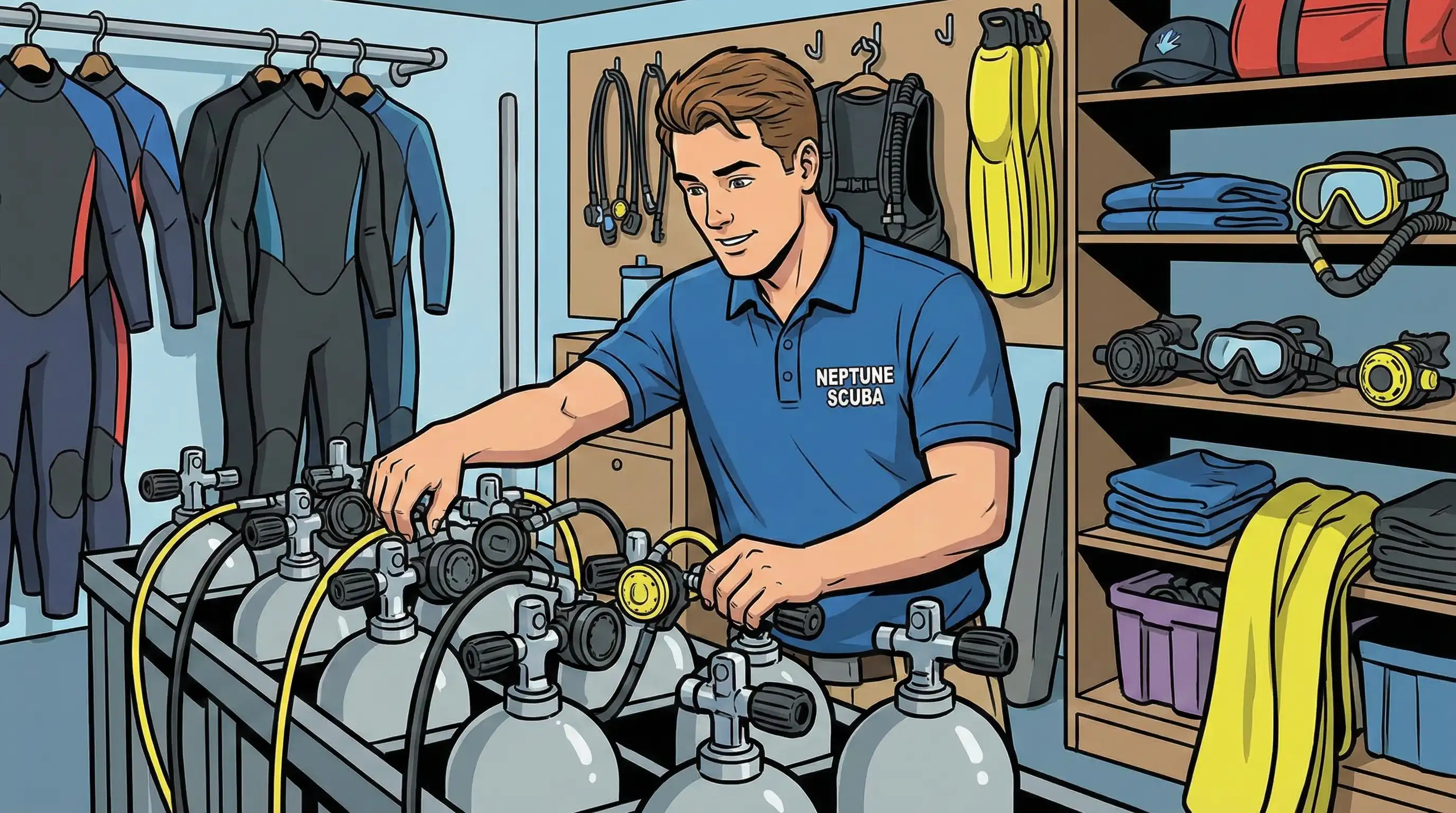
The professional instructors at Neptune Scuba Diving will guide you through your divemaster program in a way that is tailored to you. Their whole range of facilities facilitate all stages of training, from learning new things to putting them into practice. Small class sizes make sure that everyone gets personal feedback and hands-on experience that helps with real PADI courses.
During the rigorous 6-week program, you'll be able to dive at all of Bali's best sites. You'll log dives at Tulamben's wreck diving, Nusa Penida's manta rays at Crystal Bay and Manta Point, Amed's walls, and Padang Bai's training zones. This variety gets you ready for jobs in the dive industry all over the world.
Get in touch with Neptune Scuba Diving to find out if the course you want is available and to talk about program options that fit your goals and level of experience. If you need help with where to stay or what courses to take before you go diving, their staff can help you get started on your journey now. You may make friends for life and get your dream job as a professional diver.
Neptune Scuba Diving offers continuous pathways to PADI Instructor development courses for people who want to go beyond divemaster certification. This will prepare you for endless fun diving, teaching possibilities, and leadership roles in the global dive community.
What you should research after this
Pre-course preparation:
- Obtain the PADI Divemaster Crewpack (available digitally for pre-study)
- Review the PADI Divemaster manual chapters on physics and physiology
- Begin cardiovascular conditioning with swimming sessions
Indonesian diving conditions:
- Seasonal current patterns: strongest June-August around Nusa Penida
- Water temperatures: 26-30°C year-round; 3mm wetsuit typically sufficient
- Marine life identification guides focusing on Indo-Pacific species
Accommodation near training:
- Budget guesthouses and homestays within walking distance of dive centers
- Mid-range villas suitable for extended training stays
- Inquire with Neptune Scuba Diving about partner accommodation discounts
These tools will help you get ready so that you may focus completely on becoming a qualified divemaster and starting your professional diving career in Bali's beautiful waters.