Komodo dive site guide
Batu Bolong
Batu Bolong is Komodo’s most photographed pinnacle: a sheer rock between Tatawa Kecil and Komodo Island where dense coral, big fish, and fast water meet. This guide explains what makes the site special, who it suits, and how divers typically reach it from Labuan Bajo in 2026.

What makes Batu Bolong special
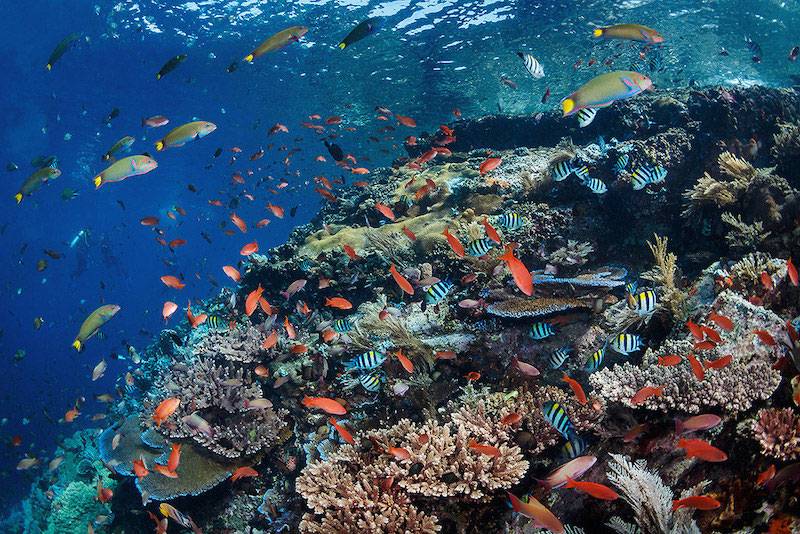
The name Batu Bolong means “hollow rock” in Indonesian—a fitting label for a small sea mount that rises from deep water and is wrapped in some of the healthiest hard coral gardens in Komodo National Park. The site sits in a strategic channel, so nutrients and current sweep across the reef, supporting dense fish biomass and dramatic wide-angle photography opportunities.
Unlike a gentle sandy slope, Batu Bolong is a compact arena: you typically circle or zigzag along the walls and ridges, staying close to structure while monitoring blue water for passing trevally, sharks, and other hunters. Its fame is justified by the combination of coral coverage, visibility on good days, and the sheer concentration of life in a small footprint—reason enough for many divers to rank it among the top sites in Indonesia.
Photographers often call out the contrast between the deep blue beyond the pinnacle and the orange and gold of healthy coral. That visual drama, paired with schooling fish that pulse in and out of the light, is what travel blogs and magazines reference when they list Batu Bolong as a must-dive location in Komodo—less as a single “bucket list animal” dive, more as a complete reef spectacle.
Marine life and underwater highlights

Expect a busy reef ecosystem rather than a single “target” species. Schools of fusiliers and anthias cloud the upper slopes, while larger visitors often include giant trevally, Napoleon wrasse, bumphead parrotfish, various snappers, and barracuda. Dogtooth tuna and other pelagic species may cruise the edges when currents run.
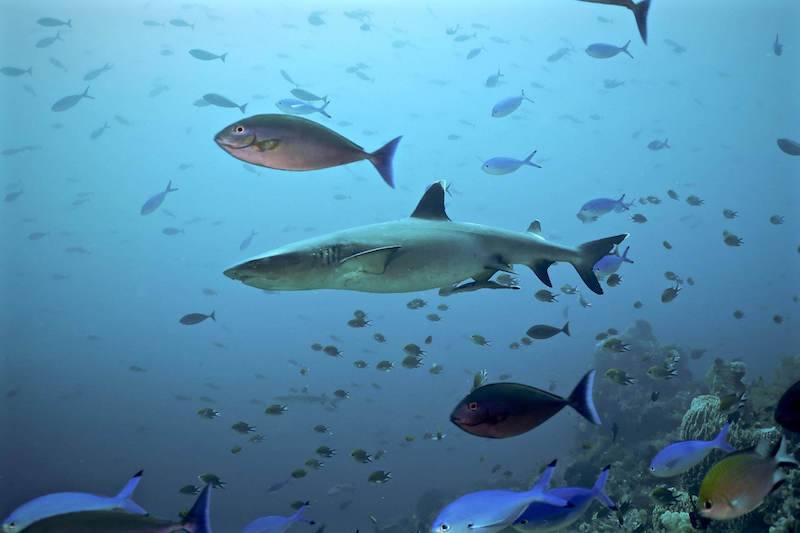
Sharks are a real possibility—white-tip and black-tip reef sharks are regularly reported, and the vertical cuts on the northeast side and northern end are known places to watch animals using the water movement rather than fighting it. Macro lovers still find nudibranchs and small critters, but Batu Bolong is primarily a big-reef, big-school experience: bring a wide-angle lens and plan for color, scale, and motion.
Seasoned Komodo divers sometimes compare a good Batu Bolong dive to standing in a busy intersection of ocean highways: traffic never really stops, but the choreography changes with the tide. One moment you are finning slowly along a coral terrace; the next, a distant wall of silver jacks materializes in the blue. That unpredictability is part of the attraction—and why briefings emphasize awareness and teamwork.
Dive conditions and difficulty

Batu Bolong is often described as an advanced dive, not because of extreme depth—most of the action sits in recreational limits—but because of current. The site is exposed; tidal flow can produce strong alongshore movement, downward components in certain channels, and occasionally swirling or uneven water behind the pinnacle.
Good buoyancy, situational awareness, and comfort near walls are essential. Many operations schedule dives around slack or favorable tide windows and may change the plan if conditions deteriorate. If you are still building confidence in current, discuss alternatives with your guide; Komodo offers milder reefs nearby for training dives while you work up to pinnacle sites.
Surface conditions can also be choppy when wind opposes tide, so seasickness-prone divers should prepare before boarding. The dive itself is not a deep technical profile for most visitors, but it rewards divers who can hover efficiently, adjust trim quickly, and communicate clearly when the group needs to change depth or direction on short notice.
Best time to dive at Batu Bolong

Komodo’s dry season roughly runs from April through November, when seas are often calmer and visibility tends to be more predictable—many divers plan peak trips in that window. The wet season can still deliver excellent dives, but surface conditions and runoff may vary more by day.
Within any month, the “best” moment at Batu Bolong is usually tied to tide and current planning rather than only the calendar. Local dive leaders combine published tide tables with recent observations—because a world-class site in the wrong phase of water movement can go from exhilarating to undivable in a short time.
If you are booking a trip specifically for Batu Bolong, build a few days of flexibility into your Komodo stay. That way, if one morning looks rough, you still have another window to catch the site when the water is cooperative. Flexibility is a hallmark of serious Indonesia diving, and it applies especially to exposed pinnacles.
How to get there from Labuan Bajo
Nearly all recreational diving to Batu Bolong starts in Labuan Bajo on Flores, the gateway town with an airport (Komodo Airport) and harbor. From town, divers transfer to a speed boat or day boat used by their operator; run times depend on the exact route and sea state, but expect a boat journey—not a shore dive—to reach the park’s central sites.
Liveaboard itineraries also visit Batu Bolong as part of multi-day Komodo circuits. Whether you are on a day trip or a longer cruise, the common thread is organized boat access inside Komodo National Park, with entry procedures handled according to current park rules.
Flights to Labuan Bajo connect through major Indonesian hubs; from the airport, most visitors reach harbors and hotels by taxi or arranged transfer. Allow time for jet lag and equipment checks before your first park day—rushing straight from a long flight into a current-heavy pinnacle is rarely ideal.
What to expect on a dive day
A typical day from Labuan Bajo includes early check-in, equipment setup, and a safety briefing that covers currents, descent plans, and group procedures. Batu Bolong is often one of several dives; your guide will brief the specific route—often a guided tour along one side of the pinnacle before crossing or ascending in a protected zone.
In the water, expect clear roles: stay with your guide, remain shallow enough to avoid unnecessary deco, and be ready to hold position behind coral heads or use appropriate techniques if the team agrees. Surface intervals usually happen on the boat, with time to hydrate, log the dive, and prepare for the next site—Komodo days are full, so pacing and rest matter as much as the underwater scenery.
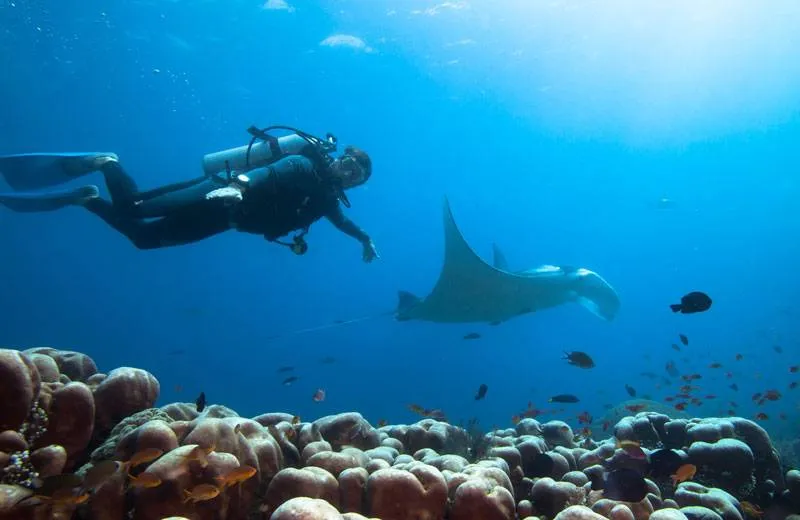
After the dive, many operators share photos, debrief currents, and outline the next destination—perhaps another pinnacle or a manta cleaning station. The rhythm of brief–dive–surface–repeat is how most visitors experience Komodo’s best geography, with Batu Bolong often highlighted as the dive that best captures the park’s wild, current-fed energy.
Haeufig gestellte Fragen
Weitere Tauchplaetze in Komodo

Schließen Sie sich mehr als
1,000+ monatliche Gäste
Aus aller Welt zu uns für Tauchen, PADI-Kurse, Schnorcheln und Freediving.