Komodo
Guide du site de plongée de Castle Rock Komodo
Castle Rock is one of Komodo’s signature offshore seamounts: a submerged pinnacle where nutrient-rich water draws dense fish schools, apex predators, and unforgettable drift-style diving. This guide explains what makes the site special, who it suits, and how to plan a safe, rewarding visit—without sales talk, just facts divers actually need.
What makes Castle Rock special

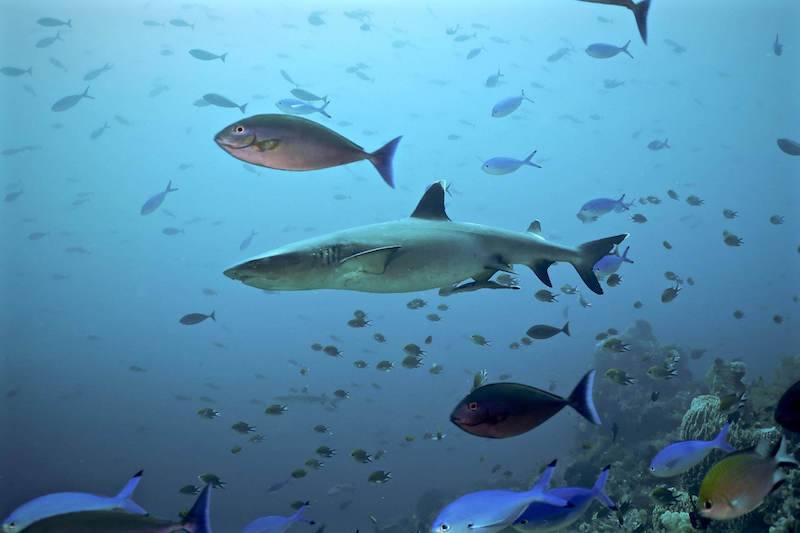
Castle Rock sits in open water north of Komodo’s main island chain. Unlike a sheltered bay, it is an exposed underwater mount that interrupts ocean currents. Upwellings concentrate plankton, which in turn supports huge volumes of reef fish—making the site a natural gathering point for jacks, tuna, and hunters higher up the food chain. Divers often describe the experience as “blue water theatre”: you hang in the current, watch baitballs shift, and scan the periphery for sharks and other pelagic visitors.
The topography is typically a steep-sided pinnacle or cluster of bommies rather than a long wall dive. That compact geometry means marine life can feel concentrated: you are not finning for hundreds of metres to find action—it tends to come to you, especially when conditions align. Visibility is often excellent, which helps for spotting schooling barracuda and trevally from a distance. Because the site is well known among experienced Komodo divers, it is frequently grouped with nearby highlights on the same boat day, yet Castle Rock remains a standout for sheer biomass and predator sightings when the current runs.
Marine life: sharks, barracuda, schools, and dolphins

The headline attraction is large-animal action in moving water. Grey reef sharks and other reef-associated sharks are commonly reported patrolling the edges of the pinnacle, especially when smaller fish cluster in the current. Chevron barracuda can form imposing tornado-like schools, while big-eye trevally, giant trevally, and various jacks hunt aggressively on the periphery. These are not guaranteed on every single dive—wildlife varies with tide, moon phase, and season—but Castle Rock’s reputation exists because these encounters happen often enough to be a realistic expectation for visiting divers.
Mid-water is rarely empty: fusiliers and other schooling fish can obscure the reef in silver clouds, and that activity alone makes the dive memorable. Dolphins are an occasional bonus in Komodo; they may appear at the surface during transit or even slip into view underwater on a fortunate day. Macro enthusiasts will still find nooks with smaller reef residents, but Castle Rock is primarily valued as a wide-angle, big-fish, high-energy site rather than a muck or critter specialty dive.
Dive conditions: currents, reef hooks, and experience level

Currents here can be powerful and changeable. Slack is not always forgiving, and even experienced divers can find themselves working harder than on a gentle coral-garden profile. For that reason, Castle Rock is widely treated as an advanced site: you should be comfortable with drift diving, situational awareness in blue water, and gas planning when the group may cover distance or face surface chop during pickup.
Reef hooks are a practical tool on many Komodo current dives. When used responsibly—on dead substrate, with minimal contact time, and under briefings—they allow divers to remain stationary to observe sharks and schools without finning into the flow or damaging corals. Your guide’s plan may include negative entries, timed drops to coincide with favourable tide windows, or conservative profiles to account for surface conditions. If you are still building confidence with currents, consider gaining experience on milder Komodo sites before attempting Castle Rock.
Best time to dive Castle Rock

Komodo diving is broadly year-round, but conditions swing with the monsoon cycle. The dry season around April–November often brings more predictable seas for boat travel in the Komodo region, though local wind and swell still vary week to week. Wet-season months can produce rougher surface conditions on some days, which may affect comfort more than underwater visibility.
Within any season, tides matter more than the calendar for Castle Rock. Stronger exchange currents can improve pelagic sightings but also raise the skill bar. Many operators schedule north Komodo sites—including Castle Rock—on days when tide models suggest manageable yet lively flow. If you have flexibility, planning several dive days in the park increases the odds of hitting Castle Rock under conditions that are exciting rather than overwhelming.
Getting there from Labuan Bajo

Most visitors base themselves in Labuan Bajo on Flores, the gateway town for Komodo National Park. From there, dive operators run day trips on speedboats or larger craft to northern and central park sites. Castle Rock is an offshore site, so transit time depends on vessel speed, sea state, and the day’s routing—often combined with other famous sites in the same region.
Liveaboard itineraries also visit Castle Rock as part of multi-day Komodo routes, which can reduce daily travel time at the cost of a longer overall trip. Whether you go by day boat or liveaboard, national park regulations and fees apply; operators handle permits as part of park compliance. Arrive rested, hydrate well, and allow buffer time in your travel plans—Flores flights and boat departures can shift with weather.
What to expect on a typical dive day

Expect an early start: equipment checks, safety briefings focused on currents and separation protocols, and a boat ride that may last an hour or more depending on routing. At the site, guides usually reassess conditions before the entry. The dive itself often emphasises controlled descent, positioning relative to the pinnacle, and disciplined depth and NDL management while drifting or hooked. Surface intervals may be spent relocating to a second site or returning toward harbour as light and sea state dictate.
Bring adequate exposure protection for repeated dives and possible wind chill, plus a surface marker if your training and local practice expect it. Photography is rewarding but challenging in surge and current—wide-angle setups excel here. Above all, listen to the briefing: Castle Rock rewards divers who match their expectations to real ocean conditions rather than social-media highlights alone.
Questions Frequemment Posees
Plus de sites de plongee a Komodo



Rejoignez plus de
1,000+ visiteurs mensuels
Du monde entier pour la plongée sous-marine, les cours PADI, le snorkeling et l'apnée.