Komodo
Karang Makassar (Manta Point)
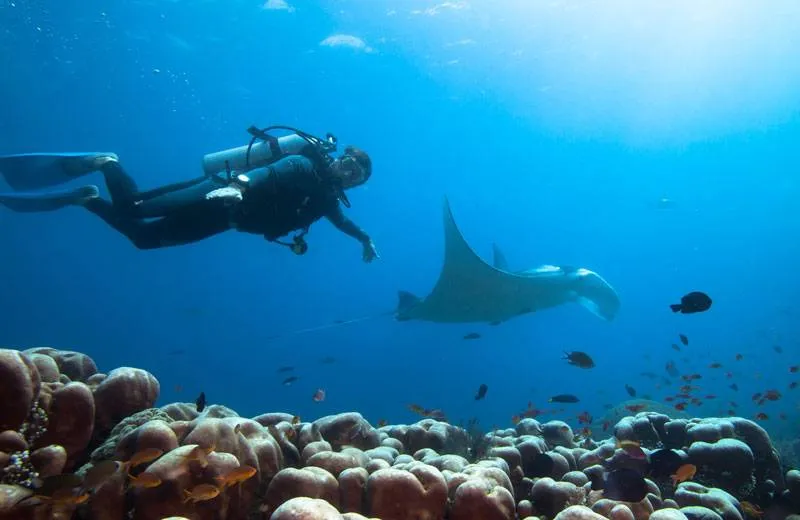
Karang Makassar—widely known as Manta Point—is the main manta ray dive site in Komodo National Park. This long, shallow drift over rubble and sand is where reef and oceanic manta rays gather at cleaning stations, making it one of the most celebrated underwater experiences in Indonesia.
Why Karang Makassar stands out in Komodo
Unlike pinnacle or wall dives built around a single bommie, Karang Makassar is an extended underwater plateau—often described as a rubble and sand channel between Komodo and Rinca. That open, gently sloping terrain is exactly what draws reef manta rays (Mobula alfredi) and, at times, oceanic mantas (Mobula birostris) into predictable patterns of movement.
Divers rarely come here for coral architecture alone. The site's reputation rests on dependable manta activity: animals circling over cleaning stations, barrel-rolling in the water column, and returning day after day along the same corridors. For many visitors, this is the defining image of diving Komodo—not only dragons on land, but gliding giants underwater.
Manta ray encounters: cleaning stations and seasons

Mantas visit Karang Makassar to be cleaned by small reef fish that pick parasites from their skin, gills, and mouths. These cleaning stations form around coral heads, sponge patches, or rocky outcrops on the otherwise sparse bottom. Patient divers who hold position—or drift slowly with the current—are often rewarded with close passes and repeated loops as mantas maintain station.
Behavior varies with plankton availability, tide, and time of day. On strong upwelling days, visibility can shorten while food in the water column increases—sometimes bringing in more rays, sometimes making encounters more fleeting. Calm, sunny intervals with mild current often produce the clearest views of individual animals and their markings.
While sightings are frequent by world standards, mantas are wild animals. No responsible guide can guarantee them on a single dive; the site's value is statistical: over repeated visits and the right season, your chances here are among the best in the archipelago.
Other marine life around the channel
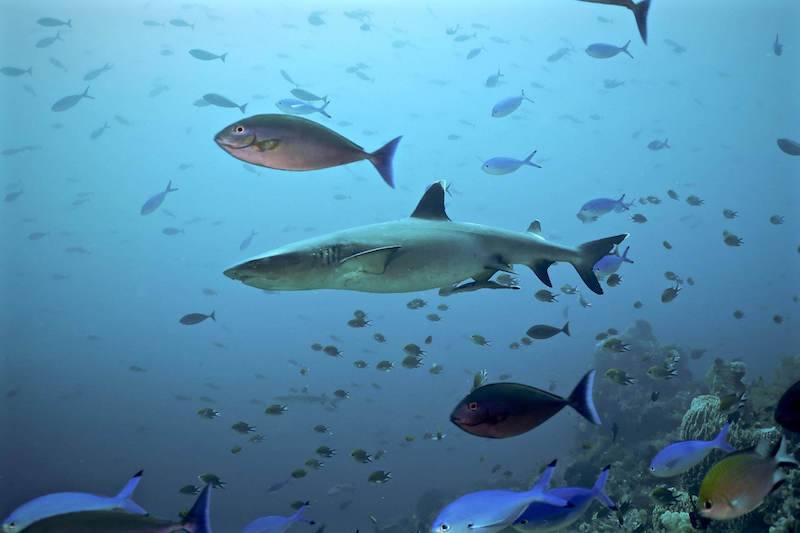
When mantas are absent or off in the blue, Karang Makassar still supports a spread of Indo-Pacific reef life. Eagle rays sometimes cruise the same sand lanes, and white-tip or black-tip reef sharks may appear at the edges of visibility. Schools of fusiliers, trevally, and bannerfish animate the water column, while macro lovers can search the rubble for nudibranchs, shrimp gobies, and small crustaceans.
The bottom itself is mostly rubble and sand, broken by scattered coral clusters. That means wide-angle photographers prioritize sunbursts and megafauna over dense coral gardens; for reef scenery, nearby sites such as Batu Bolong or Siaba Besar complement this dive well.
Dive conditions: depth, current, and experience level
Typical profiles at Karang Makassar are shallow to moderate, with much of the action between roughly 8 and 18 metres. The site is generally treated as a drift dive: divers enter up-current, ride the flow along the cleaning stations, and exit with a safety stop in open water or near the boat.
Current strength varies with tide and moon phase. On mild days the site feels relaxed and is often suitable for newly certified divers under professional supervision; when the flow picks up, good buoyancy, awareness, and surface-signaling discipline matter more. Always follow local briefings: conditions change faster than guidebooks update.
Best time of year for manta rays in Komodo
Komodo sees manta activity across much of the year, with regional peaks linked to plankton blooms, water temperature, and monsoon patterns. Many operators report strong encounters from roughly April through November, while wet-season months can still deliver excellent days—often with fewer boats but more variable visibility.
Rather than a single "magic month," plan around multiple dive days if mantas are your priority. That spreads weather and luck across several tidal cycles and increases the odds of a memorable cleaning-station session.
Getting there and what to expect on site
Most visitors reach Komodo through Labuan Bajo on Flores. Day boats and liveaboard itineraries both include Karang Makassar because it pairs efficiently with other northern or central park sites. Surface rides can be long on rough days; seasickness-prone divers should prepare accordingly.
Expect a thorough briefing on entry points, current direction, and boat pickup. Groups may split between snorkelers and divers where regulations allow. National park rules—including no touching wildlife, careful fin placement on rubble, and distance from manta cleaning behaviour—help protect the very encounters visitors travel to see.
Domande Frequenti
Esplora di piu' a Komodo


Unisciti a oltre
1,000+ ospiti al mese
Da tutto il mondo ci scelgono per immersioni subacquee, corsi PADI, snorkeling e apnea.