

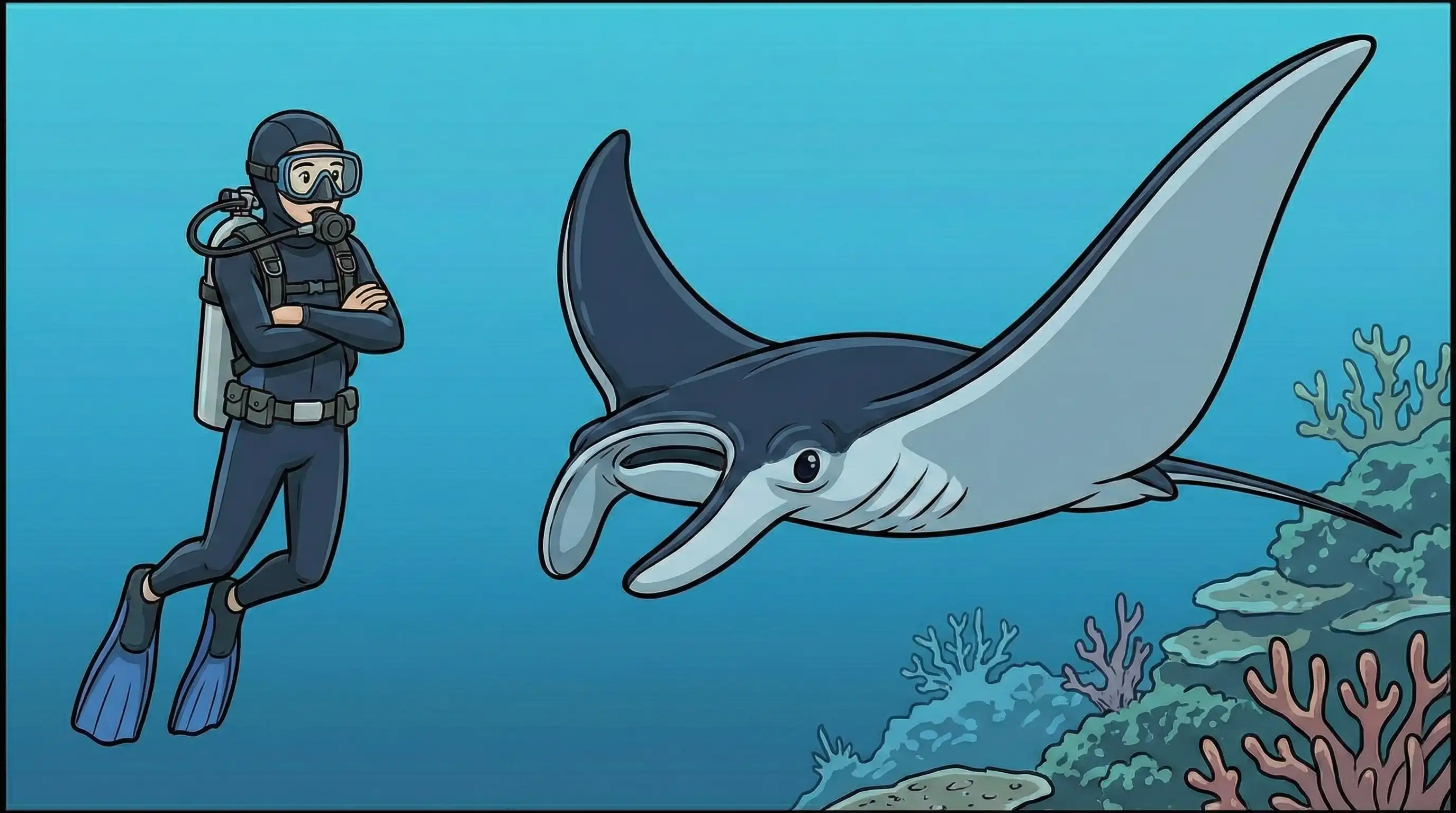
Are Manta Rays dangerous? No, manta rays don't hurt people. These beautiful creatures are not dangerous to swimmers, snorkelers, or divers in any manner. They can't sting, bite, or hurt you. Manta rays are fully safe filter feeders that can grow up to 23 feet wide. They are kind and curious, which frequently makes them want to swim close to people.
This complete article has all the information you need on manta ray safety, behavior patterns, diving and snorkeling rules, and the best places to see these gentle giants in a safe way. This guide will help you get ready for a fantastic experience, whether you're a first-time snorkeler thinking of swimming with mantas at night or an experienced diver planning visits to Bali or Komodo.
The short answer: are manta rays dangerous? no, manta rays are harmless. No way. They don't have stingers, barbs, venom, or any other way to hurt people. Their evolutionary architecture puts peaceful filter feeding ahead of fighting, making them one of the safest huge marine animals to meet in the water.
Understanding Are Manta Rays Dangerous
There are two primary types of filter feeders in the Mobulidae family: manta rays and their relatives. They live in tropical and subtropical waters all over the world. Mantas don't chase fish or other sea creatures like predators do. Instead, they spend their whole lives moving gracefully with their mouths open, filtering plankton and small fish from the water column.
Evolutionary design made them gentle. Mantas evolved to avoid huge sharks and orcas by being fast and agile instead than fighting them. This adaption to "flight over fight" implies that they swim away from any threat they see, even when they are startled by humans.
Manta Ray vs Stingray: Critical Differences
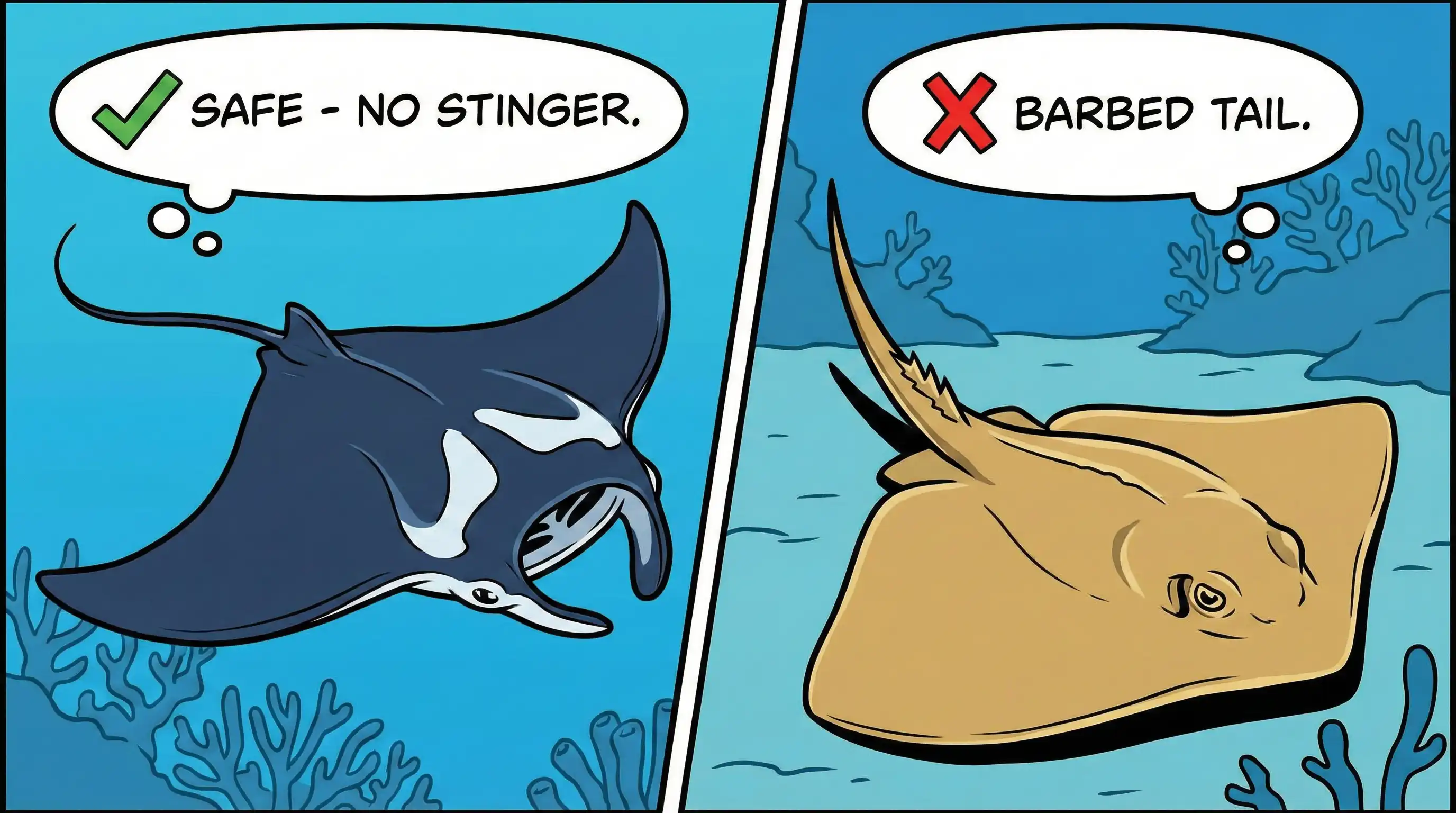
People are scared for no reason since they can't tell the difference between manta rays and stingrays. That's where the question came from, are manta rays dangerous? Both are rays, yet they live in quite different places and have very distinct bodies.
Stingrays are benthic hunters that live on the sandy bottoms of oceans and eat crustaceans. Their tails have serrated, poisonous spines that they employ to defend themselves when they are stepped on or trapped. Steve Irwin died in 2006 from a stingray barb, not a manta ray.
Manta rays don't have stingers, barbs, or venom. Their long, sleek tails are only used to steer them across open water. They live in the ocean and rarely rest on sand. They don't care about protecting their territory from people. Mantas can't sting you like stingrays can since they don't have the right body parts.
Physical Characteristics and Behavior
The two main species differ primarily in size. The wingspan of a reef manta ray (Manta alfredi) is about 18 feet, whereas the wingspan of a huge oceanic manta ray (Manta birostris) reaches an astonishing 23 feet. Both types of fish use their unique cephalic fins, which look like horns and are located near their huge mouths, to funnel plankton while they eat.
Mantas are filter feeders, thus they don't eat anything bigger than microscopic zooplankton. When they swim through waters full of nutrients, they open their mouths and filter food through unique gill plates. Their lower jaw and filtering system don't have any teeth that can bite.
Mantas are interesting creatures, which is what makes encounters with them so special. Researchers have seen mantas go up to divers, circle them many times, and even go back to cleaning stations where people are waiting. This intelligence, which is shown by complicated social activities, barrel rolls, and feeding together, makes them quite tolerant of people who are polite.
Natural Defense Mechanisms
When manta rays feel scared, they always do the same thing: they leave. They can easily swim away from danger since they are so big, have strong fins, and can move freely in the open ocean. A research from 2022 looked at more than 4,900 reef mantas and found that 29% of them had injuries, but not from fighting; they were hurt by boats and becoming caught in fishing gear.
This information backs up what decades of diving experience has shown. Over 30 years of frequent Kona coast dives report zero instances of mantas threatening humans. Their size and weight make them less aggressive; these animals evolved to filter feed gracefully, not to fight.
Understanding their peaceful nature prepares you for what actually matters during encounters: following proper guidelines to protect manta rays and ensure mutually safe interactions.
Manta Ray Behavior During Human Encounters
When people see manta rays, they always show that they are tolerant and even seem interested in them. Many marine animals stay away from divers, but mantas often come up to, circle, and check out people in their habitat. This should be enough to answer the question, "Are manta rays dangerous to people?" Do manta rays sting? The answer to both is no.
Why Manta Rays Approach Humans
Their curiosity is driven by their intelligence. These animals show that they can solve problems, have social hierarchies, and recognize individuals, all of which are signs of higher cognition. When they see divers or snorkelers, they often check them out instead of running away.
Night diving for mantas takes advantage of how they act in the wild. Plankton is drawn to lights, and mantas follow the food. This leads to dramatic confrontations as huge rays swoop down to within a few feet of people, mouths open, and do barrel rolls to get the most food. They are still only interested in plankton, not the people carrying lights.
Mantas go to washing stations on reef environments, where little fish clean their skin by eating parasites. Rays that are used to their natural habitat don't mind and often study people who are fairly nearby.
Signs of Stressed vs Comfortable Manta Rays
Understanding manta body language makes sure that interactions go well. When they swim, comfortable mantas glide slowly and easily using their fins. They may circle about people many times, getting closer each time, which shows that they are becoming more comfortable.
When mantas are stressed, they act in certain ways, including as quickly flicking their fins, making tight turns, and moving directly away from people who are watching. If a manta suddenly changes course to avoid you, respect that indication by keeping your distance and staying calm.
Mantas should be in charge of healthy interactions. Stay where you are when they get close. Don't chase them when they stay far away. Pay close attention to what your guides say about where to stand and how to act.
What Manta Rays Cannot Do to Harm You
Mantas don't have any way to hurt people physically. There is no stinger on any part of their bodies. Their mouths that filter food don't have any teeth. Their smooth skin is safe to touch because it is covered with mucus, but contacting them is harmful, which is why it is not allowed.
The sole unexpected activity that has been recorded was a manta making sounds and softly nudging a diver while it was feeding. This was probably a startle response or a way for the manta to talk to neighboring rays, not aggressiveness. The diver was fine, and the manta started eating again right away.
Because they are not dangerous to people and fly away when they are stressed, it is important to know how to dive safely to protect rays instead of yourself.
Guidelines for Safe Diving and Snorkeling with Manta Rays
Following the right rules makes sure that both people and mantas are safe when they meet. These rules keep the animals from becoming hurt or stressed out, which gives you the best chance of making long, meaningful observations.
Essential Safety Protocols
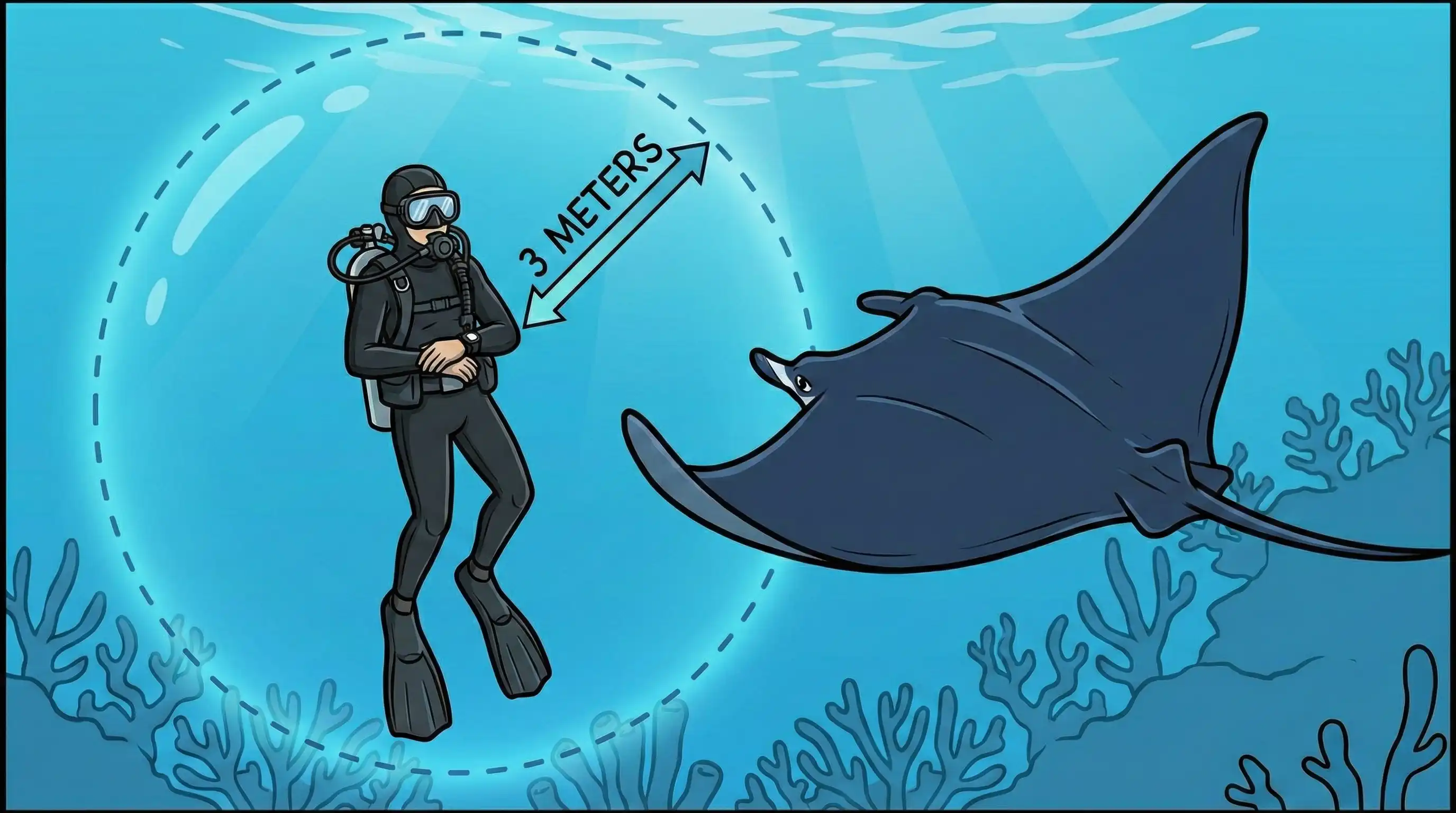
- Maintain respectful distance of 6-10 feet minimum until mantas approach voluntarily—never swim toward feeding or cleaning rays
- Never touch manta rays as this damages their protective mucus layer, potentially causing bacterial infections and skin irritation
- Move slowly and deliberately avoiding sudden movements that might startle rays or scatter groups
- Stay horizontal in the water to present a non-threatening profile similar to other marine life
- Avoid blocking escape routes ensuring mantas always have clear paths away from observation areas
- Use reef-safe sunscreen to prevent chemical pollution affecting manta habitat and food sources
Equipment and Preparation Guidelines
Wearing the right clothing makes it safer to be around mantas. Standard scuba diving gear, with a focus on buoyancy management, keeps you from accidentally touching rays. Snorkelers should wear good masks and fins. A flotation device assists people who can't swim stay calm on the surface.
Before diving, safety briefings go over the conditions at the site, what to expect from the manta, and what to do in case of an emergency. Good operators tell you what to expect, how to get ready, and how to talk to guides underwater.
Swimming ability requirements vary by activity. Night snorkeling usually requires you to float comfortably for 30 to 45 minutes. You need to be certified and have experience with current diving to get further. A fair evaluation of your skills will help you choose the right adventure.
Behavioral Guidelines During Encounters
| Appropriate Behavior | Inappropriate Behavior |
|---|---|
| Remain calm and still when mantas approach | Chase or pursue swimming mantas |
| Observe passively from horizontal position | Swim directly above feeding rays |
| Follow guide instructions precisely | Ignore positioning guidance |
| Allow mantas to control interaction distance | Reach out to touch passing rays |
| Exit if rays show stress signals | Continue pursuing uncomfortable animals |
| Use ambient lighting for observation | Deploy flash photography |
Knowing these rules keeps both species safe. Mantas that are stressed by people acting inappropriately may leave cleaning stations or feeding places. For example, in Bora Bora, too many tourists drove native populations away. Respectful behavior keeps these meetings safe for future dives and protects manta species that are already under risk.
Common Concerns and Safety Tips
Talking about common worries helps first-time manta swimmers deal with encounters with the right amount of confidence instead of fear.
Fear of Large Size and Sudden Movements
Many people are surprised by how big manta rays are at first. But their huge wingspan makes them easier to see and predict than smaller sea creatures. You will be able to see mantas coming from a long way away, which will give you time to get into the right position.
They move in smooth, sweeping patterns instead of quick, jerky ones. You can do barrel rolls and turns effortlessly while being attentive of what's around you. Mantas always stay away from divers and change their flight patterns around people with amazing accuracy. Stay calm and trust that they know where they are. They are better at it than other fish.
Concerns About Getting Trapped or Surrounded
Manta rays don't like to touch other things. They know when people are about and change their swimming patterns to keep a comfortable distance, even when they are close. When several mantas are feeding near people, they move in a way that keeps them from running into each other.
If you're worried about being surrounded, stand with clear water behind you. However, rays that are surrounded by respectful onlookers just go about their business or swim to new places. They don't circle around to trap or scare anyone. Because they are prey animals, their natural reaction is to avoid them.
Safety for Children and Inexperienced Swimmers
Most operators specify a minimum age for swimming with mantas, usually between 8 and 12, dependent on how well the person can swim and how well they can follow instructions. Kids who know how to swim well and follow the rules may usually have fun and be safe with mantas.
Families should also take these extra steps:
- Selecting calmer, shallower sites over drift diving locations
- Ensuring all participants attend full safety briefings
- Pairing inexperienced swimmers with dedicated guides
- Using flotation devices for extra security during surface observations
Talk to operators about your specific worries ahead of time. Good firms honestly evaluate the skills of their participants instead of letting inexperienced swimmers in.
Best Places to See Manta Rays Safely
Choosing the right location has a big effect on the quality and safety of the encounter. Established locations with skilled operators offer regular manta sightings, follow the right safety rules, and utilize conservation-focused methods to safeguard these amazing species.
Bali Manta Ray Diving
The clear waters of Nusa Penida are home to healthy reef manta populations all year round. Manta Point and Manta Bay are good places to see mantas since the currents there are rich in nutrients and bring in large groups of mantas. These places have depths that are safe for certified divers and conditions that are easy for snorkelers.
October to April is the best time to see mantas in these waters, but they are around all year round. The fact that it's only 45 minutes from Bali's main tourist attractions makes it easy for people with limited time to go on day trips.
Neptune Scuba Diving is the best diving company in Bali and for Nusa Penida diving. Their knowledgeable guides know a lot about how manta rays act and where to be for the best encounters. Small groups make sure that everyone has a unique experience without crowding sensitive areas. Their eco-friendly business practices help protect the environment in the area while keeping their safety records very good. Neptune Scuba Diving has the knowledge and eco-friendly procedures that make wildlife tourism responsible for anyone who wants to see manta rays in Bali.
Komodo Manta Ray Diving
Komodo's volcanic reefs are perfect for manta rays because upwellings bring plankton to certain places. Manta alfredi groups of hundreds of thousands of individuals can be seen at Manta Alley, Batu Bolong, and Central Komodo. These are some of the best places in the world to see these animals.
The best time to see mantas in the park is from May to October, but they are there all year. Stronger currents require more advanced diving abilities, but experienced divers are rewarded with amazing biodiversity beyond mantas, such as reef sharks and seasonal mola mola sightings.
Komodo Resort offers a full range of manta ray activities and access to core Komodo dive spots where you have a 90% chance of seeing them. Their PADI-certified instructors stress the importance of not touching the mantas and following the rules of proper manta behavior. Luxury Komodo liveaboard vacations also let you spend several days exploring the park's magnificent seascapes on our own liveaboards, the Komodo Sea Dragon and the King Neptune.
Komodo Resort is the best place to stay in the center of Komodo National Park for serious divers who want to view world-class mantas.
Conclusion and Next Steps
Manta rays are some of the biggest sea animals that are safe to be around. These gentle giants don't have any stingers, barbs, or hostile behavior, and they act curious and smart. This makes swimming with them a life-changing experience in the water instead of a dangerous one.
Take these immediate steps to prepare for your manta encounter:
- Choose a reputable operator: Neptune Scuba Diving for Bali, Komodo Resort for Komodo National Park
- Complete honest swimming ability self-assessment before booking
- Attend full safety briefings and commit to following all guidelines
- Practice calm, horizontal positioning in water before manta encounters
- Prepare reef-safe sunscreen and appropriate equipment
Following courteous interaction rules keeps mantas safe and makes sure that every meeting is memorable. These animals are in real danger since their poor reproduction rate makes them easy targets for boat hits, being caught in fishing gear, and losing their homes. Your responsible travel helps safeguard manta rays for future generations by supporting conservation initiatives.
If you want to get further involved in marine conservation, look into groups like the Manta Trust that work to conserve the ocean on a worldwide scale. Think about how your travel choices affect animals who are already in danger, and choose tour companies that are dedicated to responsible wildlife tourism.