

The USS Liberty Bali shipwreck in Tulamben stands as Bali’s most famous dive site and one of the best sunken ship wrecks accessible to divers of all experience levels. This World War II cargo ship rests just 25 meters from shore on Bali’s north east coast, drawing thousands of scuba divers annually to explore its coral-encrusted remains and abundant marine life.
This guide covers everything you need to know about visiting the Liberty wreck: its fascinating wartime history, what to expect when diving the site, practical planning information, and the incredible fish life hidden beneath the surface. Whether you’re a certified diver, snorkeler, history enthusiast, or Bali traveler seeking unique experiences, this resource will help you maximize your visit to this remarkable underwater attraction.
The USAT Liberty wreck is a 120-meter World War II cargo ship that was torpedoed by a Japanese submarine in 1942 and now lies parallel to shore at depths ranging from 3 to 30 meters, creating a world-class dive site accessible via a short swim from the volcanic pebble beach.
What you’ll learn from this guide about the USS liberty wreck:
- The complete history of how this ship became Bali’s premier underwater attraction
- Detailed wreck layout including the stern gun, bow section, and swim throughs
- How to plan your visit including timing, logistics, and dive options
- What marine life you’ll encounter from bumphead parrotfish to garden eels
- Practical solutions for common challenges at this famous dive site
Understanding the USS Liberty Bali Wreck
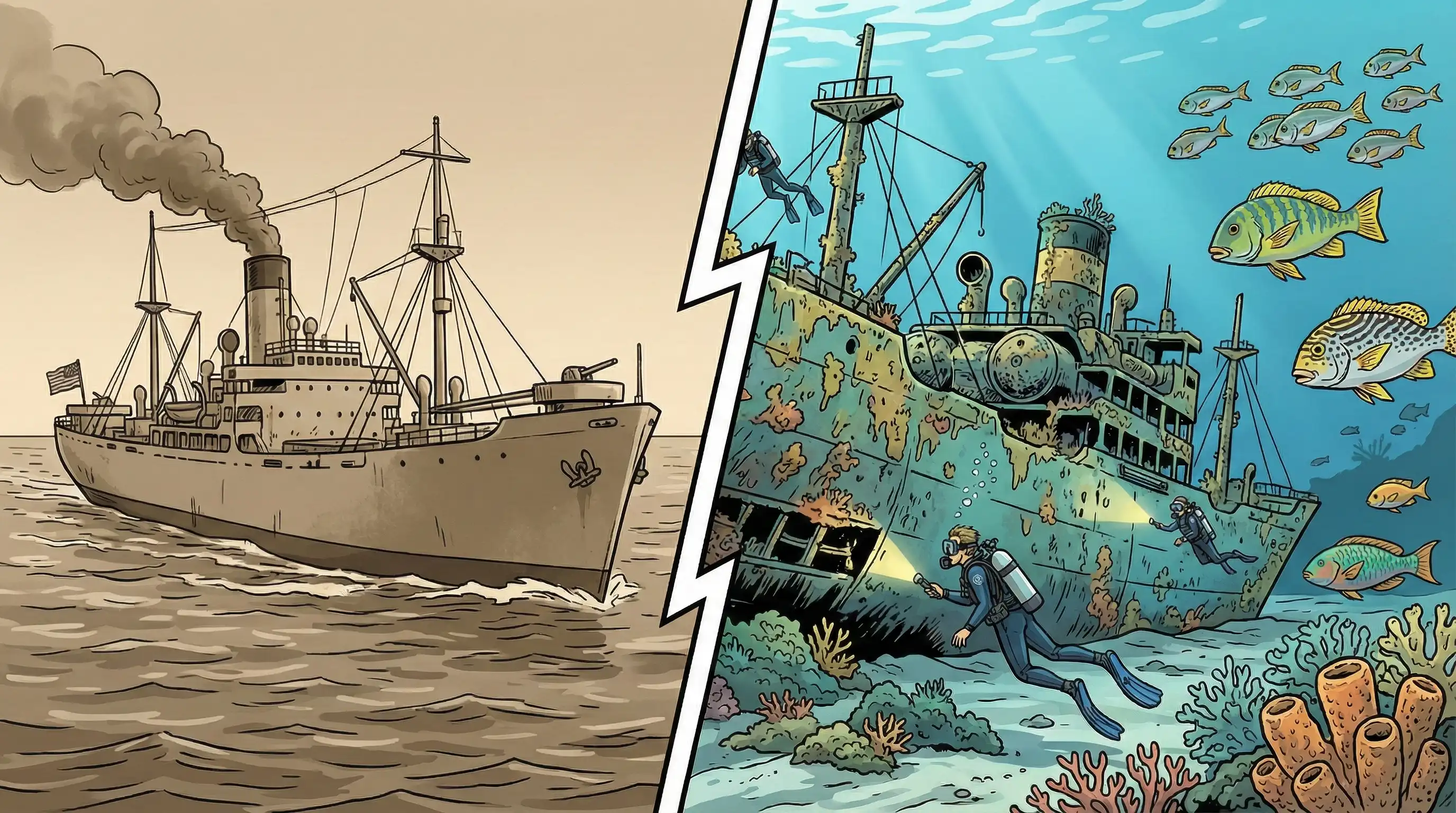
The USAT Liberty wreck lies on Tulamben’s volcanic shores as the centerpiece of Bali’s diving tourism industry. This sunken ship wreck has transformed over six decades from a damaged ship into a thriving artificial reef, now hosting over 400 species of fish and extensive coral formations that make it one of the most accessible wreck dives in the world.
Historical Background
The ship began its life in 1918, constructed at a New Jersey shipyard as a general cargo vessel designed for transatlantic operations. During World War I, the Liberty transported horses, supplies, and cargo to support Allied forces in France, establishing its role as a reliable workhorse of American maritime logistics.
When World War II erupted in the Pacific, the vessel was pressed back into military service. In January 1942, the ship was carrying a cargo of railway parts and rubber through Indonesian waters when fate intervened in the Lombok Strait.
The Sinking and Transformation
On January 11, 1942, a Japanese submarine launched a torpedo that struck the ship’s hull, causing catastrophic damage. Two US destroyers attempted to tow the damaged ship to the port of Singaraja for repairs, but she was taking on too much water. The crew made the decision to beach the vessel on the black sand shores of Tulamben to prevent her from sinking into deeper water.
For over two decades, the Liberty remained beached at the water’s edge, slowly rusting in the tropical air. Then, in 1963, the massive eruption of Mount Agung changed everything. Volcanic tremors caused the ship to slip from its resting place on the beach into the sea, where the wreck lies today in its final position on the sandy bottom.
Over the following 60+ years, nature transformed this World War II relic into a living reef. Corals colonized every surface, fish populations established territories, and the Liberty shipwreck evolved into an ecosystem that now rivals natural reef systems in biodiversity.
The Tulamben Dive Site Experience
Building on its remarkable history, the USS Liberty wreck now offers divers an experience that combines historical exploration with world-class marine encounters. The site’s accessibility and diversity make it suitable for everyone from first-time divers to advanced divers seeking challenging penetration routes.
Physical Wreck Layout
The ship stretches approximately 120 meters along the ocean floor, lying on its starboard side roughly parallel to shore. The depth range spans from just 3 meters at the shallowest part near the stern to 30 meters at the bow section, creating opportunities for multiple dive profiles.
Key features include the stern gun mounted at approximately 25 meters depth, the mid-ship engine room area with its machinery and debris scattered across the sand slope, and the bow section featuring dramatic swim throughs and the remnants of the anchor chain. Steel cables and structural elements create natural frames for photography, while large openings allow safe exploration of the interior.
The highest point of the wreck rises to within 5 meters of the surface, making this beautiful dive accessible even to snorkelers during calm conditions.
Marine Life Ecosystem
The USS Liberty wreck supports an extraordinary ecosystem nourished by the Indonesian Throughflow currents that sweep nutrients through this region. Over 400 fish species have been documented here, making every dive a different experience.
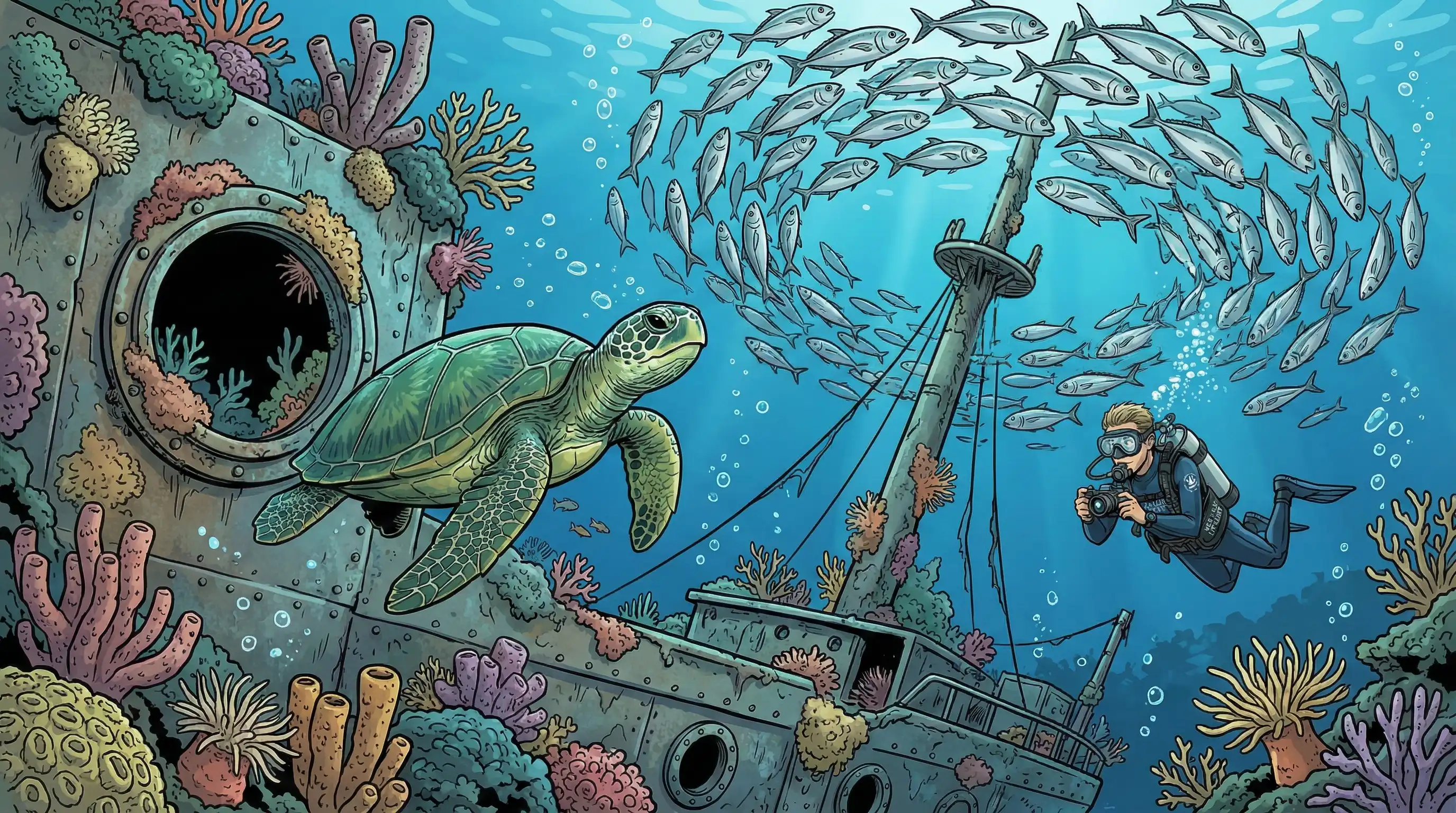
Coral coverage blankets the hull with beautiful soft corals, hard corals, and spectacular gorgonian fans that sway in the current. Giant barrel sponge specimens anchor themselves to the superstructure, providing shelter for smaller creatures.
Notable species encounters include schools of bumphead parrotfish that visit at dawn, Napoleon wrasse patrolling the deck areas, and huge school formations of trevally that circle the wreck. In the sandy areas surrounding the site, garden eels emerge from their burrows, while moray eels lurk in crevices throughout the structure. The fish life here rivals any natural reef in Indonesia.
Accessibility Features
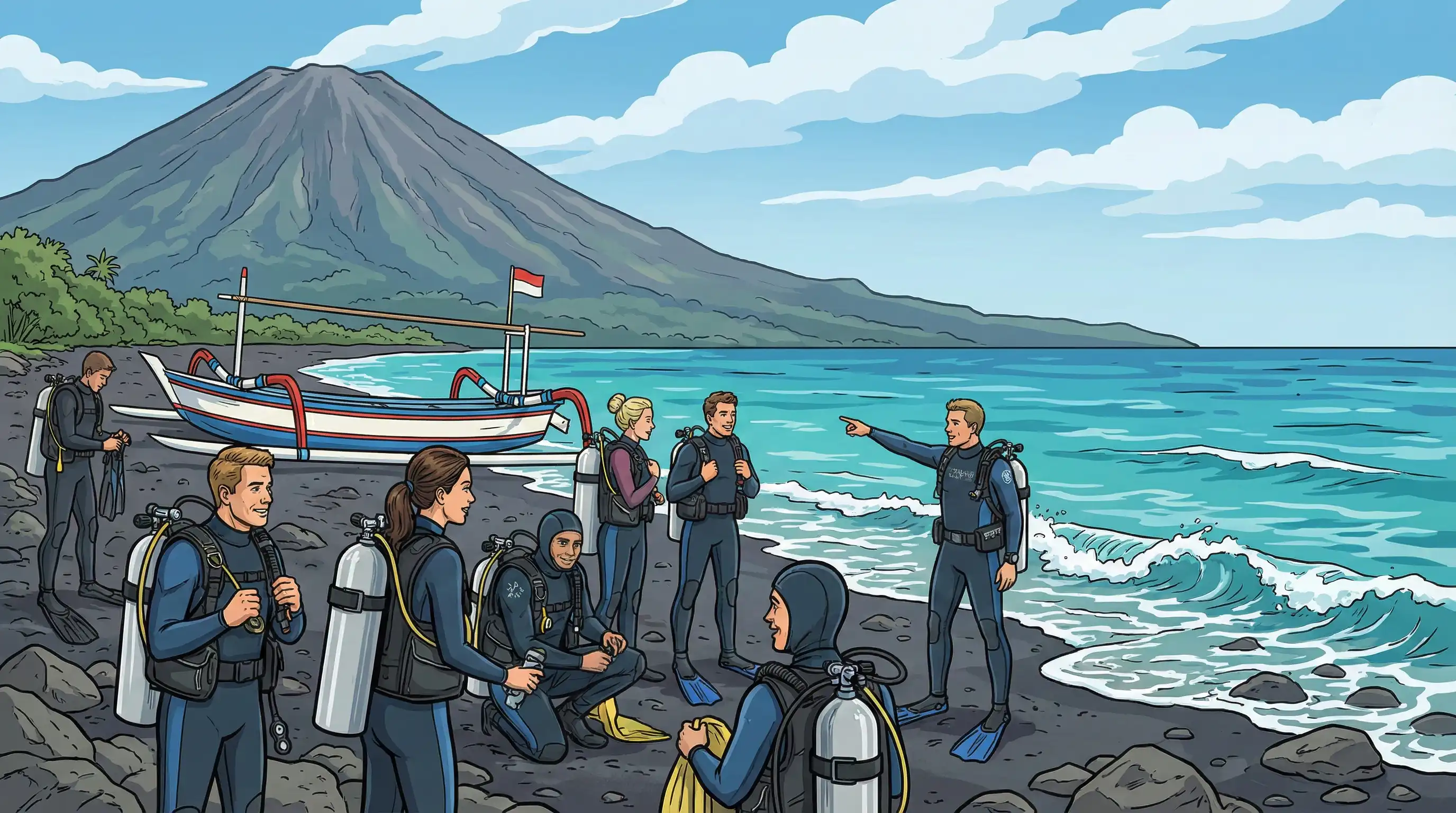
What makes this dive site in Bali truly exceptional is its accessibility. The shore dive entry begins from a volcanic pebble beach, requiring only a short swim of 25 meters to reach the stern. No boat is required, eliminating seasickness concerns and logistical complications.
Most divers with Open Water certification can safely explore the shallow and mid-depth portions of the wreck. The shallowest part of the stern offers easy exploration at 5-8 meters, while advanced divers can venture to the bow section at 28-30 meters. Even snorkelers can observe portions of the Liberty from the surface during calm conditions.
Diving the USS Liberty Wreck: Procedures and Options
Planning your dive approach maximizes the experience at this world-renowned site. Understanding the standard procedures and available options helps you choose the most rewarding way to explore this underwater wonder.
Typical Dive Procedure
The standard dive profile takes advantage of the wreck’s orientation and depth progression:
- Beach entry and surface swim – Wade into the water from the pebble beach and complete a short swim to the stern section, descending through the area where the ship’s rudder once hung
- Stern exploration – Descend to the stern gun at 25 meters, exploring the aft deck areas where debris scattered from the torpedo impact remains visible
- Mid-ship investigation – Navigate along the hull to the engine room area, observing the internal machinery and large area of structural remains
- Bow section swim throughs – Explore the forward sections where penetration opportunities and the anchor chain provide dramatic photography subjects
- Ascending return – Follow the hull upward through coral gardens, maximizing bottom time in the shallow zones where fish life concentrates
Dive Type Comparison
| Dive Type | Depth Range | Best For | Highlights |
|---|---|---|---|
| Day Dive | 5-30m | All levels | Huge school formations, coral formations, wreck structure |
| Night Dive | 5-25m | Experienced | Nocturnal species, coral polyps feeding, flashlight fish |
| Snorkeling | 3-8m | Non-divers | Stern section views, surface marine life, easy access |
Choosing your dive type depends on your certification level and specific interests. Day dives offer the best visibility for photography and observing the reef ecosystem in full color. A night dive reveals an entirely different world as nocturnal creatures emerge and the beautiful soft corals open to feed. For a second dive, many experienced visitors return after dark to witness this transformation.
Common Challenges and Practical Solutions
Understanding typical visitor concerns helps you prepare for the best possible experience at this famous dive site.
Crowded Conditions
The Liberty wreck’s popularity means crowds during peak hours. Visit for sunrise dives or late afternoon sessions to avoid the day-trip groups from southern Bali who typically arrive mid-morning.
Beach Entry Difficulties
The volcanic pebble beach can be slippery and uncomfortable underfoot. Wear proper dive booties with solid soles and consider hiring local dive guides who know the easiest entry points.
Limited Visibility
Plankton-rich waters typically limit visibility to 15-20 meters. Plan photography accordingly, favoring wide-angle shots and accepting that long-distance views aren’t this site’s strength—the benefit is that this same plankton supports the incredible fish life.
Coral Damage Concerns
Decades of diver traffic have impacted some areas. Practice excellent buoyancy control, maintain distance from the reef, and never touch coral formations. Your careful diving helps preserve this site for future visitors.
Planning Your USS Liberty Bali Visit
Preparing properly ensures you experience everything this world-class dive site offers.
Best timing: October-November and May-July provide optimal conditions with calmer seas and better visibility. Early morning dives catch the bumphead parrotfish arrivals and avoid afternoon winds.
Location logistics: Tulamben sits approximately 3 hours from Ngurah Rai Airport in southern Bali. The dive site is about 20 minutes from the popular Amed area, making it accessible as a day trip or destination stay.
Accommodation planning: Book hotels in the Tulamben area for maximum convenience—staying nearby allows you to catch dawn dives and return for a second dive at sunset or for a night dive experience.
Equipment preparation: Arrange dive operators in advance, especially during peak season. Bring your certification cards, and consider renting a dive torch even for day dives to reveal colors in the deeper sections.
Related Bali dive sites: After exploring the Liberty, consider nearby Tulamben Wall, Jemeluk Bay’s coral gardens, or make the journey to Menjangan Island on Bali’s northwest coast for additional world-class diving.
Additional Resources
Recommended dive operators: Numerous PADI-certified dive centers operate in Tulamben, offering equipment rental, guided dives, and certification courses. Book directly for best rates and local expertise.
Specialty courses available: The USS Liberty wreck provides ideal conditions for PADI Wreck Diver certification and Deep Diver specialty courses, allowing you to develop new skills while exploring this historic site.
Marine life identification: Indo-Pacific species guides help you identify the hundreds of fish species you’ll encounter, from the massive bumphead parrotfish to tiny nudibranchs hidden beneath coral overhangs.
Historical resources: For those interested in the ship’s World War II service and the broader Pacific theater conflict, military archives document the USAT Liberty’s complete service record and the circumstances of her torpedo attack in the Lombok Strait.