Komodo
Crystal Rock
Crystal Rock sits among Komodo National Park’s most electrifying offshore sites: a submerged pinnacle and reef complex where strong currents concentrate huge schools of fish and draw sharks, jacks, and tuna into the blue. This guide explains what makes the site special, who it suits, and how divers typically reach it from Labuan Bajo.

Overview: what makes Crystal Rock unique
Crystal Rock is best thought of as a high-energy seamount and reef system in the park’s northern corridor—an area already famous for cold upwellings, nutrient-rich water, and dramatic underwater topography. Unlike shallow coral gardens that suit every certification level, Crystal Rock is known for exposure to open water, steep drops, and the kind of current that turns a good dive plan into a memorable blue-water spectacle.
What sets the site apart is the combination of structure and flow: the reef gives fish somewhere to mass and shelter, while the current shuttles plankton and draws predators. On strong days you can expect shimmering walls of fusiliers and jacks, hunting trevally, and reef sharks working the edges—often in visibility that feels endless when the water is calm and clear.
Marine life: pelagic fish, sharks, GTs, and tuna
Crystal Rock is a magnet for pelagic action. Schools of fusiliers and surgeonfish stack in the water column, while barracuda and tuna streak through on the hunt. Giant trevally (GTs) are a signature sight: they cruise with purpose, then explode into baitballs when the opportunity appears.
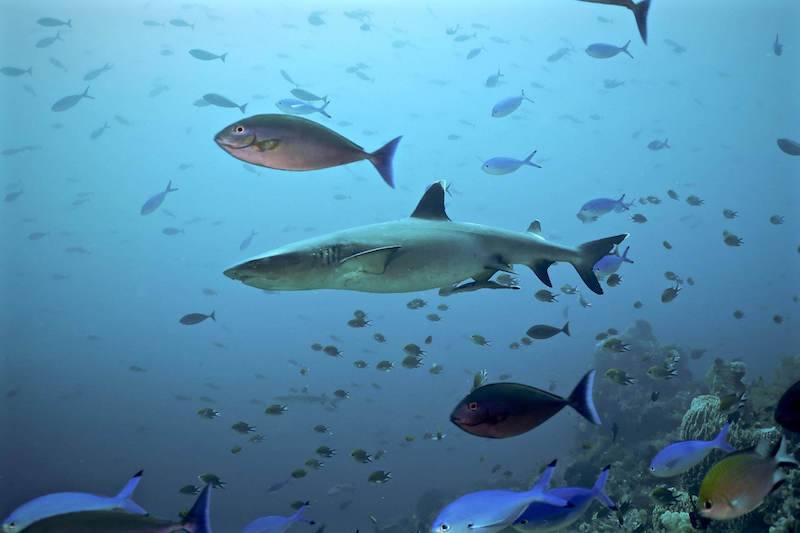
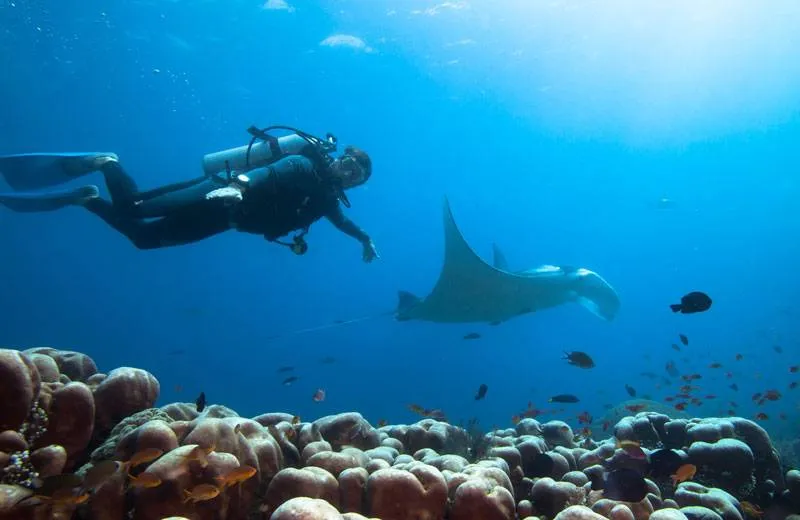
White-tip and black-tip reef sharks are commonly seen patrolling the reef; on favourable days, grey reef sharks may appear in the blue. Eagle rays and other large visitors occasionally pass through, though the main draw is the fast-moving food chain: predators, prey, and current working together in a single frame.
Macro photographers will still find subjects on calmer moments— nudibranchs, crustaceans, and small reef fish—but most divers come here for wide-angle drama and the sense of being inside a living ocean highway.
Dive conditions: strong currents and advanced divers
Currents at Crystal Rock can be powerful and unpredictable. They may run along the reef, sweep across the pinnacle, or shift in strength during a single dive as tides change. That means buoyancy control, situational awareness, and comfort in moving water are essential, not optional.
The site is widely regarded as advanced territory: divers should be comfortable with drift-style diving, occasional blue-water staging, and the use of a reef hook when appropriate and when permitted by local guidelines. Nitrox can extend no-decompression time on repetitive days, but it does not replace solid experience or a conservative plan.
Always follow pre-dive briefings, stay with your group, and respect the captain or guide’s call if conditions are not suitable. A “no dive” is better than a fight with the current.
Best time to dive Crystal Rock
Komodo’s diving year-round reputation comes with nuance. The April–November dry season often brings the sunniest skies and predictable liveaboard schedules, while December–March is the wetter, windier period when some routes may be adjusted for sea state.
For Crystal Rock specifically, many operators favour the mid-season window when currents are lively enough to aggregate fish but not so extreme that the site becomes unsafe. Water temperature typically ranges from roughly 26–28°C (79–82°F), though cooler thermoclines can appear—another reason to pack a suitable exposure suit.
Because visibility and current depend on tide and weather, two divers visiting a month apart can have very different stories. Flexibility is part of diving Komodo well.
Getting there from Labuan Bajo
Labuan Bajo on Flores is the main gateway to Komodo National Park. Most day trips and multi-day liveaboard itineraries depart from the harbour, with travel times to northern sites varying by boat speed and route.
Crystal Rock is typically reached as part of a long day on the water or a multi-dive itinerary that includes other famous northern sites such as Castle Rock or Batu Bolong. Plan for early starts: boats often leave at dawn to maximise calm surface conditions and align with tide windows for key dives.
National park regulations, fees, and zoning apply throughout the area; your operator or crew will explain how those rules affect the day’s route and dive plan.
What to expect on a dive at Crystal Rock
Expect a structured briefing focused on currents, entry style, and emergency procedures. You may drop in up-current of the pinnacle, drift along the reef, or stage briefly in the blue to watch pelagic traffic—exact choreography depends on the day.
Bottom time is often shaped by currents and no-decompression limits rather than a fixed “tank half full” routine. Stay aware of your gas supply, depth, and surface-marker deployment if you separate from the group in a drift.
When everything aligns, Crystal Rock delivers one of Komodo’s most intense reef-and-blue-water experiences: colour, motion, and predator-prey energy in a single dive. If the conditions are not right, experienced operators will pivot to another site— safety and the long-term health of the park come first.
Haeufig gestellte Fragen
Weitere Tauchspots in Komodo


Schließen Sie sich mehr als
1,000+ monatliche Gäste
Aus aller Welt zu uns für Tauchen, PADI-Kurse, Schnorcheln und Freediving.