
Sanur snorkeling is one of the easiest ways to see undersea life in Bali. The protected reef waters make it easy for families and beginners to see a lot of marine species just a few steps from the shore. The outer reef barrier around Sanur creates a tranquil lagoon that gets rid of the strong currents that are common on other parts of the island. This makes it a safe and fun place to start snorkeling.
This guide tells you about the finest places to snorkel along Sanur Beach, the marine creatures you might see, the pros and cons of taking a tour versus exploring on your own, and how to plan your trip. We will mostly talk about Sanur and the area around it, but we will also mention other places nearby for those who want to try something else. Families with kids, those who are concerned about snorkeling for the first time, and people who want a relaxing aquatic adventure without long boat rides are all part of the target demographic.
Sanur snorkeling is the best place to go snorkeling on the Bali beach since it has protected reefs, a wide variety of tropical fish, and calm water that is safe for all skill levels. It's the perfect place to have your first underwater adventure in Bali.
By the end of this guide, you will understand:
- The specific snorkeling sites along Sanur’s coast and what makes each unique
- Which fish and corals you can expect to see throughout the year
- How to choose between guided snorkeling trips and independent exploration
- Essential equipment needs and where to rent quality gear
- Safety considerations including sea urchin awareness and tidal patterns
Understanding Sanur Snorkeling
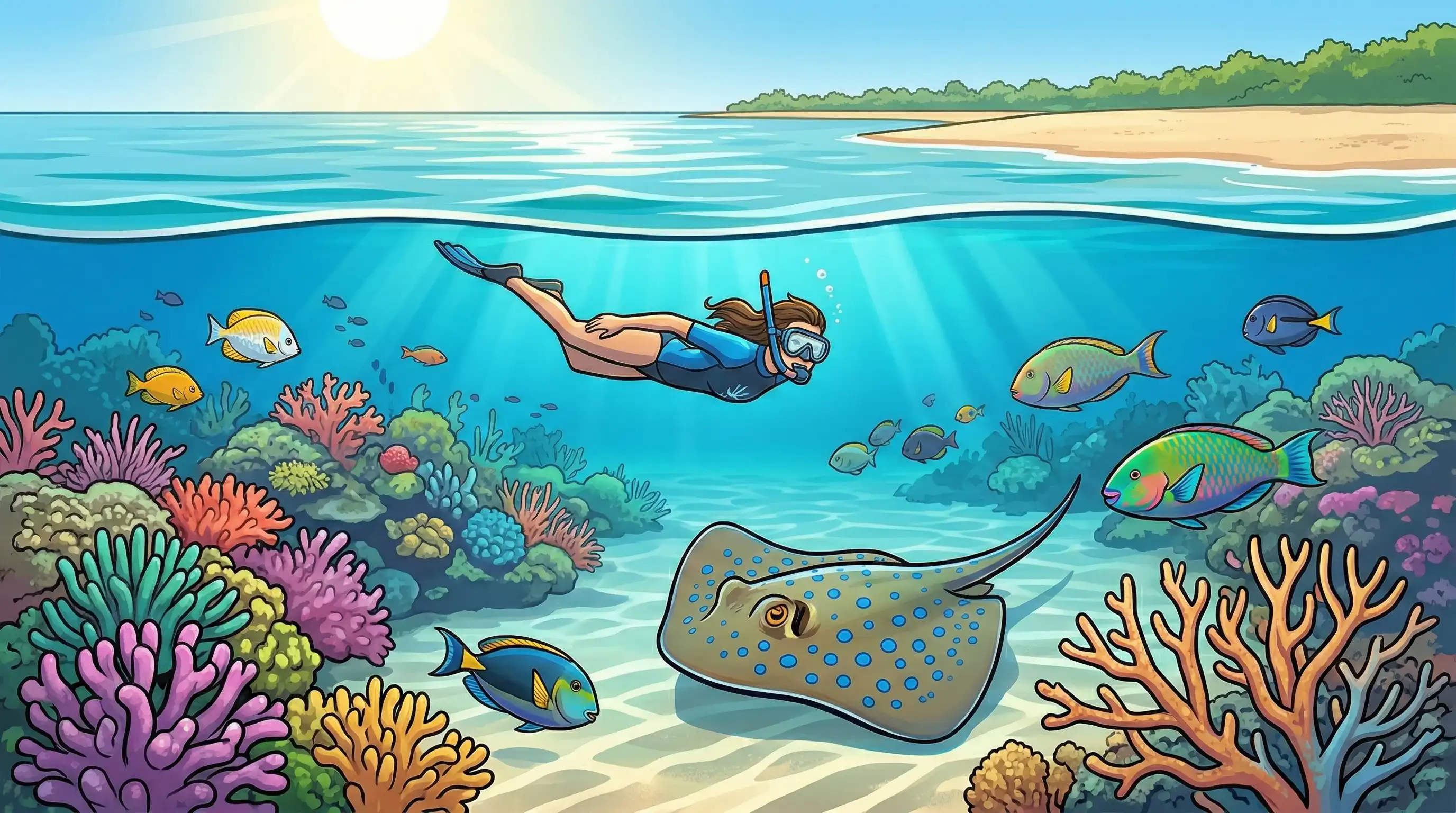
The natural coral barrier system at Sanur makes it very different from other places in Bali for snorkeling. This outer reef extends along the shore and breaks up waves that come in. This makes a shallow, quiet lagoon where snorkelers may rest and explore without having to deal with strong currents or deep water. The reef structure makes the water less than 5 meters deep, and on clear days, you can see 10 to 15 meters.
What Makes Sanur Special for Snorkeling
The protected coral barrier makes the lagoon circumstances that are hard to find anywhere else on Bali's coast. Sanur snorkeling spots is different from places like Nusa Penida, where you need to be able to swim in intermediate currents. At Sanur, you may go straight from the beach and stay in safe, shallow areas for the whole session. This makes it great for families with kids or anyone who wants to learn how to snorkel in a calm way.
Most snorkeling spots in Sanur don't need boat transports because it's easy to get to the beach. There are a number of places along the coast where you can walk into the sea and swim out 100 to 200 meters to start exploring the borders of the reef right away. This makes things easier and saves time and money compared to places that need speedboat journeys.
Because Sanur lies on Bali's south coast, the circumstances for Sanur snorkeling stay the same all year. The typical water temperature is between 27 and 30 degrees Celsius all year long. The best visibility is during the dry season, which lasts from April to October. Even in the rainy months, the reef protection keeps waves from being too strong, but plankton blooms can make things less clear for a short time.
Marine Life and Underwater Environment
Parrotfish nibble on coral, angelfish show off bright patterns, clownfish dart amid anemones, and bat fish swim in small schools. You might also see cuttlefish using their amazing camouflage skills, cowfish with their unique box-shaped bodies, and sometimes sea turtles swimming through the channel.
There are beautiful coral formations at the fringes of the reef, although these have become less common in recent decades because of bleaching occurrences. Hard corals, like branching Acropora, make the undersea environment more interesting, while soft corals offer color and movement. Since the 2010s, local conservation groups have focused on coral nursery programs and reef-safe techniques that plant about 10,000 fragments every year.
What you can expect to see changes with the seasons. The water is clearer and the fish are more active during the dry season. The wet season months (November to March) make it harder to see, although the fish may move in different ways. Estimates of marine biodiversity say that 50 to 100 fish species live in Sanur's reef system. This is less than on outlying islands, but it's still a great place for beginners to go.
The link between protecting reefs and marine biodiversity is why Sanur has healthy fish populations even though it is close to a city. The shallow lagoon keeps boat traffic from causing too much harm, and more and more local businesses are using reef-safe sunscreen policies to protect corals from chemicals.
Best Snorkeling Locations and Sites
The coastline of Sanur is around 5 kilometers long, and the quality of snorkeling varies along different parts of it. Knowing where to go in the water can make the difference between a so-so swim and an amazing underwater trip.
Main Beach Entry Points
Central Sanur Beach is easy to get to from the main promenade and has local amenities. However, the snorkeling isn't great because the sandy bottoms are close to the shore. Find the places near Pantai Karang Beach where coral patches start closer to the entrance.
Northern Sanur snorkeling, near Tanjung Sari, has better reefs and less tourists walking around. The reef structure here is usually healthier, which means there are more types of fish. People who are willing to trek 10 to 15 minutes north along the beach walkway before getting in the water will be rewarded at this spot.
The southern parts that lead to Cemara Beach are another good choice because the water is clear. There are a lot of reef fish around the reef patches here, and you won't have to share the space with as many snorkelers as you would in the central areas. The finest light for underwater pictures is in the early morning.
Traditional Jukung Boat Spots
When you get to the outer reef via traditional Balinese jukung boats, you'll see more marine life than if you went to the land. These wooden outrigger boats transport you 500 to 1,000 meters out to deeper water spots where more fish gather and coral covering is a lot better.
The boat-accessible deeper water areas have depths of 3 to 5 meters and higher visibility. The underwater landscape is also more diversified. At these outside sites, you can expect to see bigger parrotfish, groupers, and perhaps reef sharks from time to time. Boat-based snorkeling sessions usually last between 1.5 and 2 hours, including travel time.
It just takes 10 to 15 minutes by boat to get to these places from shore, so it's a good upgrade from beach snorkeling without having to spend the whole day on a boat. Most local businesses charge IDR 150,000 to 250,000 per person for these short boat trips.
Alternative Nearby Locations
Blue Lagoon and Tanjung Jepun in Padang Bai are good places for beginners to dive since the reefs are healthier and there are more kinds of marine life. These places are about an hour's drive east and include calm waters, bright corals, and many of turtles. Many tour companies provide half-day snorkeling trips that go to both places.
It takes 1.5 to 2 hours to get to places in East Bali like Candidasa and Amed, although the view is typically better than 20 meters. The underwater temples and the Japanese wrecks at Amed provide snorkeling adventures that you can't find anywhere else.
When you look at the trip time and the quality of the snorkeling, Sanur snorkeling is the greatest choice for convenience and calm conditions. Padang Bai is a good choice for a moderate upgrade that is worth the hour drive. Nusa Penida requires a 30- to 45-minute speedboat ride for world-class snorkeling with manta rays, but the results are better than those seen on the mainland of Bali.
Planning Your Sanur Snorkeling Experience
Your level of skill, price, and how much convenience you want will help you decide between guided tours and snorkeling on your own. Both methods work well at Sanur, but they have different benefits for different kinds of travelers.
Booking and Preparation Steps
Follow this sequence to prepare for your snorkeling adventure:
- Check weather forecasts and tide charts 2-3 days before your planned session—morning high tides typically offer the best conditions with calm water and good visibility
- Book your tour or arrange equipment rental at least one day ahead during peak season to avoid having to wait for availability
- Arrive at Sanur Beach by 8-9 AM to catch optimal morning light and beat afternoon winds that can reduce visibility
- Bring reef-safe sunscreen, a rash guard for sun protection, and mineral water for hydration between sessions
A correctly fitted mask (test the seal before going into the water), a snorkel with a purge valve, and fins that fit your feet are all necessary pieces of equipment. Good gear makes a big difference. About 20% of snorkelers complain about discomfort because their masks don't fit right.
It takes 20 to 40 minutes to get here from the center of Bali, depending on traffic. If you're staying in Seminyak or Kuta, be ready for possible delays during the morning rush. It costs about IDR 5,000–10,000 to park at Sanur Beach for automobiles.
Tour Options Comparison
| Factor | Guided Tour | Independent Snorkeling |
|---|---|---|
| Price | IDR 300,000-500,000 ($20-35) | IDR 50,000-100,000 (equipment rental) |
| Duration | 1.5-5 hours including transfers | Flexible, typically 30-60 minutes per session |
| Inclusions | Equipment, guide, often GoPro documentation included, lunch on longer trips | Equipment only; food and photography are extra charge |
| Group Size | 4-10 people typically | Solo or with your own friends and family |
| Best For | First-timers, families with children, those wanting photography | Experienced snorkelers, budget travelers, repeat visitors |
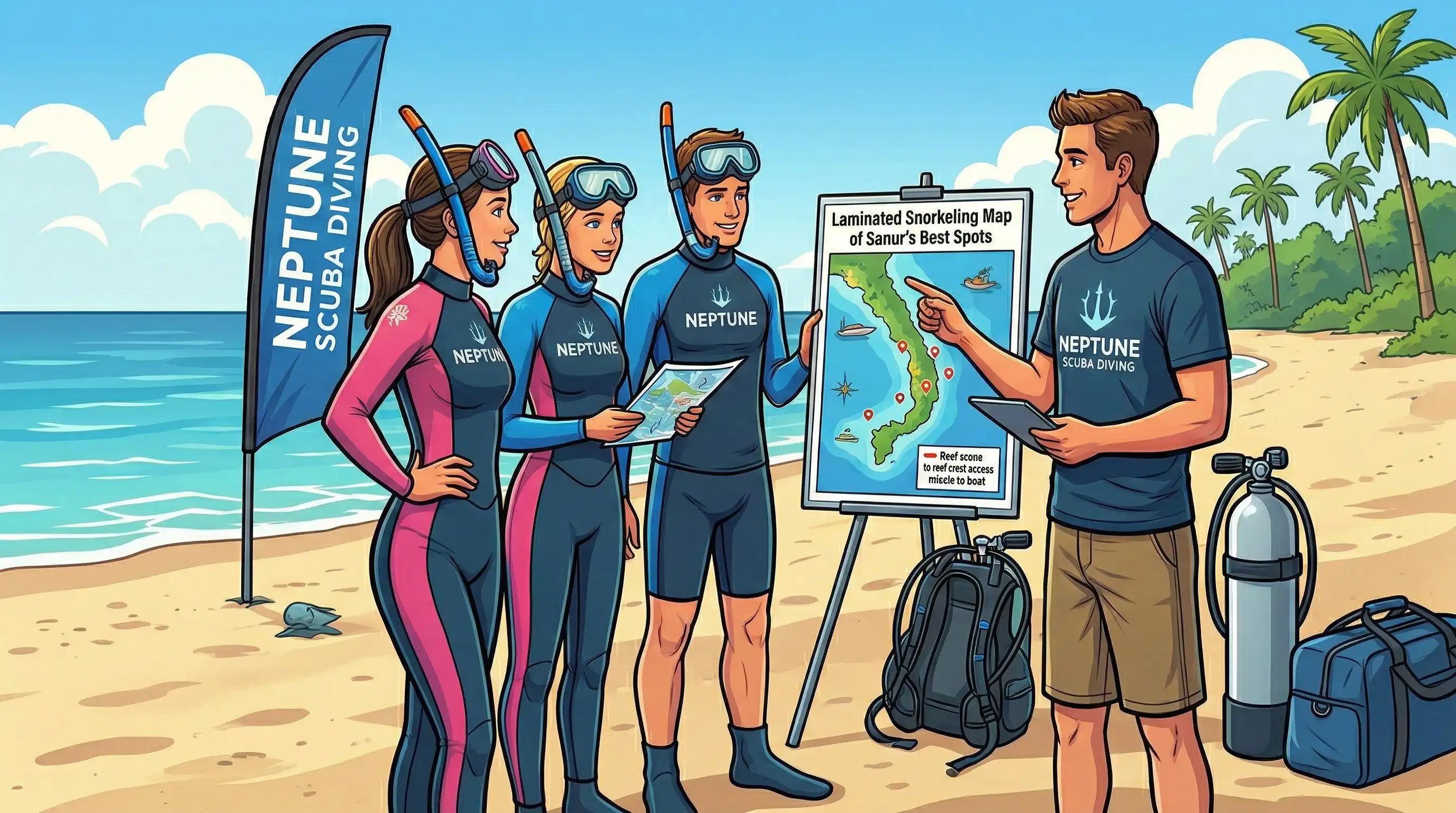
Guided tours keep you safe, help you find the finest places to go right now, and make sure your equipment is in good shape. A lot of packages include with GoPro documentation that includes images and movies of your underwater journey. This means you don't have to worry about cameras while you're learning to snorkel.
If you're comfortable in the water, independent snorkeling gives you more freedom and saves you money. You may plan your sessions around your own schedule, take breaks when you want, and go at your own pace. There are a lot of equipment rental stores along the beach walk, however the quality of the gear varies a lot from one shop to the next.
Guided excursions are excellent for families or those who are snorkeling for the first time, even though they cost more, because they are safer, easier to use, and come with paperwork. Experienced snorkelers who are comfortable with entering the water from the beach and understanding currents can save money by going on their own.
The Bottom Line
Knowing what problems are common before you get there will help you have a good time. When you know what to expect, most problems have simple answers.
Water Visibility and Weather Conditions
The months of November to March, when it rains a lot, are when cloudy water days happen the most. This is because plankton blooms and runoff make it hard to see more than 5 meters. If you can, plan your vacation during the dry season. Check recent evaluations from other snorkelers about the current circumstances, or book with companies that provide full refunds if the conditions aren't right.
April through October are the best months for clear water, while June through August are usually the best months for visibility. Morning sessions before 11 AM usually have better conditions than afternoon sessions, when the wind picks up and stirs up the sediment.
If you get there and can't see well, you might want to spend the day at the beach and reschedule your snorkeling trip for a time when the weather is better. Most trustworthy operators will help you change your plans instead of making you have a bad time.
Equipment Quality and Availability
Rental gear that isn't good enough makes things more difficult than they need to be. Don't rent from beach sellers who offer suspiciously low prices. Cracked masks and worn snorkels aren't worth the money you save. Instead, rent from well-known dive shops on Jalan Danau Tamblingan. They keep their gear in good shape and make sure it fits.
Bringing your own gear makes sure it fits and is clean, especially for masks and snorkels. If you plan to go snorkeling more than once while you're in Bali, buying your own basic gear may be cheaper than renting it over and over again. You may buy good gear for IDR 200,000–400,000 from a number of stores in Sanur.
If you require particular things like prescription masks or masks for kids, plan with tour companies that can confirm that the equipment is available ahead of time instead than trusting that beach merchants have what you need.
Safety and Sea Urchins
Sea urchins live in shallow reef regions and are the main cause of injuries at Sanur. For your safety and the safety of the reef, don't walk on coral formations. When walking through shallow areas, wear reef shoes or fins and be careful where you put your hands to keep your balance.
Even in Sanur's calm seas, it's important to be alert of what's going on around you. Stay close enough to your entry point so you can see it, and don't swim past the outer coral edge, where the water is very different. The lagoon is safe because it is sheltered by the reef barrier.
If you're new to snorkeling, guides suggest arranging at least one guided session before going out on your own. Local guides know exactly where it's safe to go, what the current patterns are, and where the best wildlife is. It takes years to learn all of this on your own. The extra expense makes things safer and gives you a higher chance of seeing interesting aquatic creatures.
Next Steps
Sanur snorkeling lives up to its reputation as Bali's easiest snorkeling spot, with quiet, protected waters, easy beach access, and enough marine life to make the experience very exciting. Sanur isn't as exciting as the dramatic encounters you may have at Nusa Penida or the beautiful reefs of Menjangan Island, but it's perfect for novices and families. It's a safe, easy way to learn how to snorkel without any problems.
To get ready for your snorkeling trip to Sanur, do these things right away:
- Check weather conditions and tide charts for your planned dates using local forecasting apps
- Book a guided tour if you’re a first-timer, or arrange equipment rental from a reputable shop for independent exploration
- Arrive early (before 9 AM) to secure parking, get fitted with gear, and enjoy morning visibility
If you like snorkeling in Sanur and want to get better, you could take a Bali diving course at a local PADI center, do other water activities in Sanur like stand-up paddleboarding or kayaking, or go on day trips to more advanced snorkeling spots like Nusa Lembongan's coral gardens or Amed's shipwreck sites.
Additional Resources
There are a lot of local dive shops and places to rent gear around Jalan Danau Tamblingan and the beach promenade. Look for businesses with stated safety certifications and recent good reviews. Established operators include those at Sanur Water Activities and the different centers near the main beach access points.
You can get tide charts for Sanur snorkeling from apps like Tide Times and local surf forecasting sites. To keep an eye on the weather, look for detailed wind and visibility forecasts on Windy.com or comparable sites. For the greatest results, try to do it on days when the wind is mild (less than 15 km/h) and it hasn't rained in a while.
Use the dive housing even in shallow water, turn on Protune for enhanced color correction in post-processing, and bring a red filter at depths deeper than 3 meters. Most essential, take a moment to just look at the reef with your real eyes instead of through a camera screen. Some things are better experienced than written down.