

Bali is Indonesia's most popular tourist spot, with over 6 million people visiting each year to see its beautiful beaches, holy temples, and interesting culture. This Indonesian island goes against all assumptions. For example, it is the only Hindu-majority island in the world's largest Muslim country, and its customs have been the same for more than a thousand years creating a strong Balinese culture.
These Bali fun facts cover everything from its cultural traditions to its natural beauty to its history and modern-day oddities. They show why this lovely island is so popular with travelers, hospitality workers, and culture lovers.
If you're going to Bali, working in Southeast Asia's tourism industry, or just interested about what makes this place so special, knowing these Bali facts will turn your visits from surface-level to profound cultural experiences.
The most important thing to know is that Bali has more than 20,000 temples, which is why it is known as the "Island of a Thousand Temples." It also has a large Hindu population (86.4% of the population), and it celebrates Nyepi, which is a full 24-hour shutdown of the entire island, including airports. This makes it unlike any other tourist destination on Earth and a good reason to visit Bali and the Balinese people for their Balinese culture.
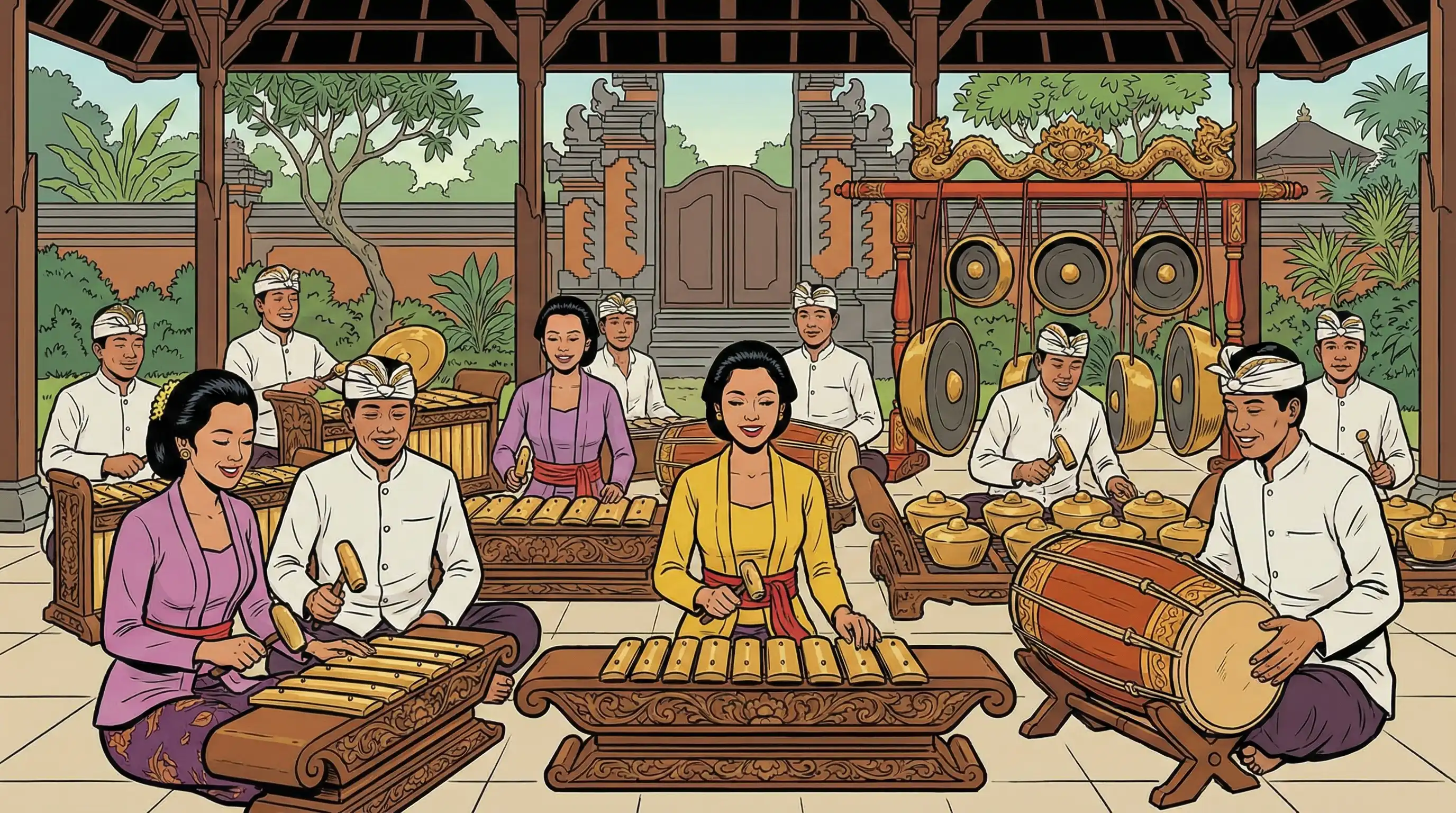
Bali’s Cultural Foundation & Fun Facts About Bali
The rich culture of Bali affects every visitor, from the gifts left at hotel doors every morning to the temple ceremonies that close beaches for sacred rituals. Understanding this cultural foundation changes how guests and people who work in hospitality interact with the island.
Religious and Spiritual Heritage
Bali is the only island in Indonesia where the majority of people are Hindu. In fact, 86.4% of the people there practice Balinese Hinduism. This is a big difference from Indonesia, which has an 87% Muslim majority and is the largest Muslim country in the world with 240 million followers. This interesting culture survived because Hindu aristocrats, priests, and scholars left Java during the Islamic advance of the 16th century. Bali became the last Hindu stronghold in the archipelago after the fall of the Majapahit Empire in 1520.
Balinese Hinduism is very different from Indian Hinduism. It mixes Shaivite practices with Buddhism, ancestor worship, and animistic traditions that are peculiar to the island. Most Balinese people do daily offering rituals, and 90% of families put out canang sari, which are little baskets of flowers, betel, and incense, to thank the gods and calm spirits. This way of life is in line with the tri hita karana philosophy, which says that people, nature, and God should all have good interactions.
Hotels all around Bali make room for these religious activities by keeping temple shrines on their sites, planning around big festivals, and training staff to explain spiritual practices to visitors who are interested.
Language and Communication
People in Bali speak three languages every day: Bahasa Bali (the traditional Balinese language), Bahasa Indonesia (the national language), and English in tourist regions. Most tourists use Bahasa Indonesia with locals, but Basa Bali is still the language of family, ceremonies, and cultural expression.
The birth order naming system is one of the more interesting facts about Bali. The names of Balinese children depend on where they are in the family: Wayan (first), Made (second), Nyoman (third), and Ketut (fourth). If there is a fifth kid, the cycle starts over with "Wayan" again. This means that about 30% of Balinese men have the name Wayan.
The old Aksara Bali alphabet, which comes from ancient Brahmi writing systems, is still used in ceremonies on temple inscriptions and sacred writings. This connects modern Balinese to literary traditions that go back more than a thousand years.
Island of a Thousand Temples
When tourists who go to Bali ask how many temples there are, the answer is more than they expect: there are more than 20,000 temples on the island, which is why it is called the "Island of a Thousand Temples." There are different levels of these holy temples, from family compound shrines to village temples to regional sanctuaries that serve whole kingdoms.
Pura Besakih, the "Mother Temple," is the biggest and most sacred landmark in Bali. A Javanese Hindu philosopher built this UNESCO-listed structure in the 8th century. It has 35 shrines spread out over seven levels, which represent the Hindu cosmic hierarchy. Balinese believe that the temple's survival of the deadly 1963 eruption of Mount Agung, which killed more than 1,000 people, is proof of its spiritual power.
These temple locations follow the topography of volcanoes. In Balinese theology, the gods live on top of mountains while the demons live in the sea. This makes a spiritual map that tourists can follow across the island's stunning landscape.
Geographic and Natural Wonders
Bali's terrain has a direct effect on its hotels, tourist attractions, and the Bali things to do that bring millions of people there every year. Knowing about these natural traits can help you understand everything from black sand beaches to where premium resorts are located.
Volcanic Landscape
Mount Agung, which is 3,031 meters tall, and Mount Batur, which is 1,717 meters tall, are the two active volcanoes that stand out in Bali's skyline. Mount Agung is the spiritual axis mundi of the island, the center of the Balinese world. It has erupted many times, including in 1846, 1963, and 2017–2018, when minor activity forced 100,000 residents to leave their homes.
Volcanic activity created the black sand beaches on Bali's southern and eastern coasts. The dark shoreline are made of ground-up volcanic rock, which is very different from the white sands found in other places. This volcanic soil also makes the rice terraces in Bali notable for their productivity. They can grow up to three crops a year.
Hotels near volcanoes have safety measures and evacuation procedures in place. The stunning scenery of volcanic landscapes attracts hikers to Mount Batur's sunrise walks and photographers to dramatic views of the crater.
Marine Biodiversity
Fun fact about Bali, Bali is in the Coral Triangle, which is a marine area that has 76% of the world's coral species. The coral reefs around the island are home to more than 3,000 kinds of tropical fish, making them some of the best places to dive in Southeast Asia.
The waters are home to amazing marine life like manta rays, whale sharks, and many kinds of sea turtles. Amed Beach on Bali's northeast coast is known for its diverse marine life and laid-back diving scene. Nusa Penida is known for its oceanic manta rays.
The volcanic highlands are home to four crater lakes: Batur, Buyan, Beratan, and Tamblingan. Each lake is surrounded by temples and has its own unique ecosystem that is different from the coastal marine environment.
Island Geography
Most people who visit Bali only go to one island, although Bali actually has four islands: the main island and Nusa Penida, Nusa Lembongan, and Nusa Ceningan. These Nusa Islands have become known for their distinct kind of tourism. For example, Nusa Penida's Kelingking Beach has cliffs that seem like dinosaurs falling into blue waters, yet another Bali fact.
The main island is only 5,780 square kilometers, which is less than Delaware, but its 593-kilometer shoreline has a lot of different types of plants and animals. Bali is only 3.2 kilometers from Java across the Bali Strait. It is part of the Indonesian archipelago, which has 17,508 islands, but it still has its own cultural and religious identity.
The Wallace Line, which naturalist Alfred Russel Wallace discovered in 1860, runs through Bali and indicates a biogeographical border where Asian animals suddenly change into Australasian species. This is why tigers used to live here but komodo dragons only live to the east.

Unique Traditions and Modern Life
Traditional customs and the needs of the modern tourism sector work quite well together in Bali. For example, you can see ancient rituals happening in hotel lobbies and religious ceremonies stopping traffic on major roadways.
Daily Spiritual Practices
Three times a day, the ordinary Balinese person makes an offering by putting canang sari at home, work, and temple shrines. This practice means that every Balinese household does spiritual maintenance all day, every day. You can see this in tourist areas when hotel staff leave offerings at entrances and intersections.
One of the most shocking things about Bali is that newborns there don't touch the earth for 105 days after they are born. During this time, Balinese people think that infants are still divine. A ceremony that marks their first contact with the ground honors their journey to earthly life.
As teenagers, Balinese kids go through tooth filing rituals. This ritual smooths out their top canine teeth to show that they can manage undesirable feelings like wrath, envy, and greed. This activity is linked to ideas about how people can become perfect and grow spiritually.
The tri hita karana philosophy, which says that people should be in harmony with God, nature, and each other, governs these practices. This is what visitors see as spirituality everywhere.
Annual Celebrations and Festivals
Perhaps one of the most interesting things about Bali and a fun fact about Bali, is that the whole island closes down for 24 hours on Nyepi, the Hindu Day of Silence. No lights, fires, noise, or travel—airports close, tourists stay in hotels, and pecalang security patrols the streets to make sure everyone is thinking. Satellite images indicate that Bali's lights virtually disappear during this tradition that has been going on since the 8th century.
On the night before Nyepi, ogoh-ogoh parades feature people bringing huge demon statues through the streets and then burning them, which is a way to get rid of evil spirits. This big difference between loud partying and total silence shows how Balinese philosophy balances extremes.
The Pawukon calendar says that temple festivals (Odalan) happen every 210 days at each of Bali's 20,000+ temples. This means that religious activities happen on the island almost every day. There are different calendar systems that visitors may come across. For example, the Gregorian calendar is used for international business, the 210-day Pawukon calendar is used for temple cycles, and the Saka lunar calendar is used for Nyepi.
Modern Economic Realities
Bali's economy has changed a lot since the opening of Sukarno's Bali Beach Hotel in Sanur and Ngurah Rai International Airport in 1970. Now, tourism makes up 80% of the economy, up from 80% of the economy before that.
The island has about 1.2 tourists for every resident. With 6 million visitors a year and a population of 4.3 million, this creates problems with infrastructure and sustainability. Australian tourists make up the biggest group of visitors. However, more and more remote workers are moving to digital nomad centers in Canggu and Ubud, where 500,000 digital nomad visas are issued every year.
This economic reality offers both opportunity and disparity. For example, tourism brings about $10 billion a year, but only around 20% of that money stays in the area; the rest goes to international hotel chains and foreign investors.
Fascinating Agricultural and Culinary Heritage
The Hindu past, agricultural advancements, and unique place of Bali in mostly Muslim Indonesia are all reflected in Balinese food. Knowing this culinary context makes meals more enjoyable and shows cultural values that are present in every meal.
Subak Irrigation System
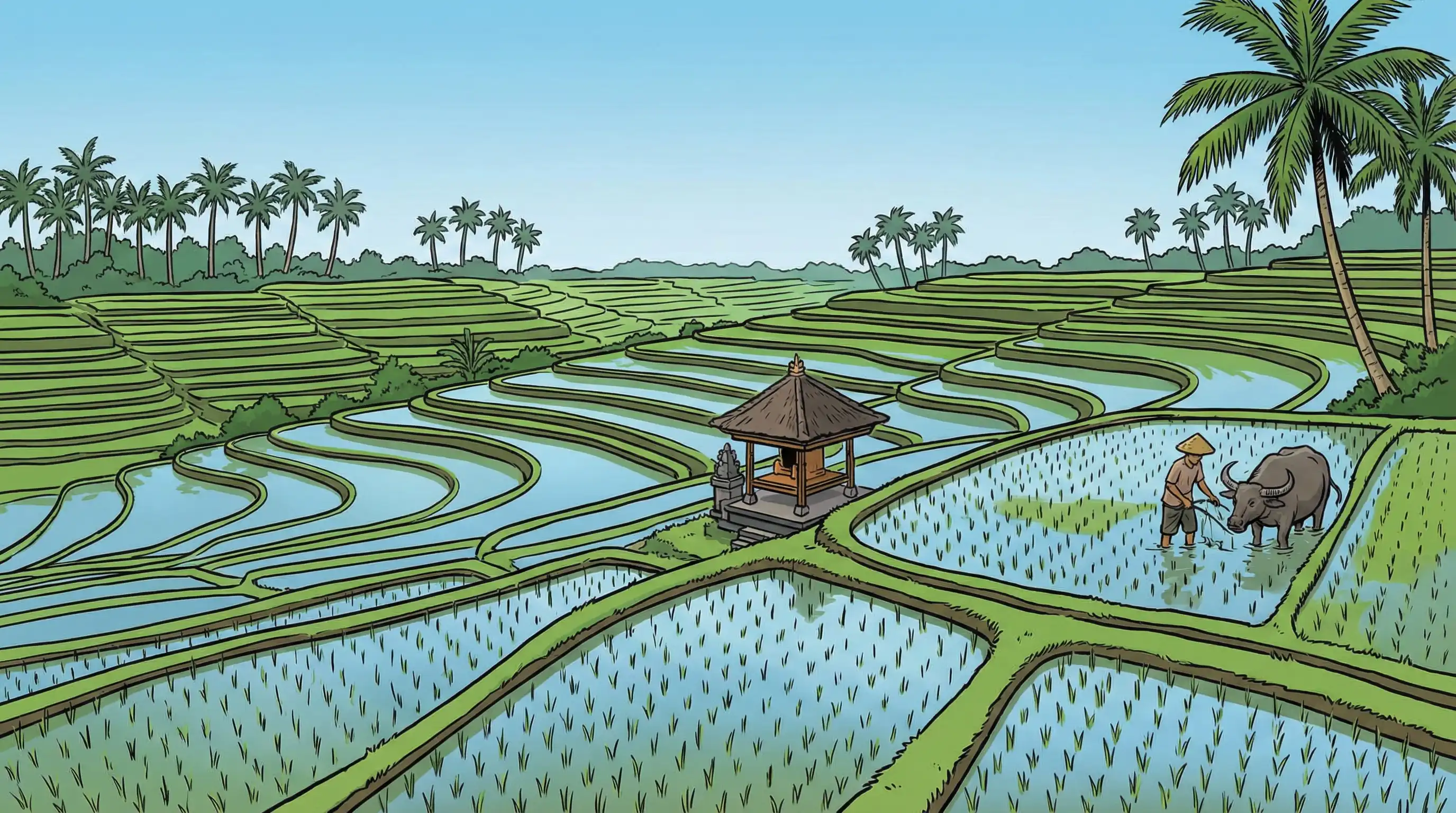
In 2012, UNESCO named the subak rice terrace management system a World Heritage Site because it combines philosophy, hydrology, and ritual in ways that are thousands of years older than modern engineering. This UNESCO World Heritage Site, which was built about the 1st century AD, is like a "living museum" of hydraulic engineering.
Water temples like Pura Ulun Danu Batur are where priests set up irrigation schedules with religious ceremonies. This is how community-based water distribution works. This integration keeps farmers working together peacefully while getting the most rice per acre in the world.
More and more modern sustainable tourist techniques are based on subak concepts. Projections for 2026 onwards predict that regenerative tourism will focus on zero waste and the rebirth of community subak. But urbanization and land conversion for tourists threaten the survival of this system.
Unique Culinary Experiences
Kopi Luwak coffee is one of the most costly coffees in the world, costing up to $600 per pound. Civet cats eat coffee beans, partially digest them, and then poop them out, which makes a fermented product with a unique taste. There is kopi luwak coffee cultivation all over Bali's highlands, but people are moving away from caged civet coffee because of ethical issues.
Babi Guling, or roasted pig, is the most famous meal in Bali. It shows how different the island's food is from the rest of Indonesia, where pork is not very common. This pricey coffee isn't the only thing that's different; Balinese food has more pork and less halal requirements than food from other parts of Indonesia.
Warung culture, which includes tiny family-run restaurants, offers authentic dining experiences that are typically better than tourist restaurants. They serve traditional dishes at local pricing.
Surprising Wildlife and Conservation Facts
Facts about wildlife show Bali's natural past and the conservation problems it faces now. These problems are becoming more and more connected to eco-tourism and hospitality sustainability efforts.
Extinct and Endangered Species
The Bali Tiger died out in the 1930s. It was one of three Indonesian tiger subspecies that died out in the 20th century. This loss happened before people were aware of the need to safeguard endangered species, therefore it serves as a warning for other endangered species.
There are presently fewer than 100 Bali Starlings, also known as Jalak Bali, in the wild. They are one of the most endangered birds in the world. In northwest Bali, the West Bali National Park (Taman Nasional Bali Barat) has conservation centers that strive to safeguard the last remaining populations and set up breeding operations.
West Bali National Park is a protected region of 190 square kilometers that includes forest, savanna, and maritime environments. It is home to endangered species and offers eco-tourism options for people who care about conservation.
There are sacred long-tailed macaques living in temple complexes all over the island, with more than 1,000 living in the Ubud area alone. These monkeys are important to the spiritual world, but they also make it hard for temples and hotels nearby to deal with them.
Contemporary Animal Facts
Bali has the most dogs in Indonesia, with 500,000 to 800,000 free-roaming canines that are important to the culture and pose health risks to the people. Balinese people don't usually eat dog meat, which is different from many other Asian countries. However, rabies control is still a problem.
The civet cats that make kopi luwak live in jungles all throughout the island. The Bali diving tourist business is supported by a wide range of marine species, including reef fish, dolphins, and sea turtles. Conservation efforts are becoming more and more linked to tourism development through reef restoration and sustainable diving practices.
Common Misconceptions and Surprising Truths
A lot of people who visit Bali have wrong ideas about the island that change how they feel and what they expect. Fixing these misunderstandings makes it easier to organize trips and appreciate other cultures.
Geographic Misconceptions
People who go to Bali often think that Bali is a separate country, which is not true. Bali is officially one of Indonesia's 34 provinces, but its unique culture, religion, and tourism infrastructure make it a very different place to visit than other parts of Indonesia.
Denpasar is the capital of Bali, not the tourist areas of Kuta or Ubud, which are more well-known around the world. Denpasar has been the capital of contemporary times since 1950, however Singaraja in North Bali was the capital during the Dutch colonial period.
Bali is small, but it has a lot of different climates, from tropical beaches to chilly alpine highlands. It also has infrastructural solutions like Indonesia's first floating toll road across Benoa Gulf and smart traffic management systems in Denpasar to help with traffic problems.
Cultural Misunderstandings
People who travel to Bali and other places with different microbiomes can get "Bali Belly" stomach problems. This isn't simply a problem in Bali, though. Ice that is approved by the government is safe to use in all tourist regions, but tap water is still not safe to drink.
Visitors can get confused by the rules around traditional attire. On Thursdays, Balinese civil personnel usually wear traditional clothing, but this doesn't happen very often for tourists. However, travelers must wear sarongs and sashes when they visit temples, no matter what day it is.
When you go to a temple, you should take off your shoes at some shrines, never point your feet at altars, and ladies should not go to the temple when they are on their period. You should also not take pictures during ceremonies without permission.
Historical Clarifications
The bombs in Bali in 2002 and 2005, which killed 202 and 20 people, respectively, led to major improvements in security that have kept people secure for almost 20 years. Current security systems do a good job of dealing with these past events.
Japan took over Bali during World War II, from 1942 to 1945, after the Dutch East Indies colonial period. Indonesia battled for freedom, including the 1946 Marga battle in Bali, where Indonesian troops fought for freedom. By 1950, Bali was part of the country.
The change from an agricultural economy to a tourism-based one sped up a lot after Sukarno's Bali Beach Hotel opened in 1963. Within a generation, this changed the economic base of traditional Balinese kingdoms.
Infrastructure and Modern Development
Modern infrastructure development supports huge amounts of tourism, while preservation attempts keep cultural authenticity. This balance may be seen in the needs for buildings, transit systems, and sustainability programs. Infrastructure has gotten better for everyone who goes to Bali, but traffic is still rather bad.
Transportation and Connectivity
Ngurah Rai International Airport, also known as Bali's Rai International Airport, is the main airport in the area and sees millions of arrivals each year. The inauguration of the airport in 1970 led to a boom in tourism that changed Bali's economy.
The first floating toll road in Indonesia crosses Benoa Gulf and shows how engineering can solve Bali's difficult geography. Smart traffic control systems in Denpasar deal with traffic jams caused by 4.3 million inhabitants and millions of tourists using the same limited road infrastructure.
Motorbike culture rules local transportation, and scooters are more flexible than vehicles on narrow village roads. However, this might be dangerous for international visitors who aren't used to how traffic works.
Architectural Marvels
After 28 years of work, the Garuda Wisnu Kencana statue of the Hindu god Vishnu riding his horse Garuda is Indonesia's largest statue. This huge sculpture made of copper and brass shows how Balinese artists worked on a large scale.
As developers realize that traditional Balinese architecture principles like facing mountains, open-air pavilions, and blending in with the terrain improve guest experiences while respecting cultural context, they are starting to use them more and more in modern hotel design.
Penglipuran Village in Bangli is still known as one of the cleanest villages in the world. This shows how traditional community organization leads to sustainable living practices that travelers looking for authentic experiences are increasingly interested in.
Travel Planning Insights
These additional intriguing facts about Bali show that the island has a mix of ancient and modern customs, volcanic geography that molds spiritual beliefs, and daily routines that make its culture stand out from all other Southeast Asian cultures.
Bali is the only Hindu-majority island in Indonesia, which is mostly Muslim. It has more than 20,000 sacred temples, a UNESCO-recognized subak irrigation system, and it shuts down completely every year for Nyepi. All of these things show why this destination goes beyond typical beach vacations to offer real cultural immersion.
For planning right away:
- Visit during dry season (April-October) for optimal weather while respecting that temple ceremonies occur year-round
- Research current Nyepi dates—this 24-hour shutdown affects all travelers on the island
- Pack modest clothing including sarong and sash for temple visits
- Learn basic greetings in Bahasa Indonesia (“Selamat pagi” for good morning builds genuine connections)
Extended exploration could include going to Nusa Penida to see the magnificent cliffs and marine life, going to Taman Nasional Bali Barat for conservation tourism, timing trips around temple festivals for a real cultural experience, or helping to protect the Bali Starling.
For people who work in hospitality, knowing these facts about Bali can help make guests' experiences better. For example, explaining morning offerings, planning around local ceremonies, and connecting visitors with real cultural experiences all help create meaningful tourism that supports both the industry and the culture.
Additional Resources for Deeper Exploration
UNESCO Subak Documentation: The official UNESCO World Heritage Site designation provides detailed information about visiting rice terraces and understanding the water temple system that makes them function.
Temple Etiquette Guides: Local cultural centers and reputable tourism organizations publish guidelines for respectful temple visits, including appropriate dress, photography policies, and behavioral expectations during religious ceremonies.
Conservation Organizations: The Friends of the National Parks Foundation and other organizations working in West Bali National Park offer opportunities to support Bali Starling protection and participate in marine conservation.
Traditional Calendar Resources: Understanding the Pawukon 210-day calendar helps time visits to coincide with specific temple festivals, turning chance encounters into planned cultural experiences.