

Anyone who wants to learn about the underwater environment can do so, but they need the necessary credentials first. Knowing the many sorts of scuba diving certifications is the first step toward safe, fun underwater exploration, whether you're planning a holiday at a resort with a few dives or want to make a full-time profession out of leading divers through tropical reefs.
With this article we explain all the scuba diving certification types you'll need to get, starting with your first pool training session and ending with professional instructor credentials. You'll find out what each qualification opens up, which agencies provide them, and how to pick the best path for you.
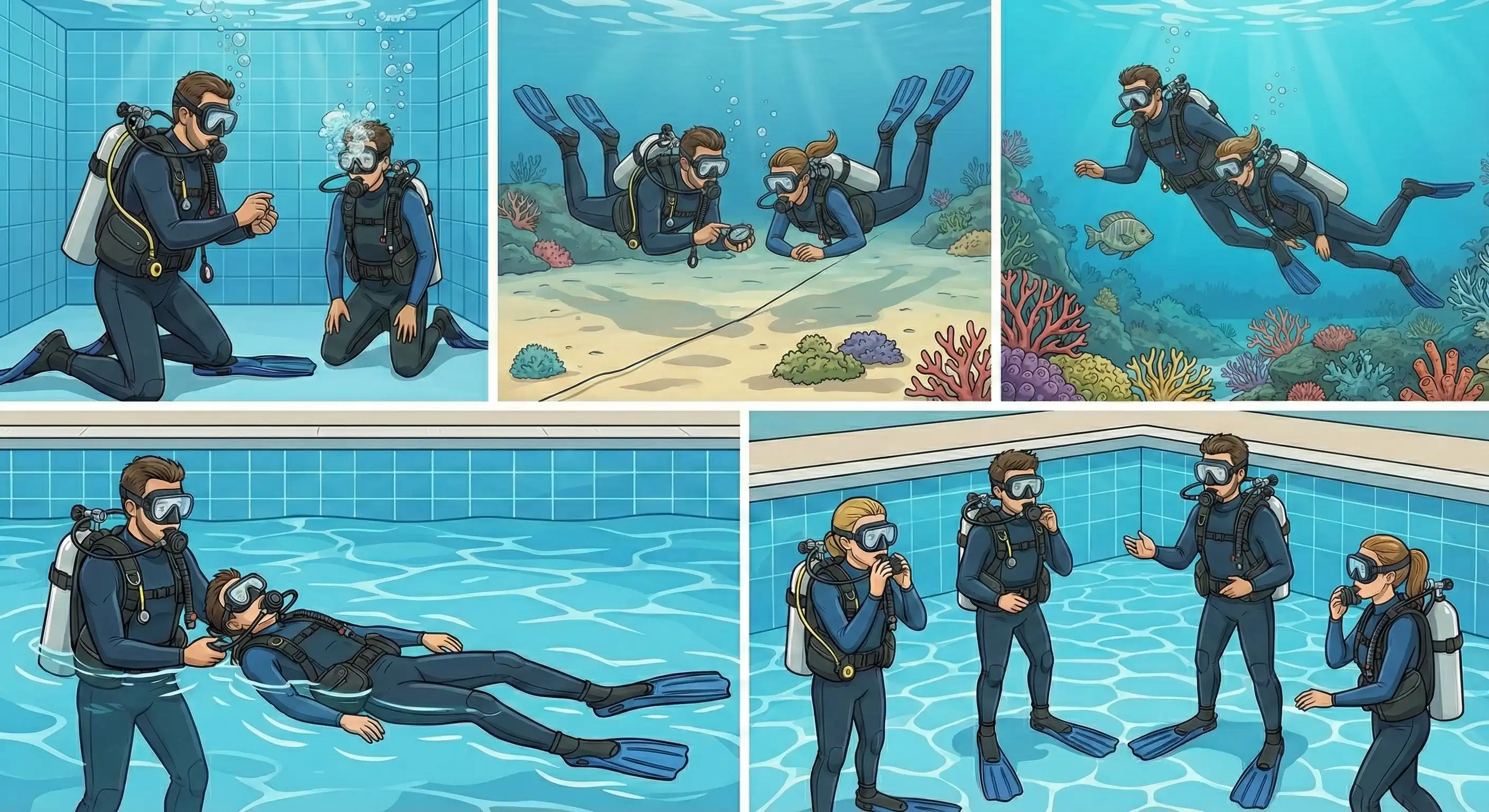
Quick Overview Of Scuba Diving Certification Types
A scuba diving certification level shows that you have finished standardized training, shown that you can dive safely within certain depth limitations and situations, and exhibited certain skills. Your certification card lets dive centers all across the world know what you can do.
The primary types of scuba certifications are:
- Recreational core levels: Scuba Diver, Open Water Diver, Advanced Open Water Diver, Rescue Diver, Master Scuba Diver
- Specialty certifications: Enriched Air (Nitrox), Deep Diver, Wreck Diver, Night Diver, Underwater Photography, Peak Performance Buoyancy
- Professional levels: Divemaster, Assistant Instructor, Open Water Scuba Instructor, Master Scuba Diver Trainer, IDC Staff Instructor, Course Director
Why does certification type matter? Your card determines whether you can:
- Book fun dives at a dive center without additional supervision
- Rent scuba equipment and get air fills for tanks
- Join liveaboards or access advanced dive sites
- Work professionally as a dive leader or instructor
PADI, SSI, NAUI, and CMAS are some of the most well-known agencies that follow the same global safety standards set by groups like the Recreational Scuba Training Council (RSTC). This means that the level of your certification is usually more important than the agency logo on your card. Most dive businesses across the world will accept certifications from different agencies that are the same level.
Why Scuba Certification Types Matter
Your scuba certification is like a driver's license: it shows that you're a certified scuba diver and can obey the "rules of the road" when diving. Without it, you can only dive with supervision. With it, you can dive on your own and go to places that get harder over time.
Your sort of certification has a direct effect on:
- Maximum depth limits: Open Water allows 18m/60ft; Advanced extends to 30m/100ft; Deep specialty reaches 40m/130ft
- Independence level: Lower certs require diving under direct supervision; higher certs allow you to dive independently with a buddy
- Booking access: Many liveaboards and advanced sites require Advanced Open Water or Rescue Diver minimums
- Gas and equipment options: Nitrox certification allows breathing gases beyond standard air; technical certs unlock specialized equipment
- Career eligibility: Professional certifications like Divemaster open doors to working in the diving industry
Most recreational scuba diving certification types don't really expire; for example, your Open Water card is good for life. But if you don't practice, your talents will get worse. Before joining guided dives, several dive facilities recommend or demand refresher dives after 6 to 12 months of not diving.
Professional certificates are not the same. A Divemaster or instructor must keep their status active, keep a record of their recent dives, and keep up with their CPR and first aid training. This is similar to how hotel managers need to keep their systems up to date and get regular training to run their businesses safely and satisfy industry standards.
Major Scuba Certification Agencies
A certification agency sets the requirements for training, makes the course materials, and gives diving instructors the right to teach and certify pupils. Most big agencies follow the World Recreational Scuba Training Council (WRSTC) and ISO standards. This makes sure that all organizations are on the same page.
Here’s what distinguishes the leading agencies:
- PADI (Professional Association of Diving Instructors): The largest global network with over 6,600 dive centers worldwide and 75% market share. Known for highly standardized courses, strong e-learning options, and a clear progression from beginner to instructor. PADI has certified over 29 million divers since 1966.
- SSI (Scuba Schools International): Strong digital learning platform with integrated digital logbooks. Offers flexible training progression and widespread recognition. Popular among divers who prefer app-based tracking and learning.
- NAUI (National Association of Underwater Instructors): A non-profit with academic and science-focused training. Emphasizes instructor discretion and leadership skills. Smaller network but respected for rigorous standards.
- CMAS: Rooted in European dive club culture with a multi-star rating system. Known for rigorous training requirements and strong presence in Mediterranean and European diving regions.
- SDI/TDI & RAID: Stronger focus on technical and advanced diving options. Excellent pathways for rebreather training, extended range diving, and technical certifications beyond recreational limits.
From the point of view of a dive shop, most agencies are the same at the recreational level. The quality of the local dive facility, the expertise of the instructors, and the culture of safety are usually more important than the agency logo on your card.
When picking an agency, think about the courses that are available where you want to live or travel. Most divers can easily find PADI or SSI centers at popular tourist spots, so they are good alternatives.
Core Recreational Scuba Certification Levels
The main recreational ladder makes sense: Scuba Diver → Open Water → Advanced Open Water → Rescue Diver → Master Scuba Diver. Each level builds on what you've learned before, pushing your limits and making you more skilled and independent.
Different agencies use different labels for the same things. For example, CMAS utilizes a star system. However, skill requirements and depth restrictions are pretty much the same across the board.
Below, you'll find information on each level, including the usual depth limits, what you need to know before you can start, the key skills you learn, and what kinds of dives or trips it opens up. For junior versions, the minimum age is usually 10 to 12 years old. Younger divers have to follow depth limits and have someone watch over them.
These certificates are for recreational diving that is fun and doesn't require decompression, not for commercial or technical work.
Scuba Diver / Junior Scuba Diver
The Scuba Diver certification is a "halfway" option for folks who don't have a lot of time but yet want a recognized credential. Most of the time, it takes one to two days to finish.
Key details:
| Aspect | Specification |
|---|---|
| Max depth | 12m / 40ft |
| Supervision | Required—must dive with a dive professional (Divemaster or Instructor) |
| Independent diving | Not allowed |
| Typical duration | 1–2 days |
Basic equipment setup, important skills like clearing a mask and recovering a regulator, hand signals, and rudimentary emergency procedures are all part of the core material.
This certification works well for:
- Vacationers wanting basic training on a tight schedule
- People “testing the waters” before committing to full Open Water
- Travelers who want more than a Discover Scuba experience but can’t dedicate 3–4 days
You can normally upgrade your supervised diver certification to Open Water later by doing the rest of the theory, pool training, and open water dives.
Open Water Diver / Junior Open Water Diver
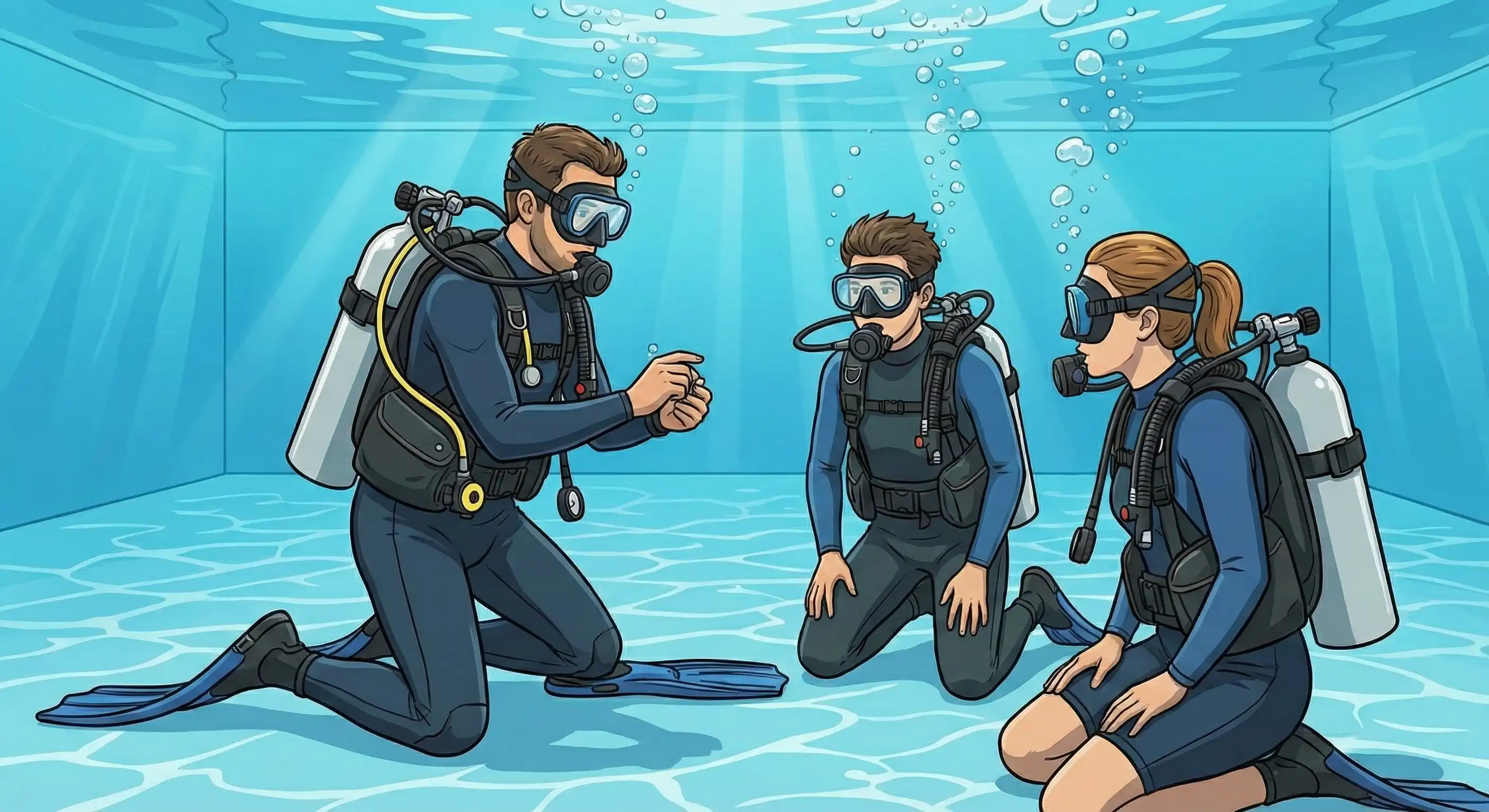
The Open Water Diver certification is the basic certification that lets you dive with a partner without a professional guide. Most qualified divers start their voyage here.
Key details:
| Aspect | Specification |
|---|---|
| Max depth | 18m / 60ft (adults); 12m / 40ft (juniors under ~12) |
| Prerequisites | Basic swimming ability (200m swim, 10-minute float); medical questionnaire |
| Typical duration | 3–4 days |
The PADI Open Water Diver course structure includes:
- Theory: Online or classroom sessions covering physics, physiology, dive planning, and equipment
- Confined water: Pool sessions for buoyancy control, mask clearing, emergency ascents, and essential skills
- Open water: 4 checkout dives demonstrating proficiency in real conditions
You have learned how to control buoyancy, navigate underwater, manage gas, work with a companion, and deal with frequent problems in real life.
Your open water diver certification lets you use most day boats, resort diving operations, and air fills at any dive center. It is also the first step in getting all higher certifications and specialist courses.
Advanced Open Water Diver
Supervised exploration and applied skills training help you become a better diver with the Advanced Open Water Diver certification. It is meant to help people feel more confident in different diving situations.
Key details:
| Aspect | Specification |
|---|---|
| Max depth | 30m / 100ft |
| Prerequisites | Open Water Diver |
| Typical duration | 2–3 days |
The course structure includes 5 adventure dives with minimal classroom time:
- 2 mandatory dives: Deep diving (to 30m) and underwater navigation
- 3 elective dives: Choose from options like night dive, wreck diving, drift, boat diving, or peak performance buoyancy
Instead of big tests, the focus is on supervised exploration and using skills. Most divers get this certification during the course of two days on a dive vacation, usually together with pleasure dives at well-known sites.
This certification lets you dive deeper, go on more difficult expeditions, and get to places that need confirmation of advanced training.
Rescue Diver
The Rescue Diver certification is the point at when divers stop thinking about their own skills and start thinking about the safety of others. People typically say that it is the hardest and most rewarding recreational course.
Key details:
| Aspect | Specification |
|---|---|
| Prerequisites | Advanced Open Water (or equivalent); current CPR/First Aid within 24 months |
| Typical duration | 3–4 days |
| Focus | Stress recognition, self-rescue, assisting others, managing diving emergencies |
Core content includes:
- Recognizing diver stress and preventing problems before they escalate
- Self-rescue skills and personal emergency management
- Assisting tired, panicked, or unresponsive divers
- Missing diver procedures and search patterns
- Emergency action planning at surface and on boat
To get a rescue diver certification, you have to do realistic scenarios in the water that are hard on both your body and your mind. Doing these scenarios gives you real confidence in how to deal with emergencies.
You need this qualification to become a Master Scuba Diver, and it is also the first step toward professional training like Divemaster. It also shows that you know how to save someone, which is something that dive centers and liveaboards look for in a serious, safety-conscious diver.
Master Scuba Diver
The Master Scuba Diver grade is the greatest level of recognition for recreational scuba divers who aren't professionals. It's frequently termed the "black belt" in recreational scuba.
Requirements:
| Requirement | Specification |
|---|---|
| Rescue Diver certification | Required |
| Specialty certifications | Minimum 5 (e.g., Deep, Nitrox, Wreck, Night, Navigation) |
| Logged dives | At least 50 |
This is a score for recognition, not a separate skills course. It recognizes a lot of experience and training in many diving settings.
Being a Master Scuba Diver can make it easier to get to hard dive sites, high-end liveaboards, and advanced trips that need verification of a lot of expertise. This level is only reached by roughly 2% of recreational divers.
If they have the chance to travel and take specialty courses, motivated divers may be able to become Master Scuba Divers in 1 to 2 years of active diving.
Specialty Scuba Diving Certification Types
After you get your Open Water or Advanced certification, you can take specialist courses that focus on things like deeper dives, wrecks, underwater photography, currents, or different gas combinations.
Specialized certifications have more specific goals than core levels and usually last 1 to 3 days. They include focused theory and 1 to 4 specialized dives.
Common specialty categories include:
- Enriched Air (Nitrox)
- Deep Diver
- Wreck Diver
- Night Diver
- Underwater Photography/Video
- Peak Performance Buoyancy
- Region-specific courses (dry suit, altitude, ice)
If you log a lot of specialty and dives, you can get higher levels of recognition, including Master Scuba Diver. Pick specialties that match where you want to go. For example, Nitrox and Deep are great for multi-day liveaboards to places like the Red Sea, the Maldives, or Indonesia.
Enriched Air (Nitrox) Diver
A lot of divers get their first specialized certification as an Enriched Air Diver, and for good reason. It expands the no-decompression limits for dives between 18 and 30 meters (60 and 100 feet), which lets you stay on the bottom longer and spend less time on the surface.
Key details:
| Aspect | Specification |
|---|---|
| Prerequisites | Open Water certification; minimum age 12–15 (varies by agency) |
| Training dives | Some agencies require 1–2; others are theory-only |
| Focus | Oxygen exposure limits, gas analysis, dive computer settings |
The course is primarily theory-focused, covering:
- Understanding oxygen toxicity limits and exposure tracking
- Analyzing gas mixes with an oxygen analyzer
- Setting dive computers for enriched air
- Benefits and risks of breathing gases with higher oxygen content
Some practical benefits are longer bottom periods on repeated dives, less fatigue, and a lot of use for liveaboard cruises with numerous dives every day. More and more operators are asking for nitrox certification for certain trips, which shows that they care about safety when diving.
Deep Diver
The Deep Diver specialization gives you focused training for dives from 18m/60ft down to the recreational maximum depth of 40m/130ft, which is deeper than the regular Advanced limit.
Key details:
| Aspect | Specification |
|---|---|
| Prerequisites | Advanced Open Water; minimum age 15+ |
| Training dives | 4 deep dives over 2 days |
| Max depth | 40m / 130ft (recreational limit) |
Key skills include:
- Recognizing and managing nitrogen narcosis
- Gas consumption planning for increased depths
- Emergency decompression procedures
- Redundant equipment considerations
This certification is useful for diving deeper into wrecks, walls, or shark cleaning stations that are usually located at depths of 30 to 40 meters in popular diving areas. To dive safely at these depths, you need to plan your gas use more carefully, use conservative profiles, and follow the advice of your dive computer very carefully.
Wreck Diver
The Wreck Diver specialty teaches dives how to safely examine shipwrecks, planes, and artificial reefs without harming the structures or aquatic life.
Key details:
| Aspect | Specification |
|---|---|
| Prerequisites | Advanced Open Water; prior experience in currents/low visibility recommended |
| Training content | Mapping, hazard recognition, limited-penetration techniques |
| Equipment | Often includes lights, guidelines, and redundant air considerations |
Training typically covers:
- Wreck mapping and orientation techniques
- Recognizing hazards: entanglement risks, silt-outs, sharp metal
- Limited-penetration techniques using guidelines and proper lighting
- Environmental considerations and wreck preservation
Some wreck courses just teach how to explore the outside of a wreck, while others teach how to go inside. If you want to get inside, look at the course descriptions.
People like to dive into ruins in places with historical sites, including WWII wrecks in Micronesia, shipwrecks in the Mediterranean, or artificial reefs in the Caribbean. Many dive operators demand wreck certification for dives that go inside.
Professional And Leadership Scuba Certification Levels
Professional qualifications start where training for fun ends. These certificates let divers guide others, help or teach courses, and work full-time in the diving sector. They start with Divemaster and go up to Instructor and higher leadership roles.
Professional classes involve more in-depth theory, such as physics, physiology, decompression models, and equipment maintenance, as well as more in-water demonstrations than recreational levels do. A dive professional needs to know more than simply how to dive. They also need to know how to teach, lead, and handle diving situations for other people.
Most of the time, pro-level certificates require:
- Medical clearance from a physician
- Liability insurance where applicable
- Maintaining “active” or “teaching” status through agency renewal policies
- Current CPR/first-aid credentials
- Minimum logged dive counts and ongoing professional training
Divemaster
The first professional level is Divemaster (DM). This allows trained divers to lead other certified divers, oversee some training activities, and help diving instructors during classes.
Key details:
| Requirement | Specification |
|---|---|
| Prerequisites | Rescue Diver; current CPR/First Aid |
| Minimum age | 18+ |
| Dive log | 40 dives to start training; 60 to certify |
| Typical duration | 4–8 weeks (intensive); several months (part-time) |
Training elements include:
- Advanced dive theory exams covering physics, physiology, and equipment
- Stamina tests (timed swims, equipment tows, survival floats)
- Skill circuit demonstrations to instructor-level standards
- Dive site mapping exercises
- Practical leadership internships guiding real divers
Divemasters usually guide entertaining dives, help with courses, take care of dive gear, and act as the main point of contact between guests and diving instructors. The job is similar to that of a front-office supervisor in the hotel industry, as it involves managing visitor experiences and helping senior staff.
Instructor Levels (OWSI, MSDT, Course Director And Equivalents)
With the Open Water Scuba Instructor (OWSI) certification, professionals can instruct and certify new dives on their own, following the requirements set by their agency. This is the first step toward becoming a diving instructor.
Instructor Development Course (IDC) components:
- Classroom teaching techniques and presentation skills
- Confined water demonstrations to examination standards
- Open water teaching evaluations
- Standards, procedures, and risk management
- Final standardized Instructor Examination (IE)
Higher instructor ratings include:
| Rating | Capabilities |
|---|---|
| Master Scuba Diver Trainer (MSDT) | Teach multiple specialty courses; requires experience certifying students |
| IDC Staff Instructor | Assist with Instructor Development Courses |
| Course Director | Train and mentor new instructors; shape training programs at dive centers |
The assistant instructor rating is a way for people who aren't ready for a full instructor evaluation yet to get supervised teaching experience.
Training at the instructor level is quite hard and can take more than two weeks for the IDC alone. It shows that you are serious about a long-term or full-time job in the diving industry. It is like rising up to management in the hospitality industry, where you learn how to lead and teach while also learning how to run things.
Commercial, Technical, And Public Safety Diving Certifications
In addition to leisure and professional teacher courses, there are also specific qualifications for working in factories and extreme diving conditions. These come with varied levels of risk, training requirements, and typically rules.
Commercial diving certifications prepare divers for underwater work:
- ACDE (Association of Commercial Diving Educators) credentials following ANSI standards
- ADCI (Association of Diving Contractors International) Commercial Diver—requires 625 hours of formal training
- IMCA certifications for international offshore work
- Programs following U.S. Navy or European commercial standards
Commercial divers can work on underwater welding, building, inspecting, or oil and gas activities on the ocean floor. Training usually includes hundreds of hours of using surface-supplied equipment, working in a hyperbaric chamber, and working as a team. You may need further certificates, like HAZWOPER, to work in places that are polluted.
Technical diving certifications extend beyond recreational no-decompression limits:
- Extended-range courses for depths beyond 40m
- Decompression diving procedures
- Mixed gases (trimix, heliox) for deep operations
- Twinset, sidemount, or closed-circuit rebreather configurations
- Offered through TDI, RAID, GUE, or tech divisions of agencies like PADI TecRec
Public safety diving certifications serve police, fire, and search-and-recovery teams with additional protocols for:
- Evidence handling and chain of custody
- Low-visibility and contaminated water operations
- Body recovery procedures
- Coordination with emergency services
These paths require extensive prior certification, significant logged experience, and often full-time professional commitment.
Prerequisites, Training Structure, And Skill Assessment
Understanding the common prerequisites and training structure helps you plan your certification journey efficiently.
Common prerequisites across agencies:
| Requirement | Typical Standard |
|---|---|
| Minimum age | 10–12 for junior courses; 15–18 for advanced/pro |
| Swimming ability | 200m swim, 10-minute float (no aids) |
| Medical fitness | Self-assessment questionnaire; physician sign-off for certain conditions |
| Prior certification | Varies by level (e.g., Open Water required for Advanced) |
Typical training stages:
- Theory: Online e-learning or classroom covering physics, physiology, environment, and equipment
- Confined water: Pool training to build core skills in controlled conditions
- Open water: Real dives at sea or lakes to apply and demonstrate skills under instructor supervision
Assessment methods include:
- Knowledge reviews and quizzes throughout training
- Final theory exam (typically 75% passing threshold)
- In-water skill demonstrations to defined performance standards
- Logged dives meeting depth and time requirements
Higher certification levels need stricter performance standards, such as neutral buoyancy to exact standards, appropriate trim, and regulated ascent rates. They also require increased responsibility for planning and guiding dives.
How To Choose The Right Scuba Certification Path
Your ideal certification path depends on your real goals. A casual vacationer, dedicated enthusiast, and career-focused professional will each follow different routes.
Guidance for three typical profiles:
| Profile | Recommended Path |
|---|---|
| Casual traveler | Open Water → Nitrox specialty → Advanced Open Water for future trips |
| Enthusiast | Progress through Rescue Diver → Multiple specialties (Deep, Wreck, Night) → Master Scuba Diver |
| Career-focused | Open Water → Advanced → Rescue → Divemaster internship → Instructor Development Course |
Prioritize dive center quality over small price differences. Evaluate:
- Class sizes (smaller is usually better for skill development)
- Safety culture and emergency preparedness
- Equipment maintenance and condition
- Instructor experience and communication style
- Honest pre-course discussions about prerequisites and expectations
Practical checks before booking:
- Read recent reviews on multiple platforms
- Verify the center’s agency affiliation and insurance coverage
- Ask about group sizes for your course dates
- Inquire about boat procedures, surface support, and emergency protocols (oxygen kit, radios, evacuation plans)
- Confirm the entry level course schedule matches your available time
The diving industry is always changing, with new trends including sustainable certifications, rebreather technology, and better digital learning. Choosing the appropriate course today will prepare you for whatever comes next in your diving career.
Just like professional hotels are using more and more integrated platforms like Prostay to make sure that guests have a smooth and safe experience from booking to checkout, divers rely on well-run dive centers and recognized certificates to have safe and memorable underwater adventures. Your certification card is like a passport to the underwater world. Pick the level of scuba diving certification that will help you go to where you want to go next.