
Every few days somebody emails us a version of the same question. They want to know how to get scuba certified, they have read four different answers online, and they cannot work out whether it takes a weekend or a month, costs two hundred dollars or two thousand, or requires them to be a strong swimmer. So here is the whole thing written out plainly, the way we explain it across the counter in Sanur before anyone books an PADI Open Water Diver course in Bali. No agency marketing, just what actually happens and what it actually costs.
The short version: an entry level certification takes three to four days, involves theory, a pool and four sea dives, and leaves you qualified to dive to eighteen metres anywhere in the world with a buddy. It does not expire. You do not need to be an athlete. If you have never breathed underwater at all and you are not sure you will even like it, do a try dive in Bali first and put the money toward the full course afterwards. We would rather you spent one morning finding out than four days regretting it.
What follows covers the process from the first day to the card arriving, plus the bits people usually discover too late: the swim test, the medical form, whether to train at home or on holiday, and what the price should include. We teach roughly two hundred entry level students a year, so most of this comes from watching where people get stuck rather than from a manual.
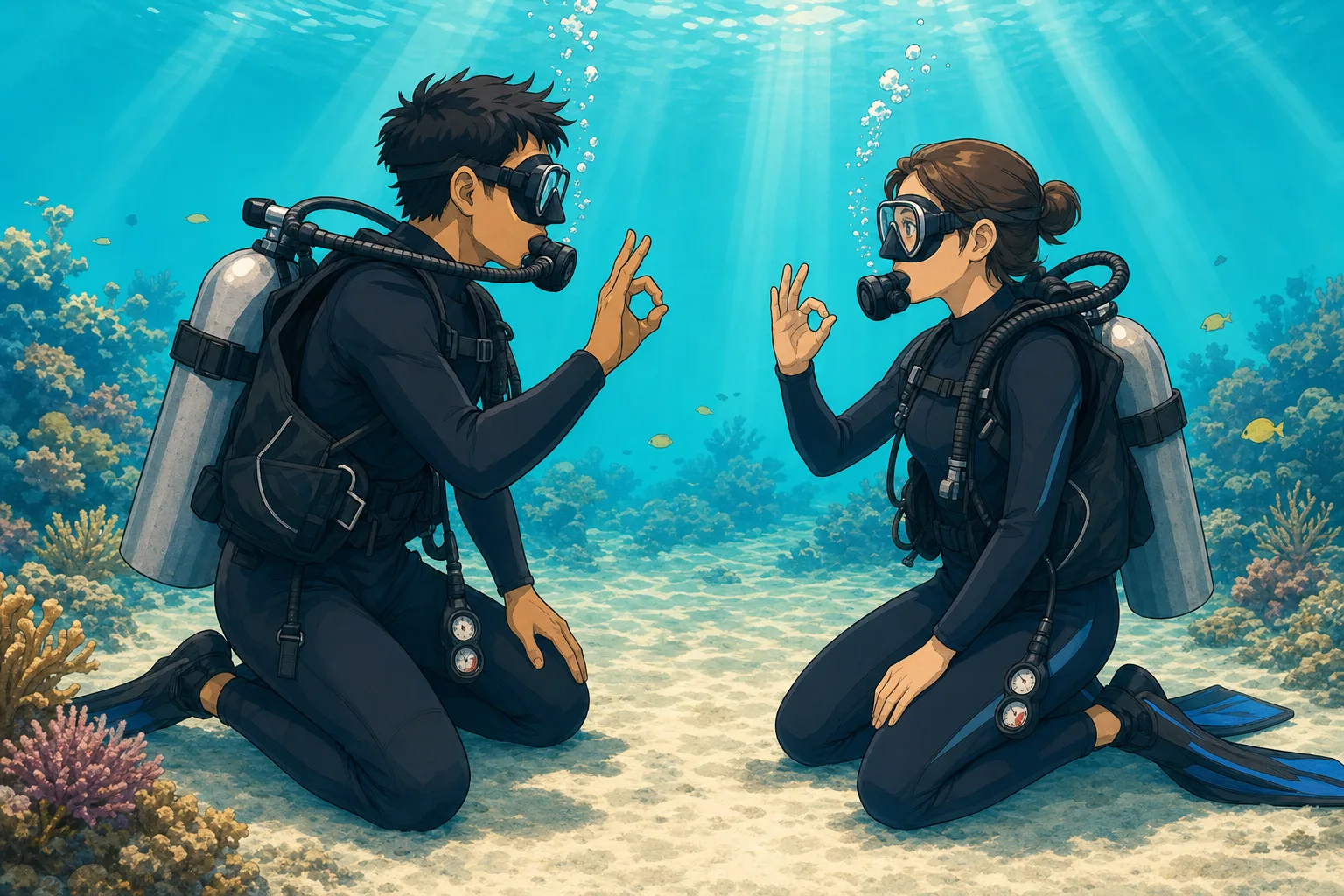
What being scuba certified actually means
A certification is not a licence issued by a government. Nobody from the state checks your card. It is a training qualification issued by a diver training agency, and what it really buys you is access. Dive centres, boats and fill stations will not rent you a tank, sell you air or take you on a boat without one, because their insurance says they cannot.
So the honest answer to whether the law requires certification is usually no, and the answer to whether you can dive without one is also effectively no, because nothing in the supply chain will serve you. In Indonesia there is no dive police. There is simply no operator who will put an uncertified stranger in the water unsupervised, ourselves included.
The card itself is a plastic rectangle, and increasingly an app. What matters is the record behind it, held by the agency, which any centre in the world can verify in about a minute. That is why a card earned at a Bali diving school works in Egypt, Mexico or Norway without any paperwork. The system is genuinely global, and it is the one thing the agencies got unambiguously right.
Entry level certification is deliberately narrow. It qualifies you to dive with a buddy of similar or greater training, in conditions similar to those you trained in, to a recommended maximum of eighteen metres. It does not qualify you to dive alone, to go into wrecks or caves, or to do decompression diving. Those are separate courses, and we will come to the ladder further down.
The three parts of every entry level course
Whichever agency you pick, the structure is the same, because they all certify against the same international standard. Theory, then confined water, then open water. None of the three can be skipped, and no centre can honestly compress them into less than three days.
Part one: the theory
Five sections of knowledge development covering pressure, buoyancy, equipment, planning and safety, with a short quiz after each and a final exam of fifty multiple choice questions. Pass mark is seventy five percent. Almost nobody fails, and the ones who do simply resit the missed questions with an instructor the same afternoon.
You can do all of it online before you travel, and we strongly suggest you do. It takes six to ten hours depending on how carefully you read, and doing it at home on your sofa in the weeks before your trip converts what would be a four day course into a three day one. It also means your first morning here is spent in the water rather than in front of a laptop while the boat you can hear leaving goes without you.
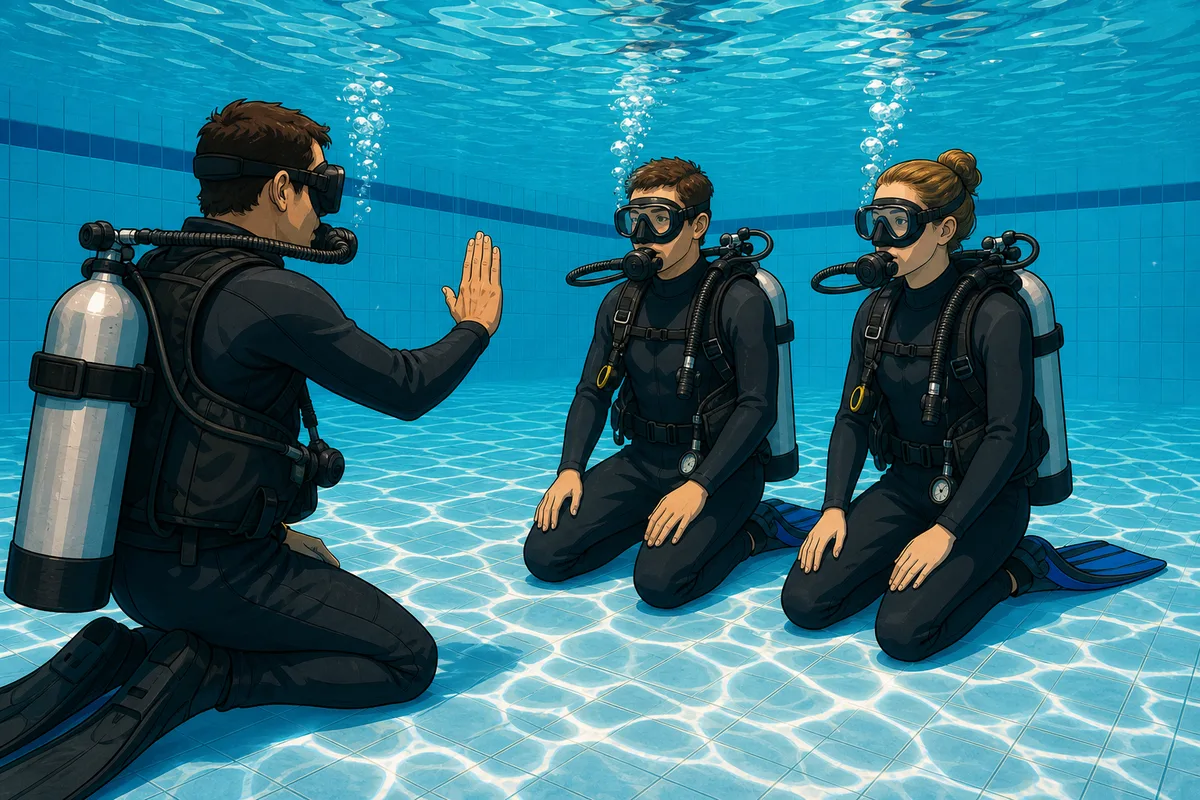
Part two: confined water
A pool, or a sheltered patch of shallow sea that behaves like one. Five sessions covering roughly twenty skills: clearing a flooded mask, recovering a regulator you have dropped, sharing air with a buddy, controlling your buoyancy, removing and replacing kit. Each one is demonstrated, then you copy it, then you do it again until it stops being interesting.
This is the part people underestimate and the part that decides how the rest goes. Mask clearing is where the nerves show up, because filling your mask with water and then breathing calmly through your mouth is genuinely counterintuitive the first time. Around one student in six needs a few extra goes at it. That is normal and it is not a sign you will be a bad diver.
Two skills are worth knowing about in advance because they cause most of the wobbles. Equalising your ears is the first, and it is the one thing that can genuinely stop a course rather than merely delay it. You clear your ears every metre on the way down, gently, before it hurts, and if you have a cold you do not dive at all. Learn the technique the week before you travel rather than the morning of your first dive.
The second is weighting. New divers are almost always overweighted, partly because sinking feels safer than floating and partly because it is quicker for an instructor to add a kilo than to fix a breathing pattern. Overweighting is why some people finish a course convinced they are clumsy underwater. Ask your instructor to do a proper buoyancy check at the surface on every dive, with an empty jacket and a normal breath held, and you should float at eye level. Two kilos less than you think is usually right.
Part three: four open water dives
Usually two dives a day across two days, in the sea, at real dive sites. You repeat a subset of the pool skills at depth to prove they transfer, then you go for a swim. Dive one and two are shallow, capped at twelve metres. Dive three and four go to eighteen. By dive four there is almost nothing to demonstrate and it becomes an ordinary dive with an instructor nearby.
We run ours on the house reef in Sanur and at Padang Bai, both of which are forgiving: sand to kneel on, gentle profiles, and enough fish that the skills feel like an interruption rather than the point. We do not teach open water students at Nusa Penida. The currents there are unpredictable and it is the wrong place to learn, whatever anyone selling you a package says.
How long it takes from start to card
Three days is the realistic minimum if you finish the theory before you arrive. Four days if you do the theory here. Anyone advertising a two day open water course is either cutting skills or is not counting the day of theory you will do on your own time.
A typical three day schedule with us looks like this. Day one: paperwork and kit fitting at eight, pool from nine until about one, a swim assessment somewhere in the middle. Day two: two open water dives on the house reef, back at the shop by two. Day three: two more dives, usually a short boat trip, exam review, and the card processed by late afternoon. Total in water time across the three days is around six hours. The full Bali Open Water course guide sets out what each day involves if you want to see it in detail.
You do not have to do it consecutively. The standards allow a course to be spread over twelve months, so plenty of people do theory and pool at home in the spring and the sea dives somewhere warm in the autumn. More on that arrangement shortly, because it is the most useful and least advertised option in diving.
The physical card takes two to six weeks to arrive by post, but you are certified the moment your instructor signs you off. A temporary digital card lands in your email or the agency app within about twenty four hours, and every dive centre in the world accepts it. Plenty of our students dive somewhere else the following week on nothing but a phone screenshot.
What you need before you start
Less than people fear, but three things are non negotiable and it is much cheaper to sort them out before you book a flight than to discover them at our counter.
Age
Fifteen for a full certification. Ten to fourteen earns a Junior version of the same card, which converts automatically at fifteen and carries tighter depth limits: twelve metres, and diving with a parent or professional. Children from eight can do pool only programmes. If you are travelling as a family, ask which programme fits which age before you book anything, because the age bands are strict and no instructor can bend them.
Swimming
There is a watermanship assessment and it is not optional, although it is gentler than the word test suggests. Two hundred metres of swimming, any stroke, no time limit, no style marks. Or three hundred metres with mask, fins and snorkel if you would rather. Then ten minutes floating or treading water, again untimed in the sense that nothing else is happening.
You cannot fail it by being slow. You fail it by being unable to keep yourself at the surface without help, which is a genuine safety issue rather than a bureaucratic one. If that worries you, read our honest piece on whether you need to swim to scuba dive before writing the idea off, because the fin assisted option solves it for most nervous swimmers.
The medical form
A standard questionnaire, the same one worldwide, with around thirty yes or no questions. If every answer is no, you sign it and that is the end of it. A single yes means a doctor has to sign you fit before you can get in the water. Asthma, heart conditions, recent surgery, epilepsy, diabetes and some medications are the usual triggers.
This catches people out constantly, because the doctor's signature is easy to obtain at home in advance and awkward to obtain in Bali at short notice. Expect to lose most of a day and around IDR 750,000 to a clinic here. Our guide to diving with asthma covers the medical side properly, and most conditional answers turn out to be fine. Download the form, read it, and if anything is a yes, see your GP before you fly.
Which agency: PADI, SSI, NAUI or RAID
This is the question people spend the most time on and it matters the least. All the major agencies certify to the same international standard, and every card is recognised by every operator. Nobody has ever been turned away from a boat for holding the wrong brand.
| Agency | Entry level course name | Recognised worldwide | Worth knowing |
|---|---|---|---|
| PADI | Open Water Diver | Yes | The largest network, so the easiest card to continue training on anywhere. Materials cost slightly more. |
| SSI | Open Water Diver | Yes | Digital materials are usually included rather than sold separately. Slightly more flexible skill order. |
| NAUI | Scuba Diver | Yes | Strong reputation in North America and in university and research diving. |
| RAID | Open Water 20 | Yes | Online first, no paper. Popular with centres that also teach technical diving. |
| BSAC | Ocean Diver | Yes | Club based, mostly UK. Excellent training, usually spread over months rather than days. |
We teach PADI certification courses in Bali because it is the largest network, which means a student certified here can walk into a centre in almost any country and continue without explaining anything. That is a practical advantage for travellers rather than a claim that the training is better. It is not better. It is the same skills in a slightly different order.
What genuinely varies is the instructor standing in front of you and the ratio they teach at. A patient instructor with four students will produce better divers than a rushed one with eight, whatever logo is on the paperwork. If you want the full comparison of what each level of card actually permits, we have written it up in our guide to scuba certification types.
What it costs, and what the price should include
Entry level certification runs from roughly three hundred US dollars in Southeast Asia to nine hundred or more in Europe, North America and Australia. The training is identical. You are paying for local wages, boat fuel and whether the water needs a drysuit.
Our Open Water course is IDR 5,500,000, which at the time of writing is around three hundred and forty dollars. That includes all training, equipment hire, the digital learning materials, certification processing, and the boat where a boat is used. It does not include the IDR 50,000 marine park fee at some sites, or lunch. Full detail sits on our Bali dive course prices page and in the Bali diving price breakdown.
When you compare quotes, and you should, check four things. Are the learning materials included or billed separately, because that is often forty to eighty dollars hidden. Is certification processing included. What is the student to instructor ratio. And are all four open water dives included, because a handful of operators quote for two and sell you the rest later.
A course priced far below everyone else is usually solving for one of those four. We are not the cheapest in Sanur and we do not try to be. Eight students to one instructor is how you get a cheap course, and it is also how you get a diver who never really learned buoyancy.
Budget a little beyond the course fee as well. A mask that actually fits your face is the one piece of kit worth owning from day one, and costs forty to seventy dollars. Rental masks leak more often than they should, and a leaking mask during your first week is a genuinely miserable way to learn. Everything else, regulators, jacket, computer, can wait until you know whether you are going to keep diving. Add roughly IDR 100,000 a day for transport to the further sites if you are staying outside Sanur, and remember you cannot fly for eighteen hours after your last dive, which is a scheduling cost rather than a cash one.
Certify at home, on holiday, or split the difference
Three routes, and the third one is the one almost nobody knows about.
Entirely at home
Good if you want to dive regularly near where you live, and if you would rather learn slowly over several weekends than in three consecutive days. The trade off is cold, low visibility water in most of Europe and North America, which makes the skills harder and the experience less persuasive. Learning to clear a mask at eight degrees in a quarry is a different sport.
Entirely on holiday
What most people do. Warm clear water makes every skill easier, and finishing on a reef rather than in a quarry is the difference between a hobby that sticks and a certification that gets used once. Twenty nine degree water and thirty metre visibility in the dry season are why so many people end up scuba diving in Bali for their first card. The cost is three or four days of a two week trip. Our first Bali diving trip guide has sample itineraries that fit a course around the rest of a holiday.
The referral: theory and pool at home, sea dives abroad
You complete the theory and all five confined water sessions with a centre near home, they issue a referral document valid for twelve months, and you arrive here needing only the four open water dives. That is a day and a half instead of three or four days, and it hands you back two days of your holiday.
It suits anyone on a short trip, anyone nervous who would rather do the fiddly skills in a familiar pool, and couples where one person is already certified. We accept referrals from any recognised agency. Bring the paperwork signed and dated, and email us a scan before you fly so we can check it is complete. About one referral in ten arrives missing an instructor signature, and sorting that out across time zones is miserable.
How deep you can go, and what comes next
Eighteen metres is the entry level limit, and it is a recommendation rather than an alarm that sounds. It exists because at eighteen metres a reasonably calm person with a normal air consumption has enough gas and enough no decompression time to solve most problems and still reach the surface slowly.
Honestly, eighteen metres is where most of the good stuff lives anyway. Reefs are shallow. Light is better shallow. Your air lasts far longer shallow. The Liberty wreck at Tulamben starts at five metres. Plenty of divers with thirty years of experience spend most of their dives above twenty metres and do not feel short changed.
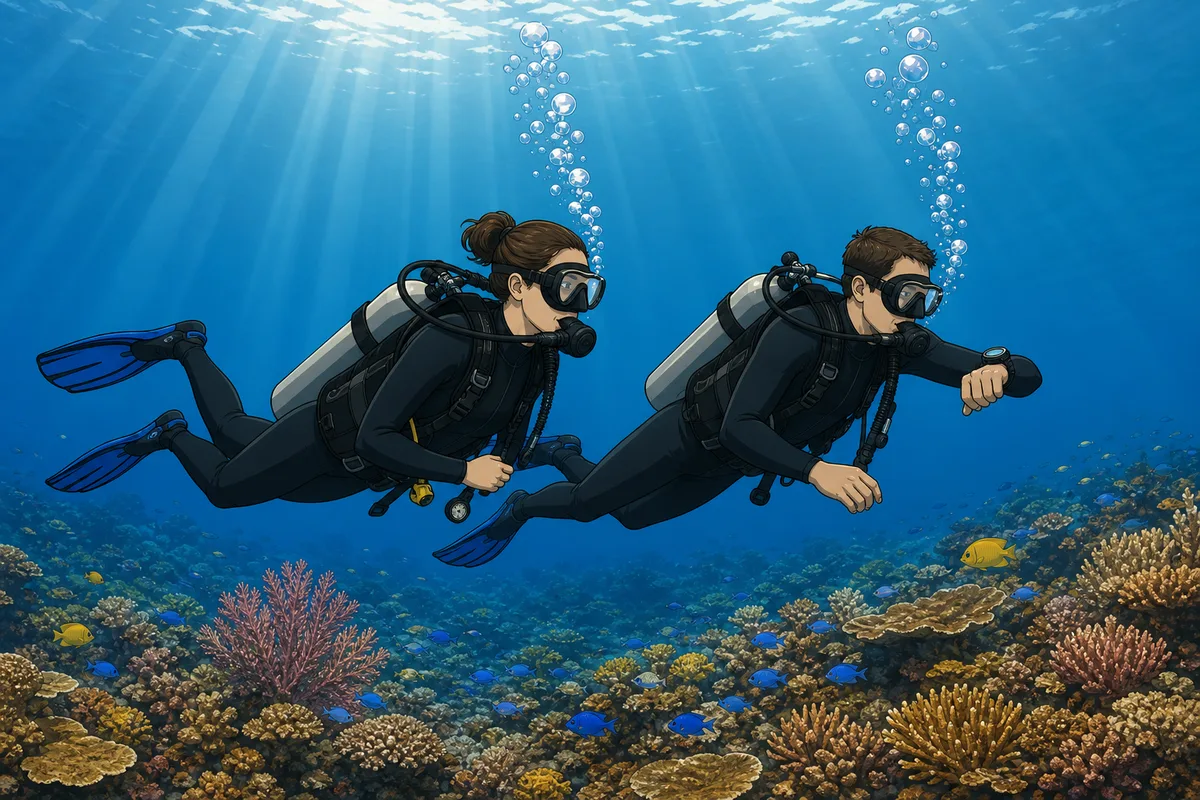
The next card is Advanced Open Water, which takes two days, five dives and no exam, and lifts you to thirty metres. It is less a qualification than five guided dives with a theme, but it does add a deep dive and a navigation dive that genuinely change how you dive. Our Advanced Open Water course in Bali is IDR 6,500,000, and the Bali Advanced course guide explains which adventure dives are worth picking.
After that the ladder runs through Rescue Diver, which most instructors will tell you is the best course in recreational diving, then Divemaster if you want to work in the industry, then instructor training. Running alongside all of it are the specialties, which are short one or two dive courses on a single subject. We teach the whole ladder from Sanur: the Rescue Diver course in Bali, Divemaster internship in Bali and the PADI instructor course in Bali, plus specialties including nitrox diving in Bali for longer bottom times and deep diver training in Bali to forty metres.
Our advice, for what it is worth, is to ignore the ladder for a while after your first card. Go and do twenty ordinary dives. Courses teach you procedures, but only repetition teaches you the thing that actually separates a comfortable diver from an uncomfortable one, which is knowing where your body is in the water without thinking about it. When you do start collecting cards again, the two with the best return are enriched air, because it buys you real bottom time for one evening of theory, and anything that fixes your buoyancy, because everything else in diving gets easier once that is sorted.
Does a scuba certification expire?
No. Not with any recognised agency. A card issued in 1994 is still valid in 2026 and no centre can refuse it on age alone. There is no renewal fee and no expiry date printed on it, whatever a nervous forum post told you.
What does lapse is you. Skills fade fast, and the ones that fade first are the ones you need in a hurry: mask clearing, regulator recovery, weighting. Every agency recommends a refresher after six to twelve months out of the water, and any decent centre will quietly assess you on the first dive regardless of what your logbook says.
If it has been more than a year, book the refresher and stop arguing with yourself about it. A half day in the pool with an instructor costs a fraction of a course and turns a tense first dive into a normal one. Our Bali PADI ReActivate refresher guide covers what the session involves. We will not turn away a rusty diver, but we will put you on the house reef before we put you on a current.
The one thing that does expire is professional level ratings. Divemasters and instructors renew annually and carry insurance. That is a working credential rather than a recreational one, and it does not affect the card in your wallet.
How to choose a dive centre, and where to start
The centre matters more than the agency, the price or the location. Four questions will tell you nearly everything, and any honest shop will answer them without hesitating.
First, what is the student to instructor ratio. Standards allow up to eight in open water. We cap ours at four and most days it is two or three. Ask for a number, not a reassurance.
Second, what happens if I need an extra session. The correct answer is that you get one. A centre that charges you for a repeat pool session has an incentive to sign you off before you are ready, which is the opposite of what you want.
Third, where do the open water dives happen. Sheltered sites with sand and gentle profiles are right for training. If the answer involves a strong current site because it is more impressive, go elsewhere.
Fourth, who is my instructor and how long have they been here. Seasonal staff turn over quickly across Bali, and there is a real difference between someone on their third month and someone who has taught the same reef for six years. Our Bali dive instructors and divemasters page lists who actually works here rather than a stock photo of a team.
One honest admission to finish on. We turn away perhaps five students a year, usually because they cannot complete the watermanship assessment safely or because a medical form comes back without a clearance. We refund the course in full when that happens. It is a bad morning for everyone, and it is still the right call.
If you are certain, book the course and start the online theory tonight, because that single decision is what turns four days into three. If you are not certain, do a try dive and decide afterwards. If you learned to dive years ago and let it slide, book a refresher rather than another course.
If you are still at the stage of wondering what actually happens underwater, before worrying about agencies and cards, start with the mechanics. Our guide to what scuba diving is and how it works explains how the tank and regulator deliver air at depth, what pressure does to your ears and lungs, and why buoyancy is the skill every course spends the most time on.
Any of those can be arranged through our Sanur shop, and if you would rather talk it through before committing to anything, the scuba diving certification overview lays out the routes side by side. We have taught nervous swimmers, people in their seventies and a decent number of confident types who turned out to hate having a mask on. All of them found out in three days, which is the point.