
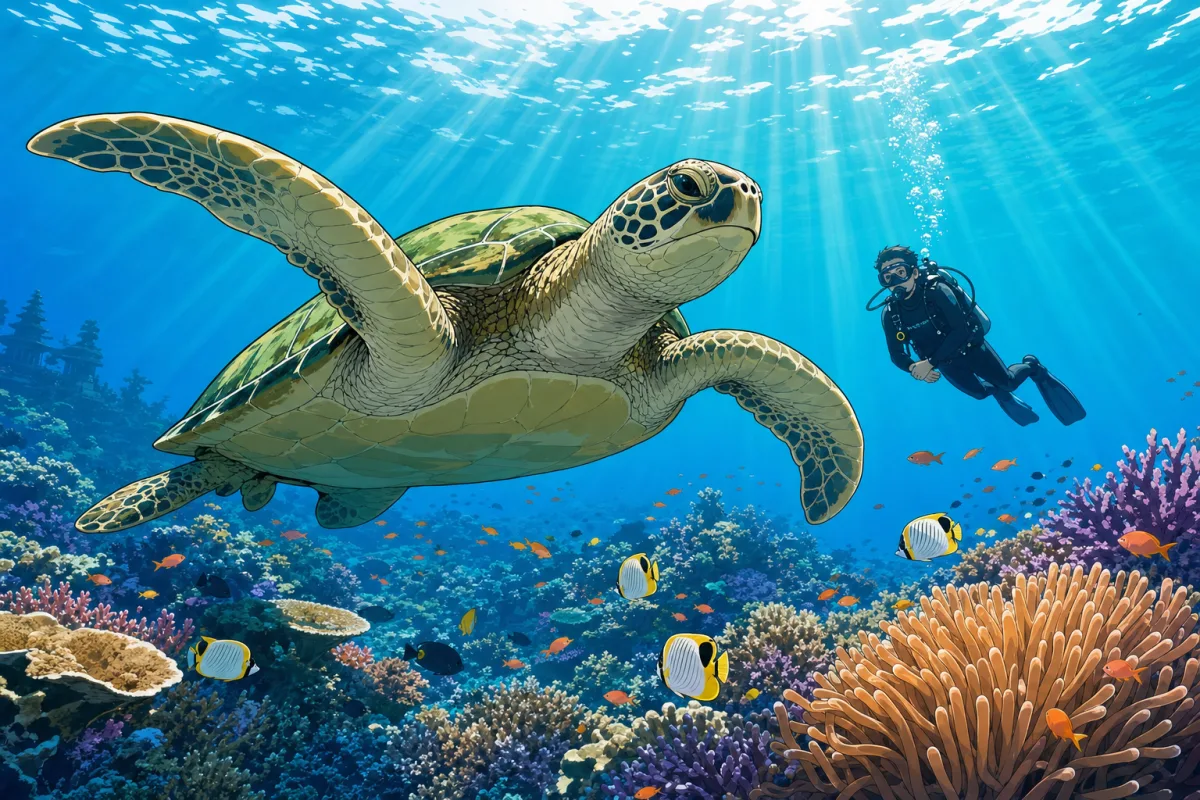
Where can you see sea turtles in Bali? Almost everywhere we dive, and on a good week, almost every day. Bali's reefs host healthy resident populations of green and hawksbill turtles year-round, with Padang Bai, Nusa Penida, Amed and the Tulamben coral gardens delivering the most reliable encounters, and you do not need a dive certification to meet one: several of the best turtle reefs sit in easy snorkelling depth. This guide covers the species you will actually encounter, the sites where sightings approach a sure thing, the season and time-of-day question, the etiquette that keeps turtles calm around you (and keeps your encounter long), Bali's genuinely inspiring turtle conservation story, and answers to everything guests ask us about turtles at the shop counter in Sanur.
We have guided dive trips and snorkelling trips on these reefs for over fifteen years, which means thousands of turtle encounters and a fairly precise mental map of who lives on which coral head. Some of those turtles we have known for a decade; there is a green turtle at Padang Bai roughly the size of a coffee table that our guides greet like a colleague.
On Bali's north-east coast, hawksbill and green turtles are seen regularly at the Amed Pyramids, an artificial reef in shallow water. The Amed snorkeling guide explains where to find them, when conditions are calmest and how to snorkel there from the shore or by jukung.
Which sea turtles live in Bali?
Seven sea turtle species exist worldwide; six occur in Indonesian waters; two of them you will realistically meet on a Bali reef, with a third as a lucky bonus.
Green turtle (Chelonia mydas)
The classic. Big, round-shelled, unhurried, and the turtle in ninety percent of guest photos. Adults run 80 to 120 centimetres and well over 100 kilograms, grazing on seagrass and algae, which is exactly what they are doing when you find one mowing a reef flat, entirely unbothered by your existence. Despite the name, the shell is olive-brown; the "green" refers to their fat, a detail we mention on the boat mostly to watch faces change. IUCN status: endangered, though Indonesian populations have responded well to protection.
Hawksbill turtle (Eretmochelys imbricata)
Smaller, prettier, busier. Hawksbills carry the beautiful overlapping, serrated-edge shell that made them the target of the historical tortoiseshell trade, and a narrow bird-like beak they use to pry sponges out of reef crevices. Where greens graze placidly in the open, hawksbills work the reef like inspectors, head jammed under a coral ledge, rear flippers waving. They are critically endangered globally, which makes Bali's regular sightings genuinely special.
Olive ridley turtle (Lepidochelys olivacea)
The bonus turtle. Olive ridleys are open-ocean animals that nest on Bali's west-facing beaches and occasionally cruise past reef sites; sightings underwater are uncommon but happen a few times a season, usually in the blue at Nusa Penida or off Amed. Leatherbacks and loggerheads pass through Indonesian waters too, but a sighting while diving Bali would be newspaper-worthy; we are still waiting for ours.
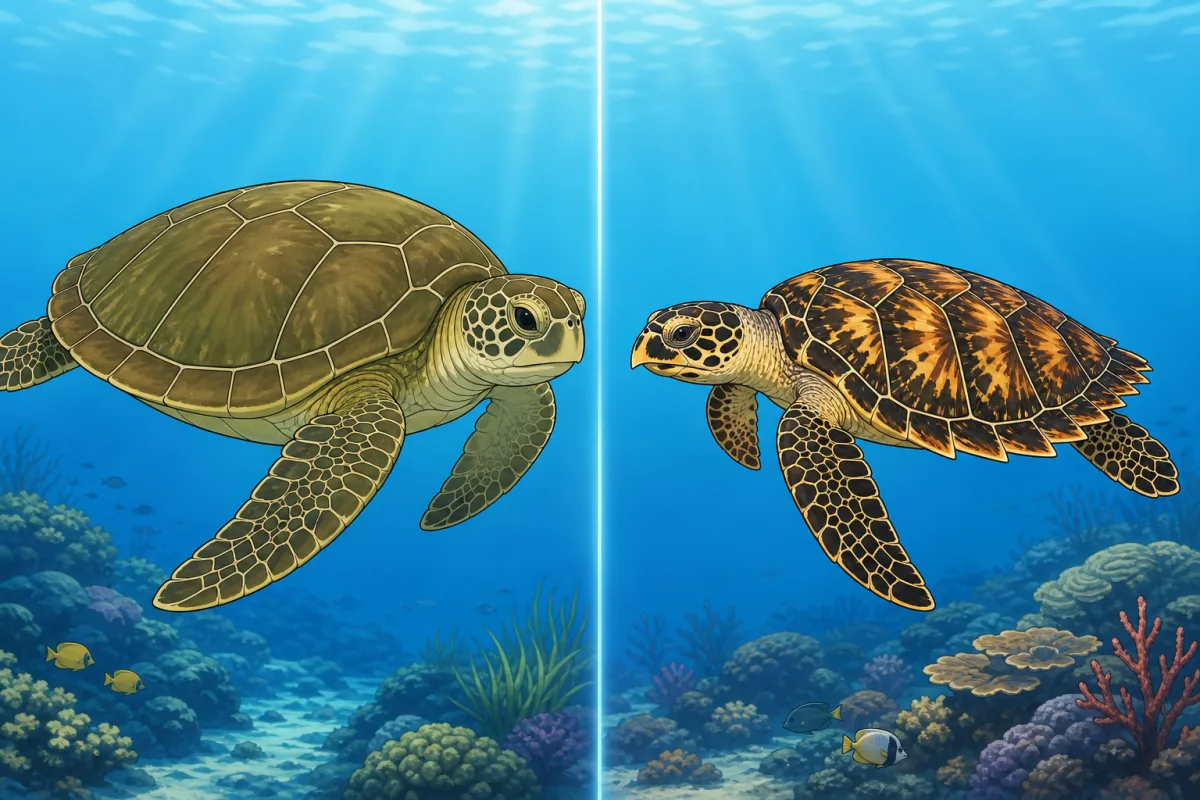
Telling the two regulars apart takes one glance once you know the trick: green turtles have a smooth-edged, rounded shell and a short blunt face; hawksbills have a jagged shell edge like a saw blade and a pointed beak. Size helps too, since an adult green typically doubles a hawksbill. Our Bali marine life guide covers the rest of the cast you will meet around them.
The best places to see turtles in Bali
Padang Bai: the most reliable turtles on the island
If a guest tells us they absolutely must see a turtle, we point the boat at Padang Bai. The sheltered bays here, Blue Lagoon and the surrounding sites, hold a dense resident population of greens and hawksbills at depths from three to eighteen metres, and our guides know individual animals' favourite ledges. Sightings run close to nine dives out of ten across the season. The site suits every level: calm, shallow, and equally good on scuba or snorkel, which is why it anchors both our Padang Bai diving guide and our snorkelling day trips. The neighbouring advanced sites at Gili Mimpang and Tepekong add turtle traffic to their shark and mola résumé.
Nusa Penida: turtles with a manta chaser
The reefs along Penida's north coast, SD, Ped, Sental, and Crystal Bay on the west, produce steady green turtle sightings drifting over some of the healthiest hard coral in Bali, detailed in our Nusa Penida diving guide. The practical magic of a Penida day is the combination: turtles on the drift dives, then manta rays at Manta Point, which is as strong a one-day wildlife line-up as recreational diving offers anywhere. Snorkellers get the same turtles on our Nusa Penida snorkelling trips.
Tulamben and Amed: turtles among the coral gardens
The Tulamben Coral Garden and the reef at the USAT Liberty wreck host resident hawksbills that have grown up photographed and act accordingly, while Amed's Jemeluk Bay adds greens over its sloping reef. Both are shore-entry sites with barely any current, ideal for new divers and for the three-dive full days we run up the east coast.
Menjangan and Sanur: the quieter options
Menjangan Island in the far northwest pairs its famous walls with regular turtle fly-bys, and even the reef flats off Sanur, minutes from our shop, turn up the occasional green turtle at high tide, a pleasant reminder that in Bali the wildlife does not wait for a long boat ride.
When to see turtles: season and time of day
The honest answer is that turtle season in Bali is every season. Greens and hawksbills are residents, not migrants; they live on these reefs full-time, so sightings stay consistent from January through December, wet season included, as we explain in our rainy-season diving guide. This makes turtles the most democratic of Bali's big animals: mantas concentrate at cleaning stations, mola mola keep strict office hours (July to October), but a turtle can appear on any dive of the year.
Time of day nudges the odds slightly. Morning dives find turtles actively feeding, which makes for better behaviour-watching; afternoons find more of them wedged under ledges, napping, which makes for easier photographs of a subject that has voluntarily stopped moving. Turtles rest underwater for anywhere from twenty minutes to several hours on a single breath, slowing their heart rate dramatically, so a "sleeping" turtle under a coral head is completely fine and should be left exactly where it is.
Swimming with turtles: the etiquette that gets you a longer encounter
Turtle etiquette is not just conservation virtue; it is self-interest. A turtle that feels crowded leaves, and it swims faster than you. A turtle given space carries on feeding for twenty minutes while you watch. The rules we brief on every trip:
Keep three metres and approach from the side. Head-on reads as a predator; from behind reads as a pursuit. Side-on, at their pace, reads as another harmless reef creature. Never touch, ride, or hold. Beyond being illegal under Indonesian conservation law, handling strips the shell's protective coating, stresses the animal, and instantly ends the encounter. Never block the surface. Turtles breathe air; a snorkeller floating directly above a turtle that needs to come up is genuinely dangerous to it. Drift to the side and it will surface calmly right next to you, which is a far better photograph anyway. No flash at close range, no chasing, no feeding. Fed turtles learn to approach boats, which is how boat-strike injuries happen. Perfect your buoyancy. A diver crashing into the reef next to a turtle ends the show for everyone; if your hovering needs work, the Peak Performance Buoyancy specialty pays for itself in wildlife encounters alone.
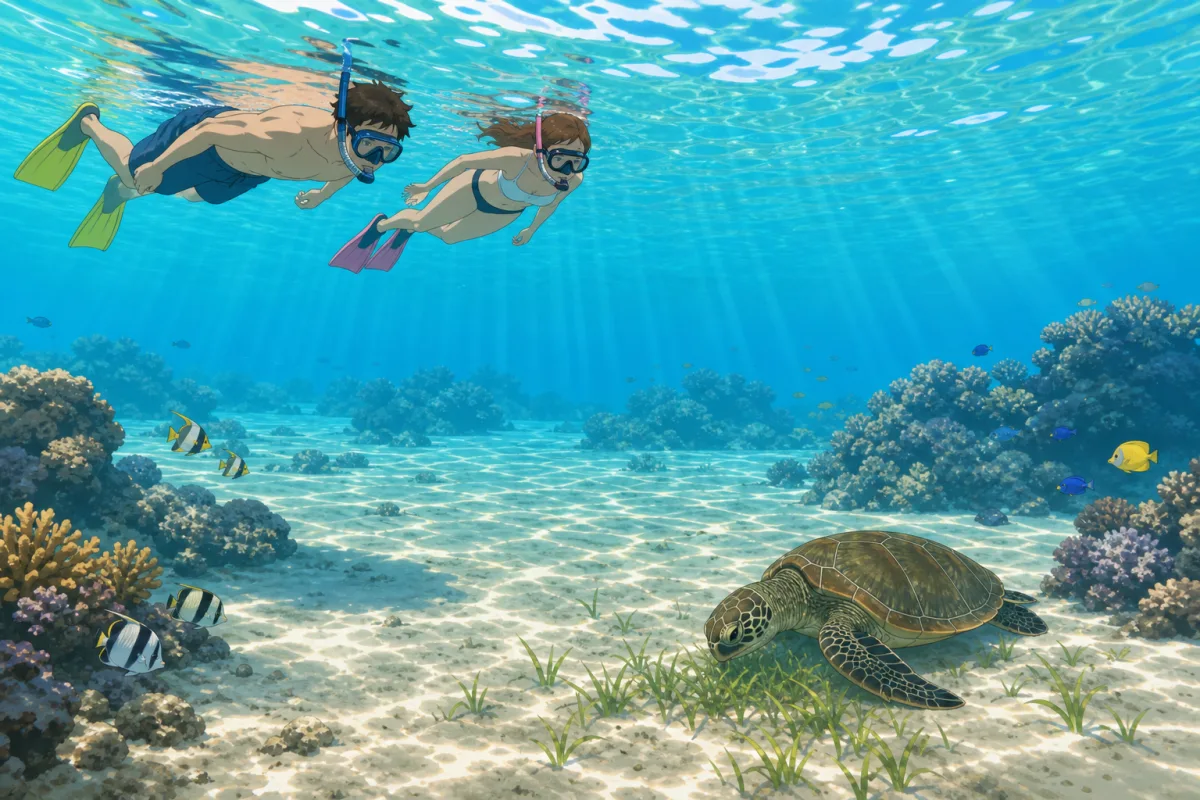
None of this requires experience, only briefing, which is why turtle sites work beautifully for a try dive or a family snorkel day; our family guide covers the kid-specific logistics. Children tend to be the best-behaved turtle watchers on the boat once they have been given the "we are guests in their house" speech.
Bali's turtle conservation story: from trade hub to sanctuary
Here is the part of the turtle story most visitors never hear, and it deserves telling. Within living memory, Bali was one of the largest sea turtle trade centres in the world: through the 1970s and 80s, tens of thousands of green turtles a year passed through the island for meat, for ceremony, and for the tortoiseshell trade. The species you now photograph casually at Padang Bai were being landed by the boatload a generation ago.
The turnaround took decades and came from an unusual alliance. Indonesian law granted sea turtles full protection in 1999. Conservation groups, including the Turtle Conservation and Education Center on Serangan Island near Sanur, worked with Hindu religious authorities, who issued guidance that ceremonies could be fulfilled with symbolic alternatives or with a small number of permitted, sustainably handled animals rather than mass harvest. Village-level hatchery programmes spread along the coasts: locals who once collected eggs for sale now patrol nesting beaches, relocate clutches away from erosion and dogs, and release hatchlings, often with tourists watching and contributing. The result is visible on every reef we dive: turtle sightings today are the best our senior guides have seen in their careers.
Nesting beaches and hatchling releases
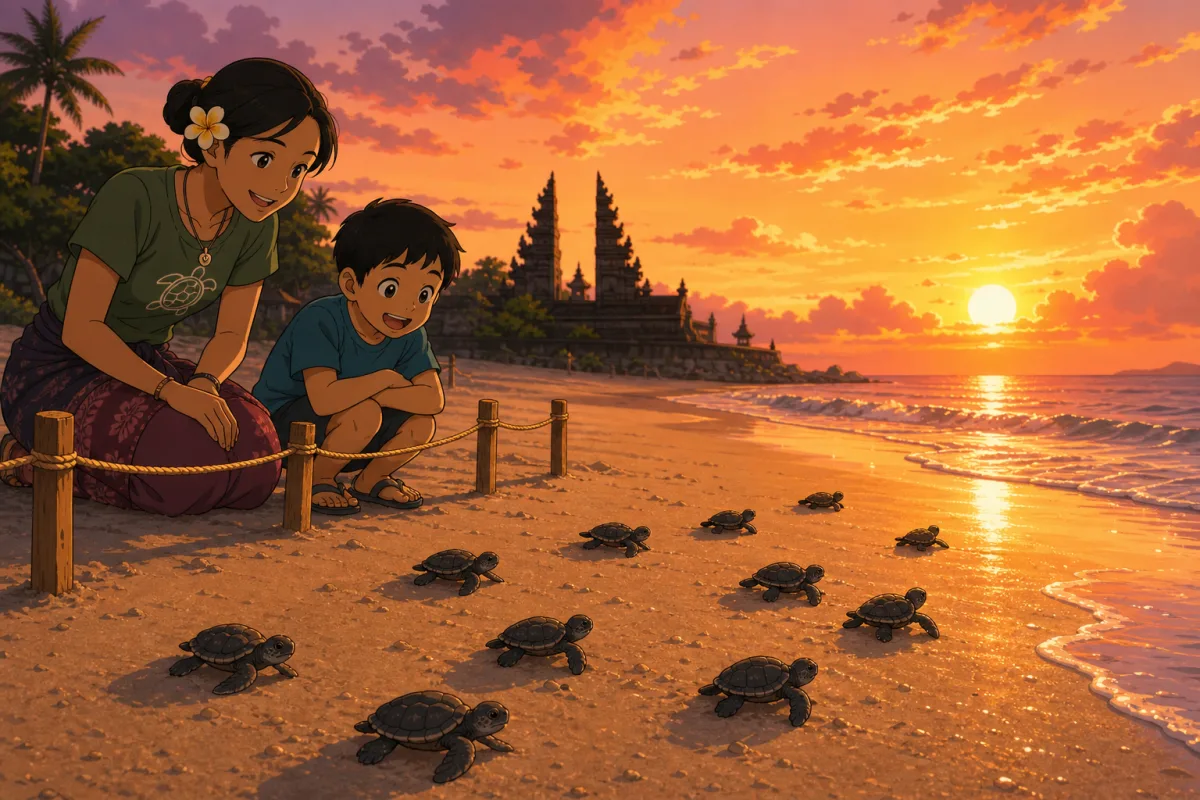
Olive ridleys and occasional greens nest on Bali's beaches, mainly along the west and south coasts, with the nesting season roughly March to September. Females haul out at night, lay around a hundred eggs, and return to the sea; hatchlings emerge some fifty to sixty days later and sprint for the surf. Several beach programmes around Kuta, Seminyak and Serangan run supervised hatchling releases in season. If you join one, pick an operation that releases hatchlings in the evening on the sand (not from buckets into daylight surf for photos), keeps handling to a minimum, and lets the animals walk to the water themselves; that walk imprints the beach so females can return decades later to nest where they hatched.
What still threatens them, and what you can do
The remaining threats are unglamorous: plastic, which a green turtle's brain files under "jellyfish, delicious"; ghost fishing gear; boat strikes; and coastal development squeezing nesting beaches. The tourist contribution is straightforward: refuse single-use plastic where you can (Bali banned single-use plastic bags and straws in 2019, but enforcement is a work in progress), choose operators who brief and enforce no-touch wildlife rules, skip any attraction offering turtle handling or turtle-shell souvenirs, and if you want to do more, the Serangan conservation centre takes visitors and support. Every one of our PADI courses weaves reef etiquette into training, because certified divers who learned it right are the ocean's best long-term constituency.
The secret life of a Bali reef turtle
Knowing what you are looking at doubles the pleasure of watching it, so here is the biology our guides share between dives, condensed.
They are older than they look, and slower to start than you would believe. A green turtle takes roughly 25 to 35 years to reach breeding age, and can live 70 or more. The coffee-table-sized adults at Padang Bai are plausibly older than most of the guests photographing them. This slow maturity is exactly why the trade years hit populations so hard, and why the recovery you are now swimming through took a full generation of protection to show.
They commute like ocean-going professionals. The turtles feeding on Bali's reefs do not necessarily nest on Bali's beaches. Greens tagged in Indonesian waters have been tracked over a thousand kilometres between feeding grounds and nesting beaches, navigating with, among other cues, a magnetic map imprinted as hatchlings. A female may cross an ocean basin to lay eggs on the specific beach where she hatched thirty years earlier, a feat of natural navigation that makes your dive computer look modest.
Their day is admirably simple. Feed in the morning and late afternoon; rest under a ledge through the middle of the day; surface for air in between; repeat for seven decades. Greens crop algae and seagrass with serrated jaws (their grazing keeps seagrass meadows healthy, one of several reasons ecologists call turtles a keystone species); hawksbills excavate sponges, keeping fast-growing sponge species from smothering coral. A reef with resident turtles is not just prettier, it is measurably healthier.
The reef returns the favour. Watch a resting turtle long enough and you may see cleaner wrasse and surgeonfish working over its shell, picking off algae and parasites, a service arrangement older than any of the parties involved. Some Penida turtles visit the same coral heads mantas use as cleaning stations, patiently queueing, which our guides insist proves turtles are the most Balinese of marine animals: unhurried, ritual-minded, and never missing an appointment.
Reading turtle body language: what our guides watch for
After thousands of encounters, our guides read turtles the way commuters read traffic, and the signals are learnable in one briefing. A relaxed turtle keeps doing what it was doing: steady grazing, slow flipper strokes, the occasional unbothered glance in your direction. That glance is the healthy check-in of an animal that has clocked you and filed you under harmless; take it as your permission slip to stay, at distance.
A disturbed turtle telegraphs it early: feeding stops, the head comes up and fixes on you, the body angles away. This is your cue to back off a metre or two and drop lower in the water column; nine times out of ten the turtle settles and resumes. Ignore the cue and you get the third stage, the departure: a burst of surprisingly fast swimming that ends the encounter for you and everyone behind you. A green turtle can sprint past 30 km/h when motivated; you cannot, so the entire game is making sure it never feels the need.
Two more situations worth knowing. A turtle surfacing to breathe rises steeply with purpose; give it a wide, obvious lane, and never let a group form a ring around a turtle, because an animal that cannot see an exit behaves like an animal that cannot see an exit. And a turtle wedged motionless under a ledge with its eyes half-closed is sleeping, not trapped, not sick, and not a photo opportunity that needs its shell tapped; watch from distance, count yourself lucky, and move along the reef. Guests who follow the body-language briefing routinely get fifteen-minute encounters at Padang Bai; the etiquette is not a restriction on the experience, it is the recipe for it.
Photographing turtles: five tips from our guides
1. Shoot up, not down. A turtle against blue water and sun rays beats a turtle against rubble every time; get slightly below its level. 2. Wait for the head turn. The frame you want is the eye and beak profile, and turtles turn to check on you every thirty seconds or so; patience beats pursuit. 3. Let it come to you. Park yourself at a polite distance along its feeding path and the gap closes on the turtle's terms. 4. Skip the flash. Ambient light at snorkel and shallow-dive depth is plenty, and strobes at close range earn you a departing turtle's rear flippers. 5. Put the camera down for one encounter. Genuinely. The guests who watch a turtle for ten unhurried minutes remember it forever; the ones who chased it for a photo remember the chase.
Snorkelling or diving: which is better for turtles?
Both work, and the honest comparison in our snorkelling versus diving guide applies fully here. Snorkellers see turtles surprisingly well because greens graze shallow and must surface to breathe, meaning the animal comes to your depth several times an hour; Padang Bai's Blue Lagoon and Penida's north-coast reefs deliver constant snorkel encounters. Divers get the intimate version: eye level with a hawksbill working a sponge at twelve metres, or a green napping under a ledge, encounters that last as long as your patience and no-decompression limit allow. The ideal Bali itinerary does both, and if the turtle encounter is what finally tips you into trying scuba, a supervised try dive at a turtle site or the full Open Water course puts you on their side of the surface permanently. Our first-time diving guide covers exactly what that first descent feels like.
A Padang Bai turtle day with Neptune, hour by hour
For the planners: hotel pickup around 7 AM from Sanur, Kuta, Seminyak or Nusa Dua; gear fitting and briefing at the dive center; a one-hour drive east to Padang Bai harbour; then two or three dives (or snorkel sessions) across Blue Lagoon and the neighbouring bays from a traditional jukung boat, with turtle sightings on the overwhelming majority of days, plus the supporting cast of reef octopus, moray eels, occasional reef sharks (the shy, harmless kind, as our sharks guide explains), and dense schooling fish. Lunch at a local warung is included, and you are back at the hotel by mid-afternoon. Current prices for all trips are on our pricing page, and our best dive sites overview helps you build the rest of the week around it.
Turtles in Balinese culture
One more layer worth appreciating as you float above a grazing green: in Balinese Hindu cosmology, the world itself rests on the back of a giant turtle, Bedawang Nala, who carries the universe and whose movements were the traditional explanation for earthquakes. You will find him carved at the base of temple shrines across the island, holding everything up. Turtles historically featured in major religious ceremonies too, which is precisely why the conservation breakthrough required religious authorities at the table rather than just regulators, and why their endorsement of symbolic alternatives mattered so much. The animal your dive guide points out at Blue Lagoon is, in the local imagination, a small cousin of the creature holding up the world. It seems a reasonable reason to give it three metres of space.
The bottom line
Bali is one of the easiest, most reliable places on earth to swim with wild sea turtles: two resident species, sightings year-round, sites that suit snorkellers, first-timers and certified divers equally, and a conservation recovery story that makes every encounter feel earned rather than extracted. Give them three metres of respect and they will give you twenty minutes of their day. Come by the shop in Sanur or drop us a message, and we will point you at the right reef; the coffee-table-sized green at Padang Bai has been expecting you.
Frequently Asked Questions
Padang Bai is the most reliable spot, with a dense resident population of green and hawksbill turtles in calm, shallow bays that suit both divers and snorkellers; sightings approach nine trips out of ten. Nusa Penida's north-coast reefs, the Tulamben Coral Garden, and Amed's Jemeluk Bay are close behind. All are day trips from our Sanur dive center.
Two species are seen regularly: green turtles (large, round smooth shell, calm seagrass grazers) and hawksbills (smaller, serrated overlapping shell, pointed beak, sponge feeders). Olive ridleys nest on Bali's beaches and occasionally pass reef sites. Leatherbacks and loggerheads occur in Indonesian waters but are almost never seen while diving Bali.
Snorkelling works very well. Green turtles graze in shallow water and must surface to breathe, so they regularly come right up to snorkel depth. Padang Bai's Blue Lagoon and the Nusa Penida north-coast reefs produce constant snorkel encounters. Diving adds the close-quarters version at eye level on the reef, but no certification is needed to meet a turtle in Bali.
Year-round. Bali's green and hawksbill turtles are residents, not migrants, so sightings stay consistent every month including the rainy season. This differs from mantas (concentrated at cleaning stations) and mola mola (July to October). Nesting season for olive ridleys on Bali's beaches runs roughly March to September, with hatchling releases about two months behind.
No. Sea turtles have been fully protected under Indonesian law since 1999, and touching, riding, feeding or harassing them is illegal as well as harmful: handling strips the shell's protective coating and stresses the animal. Reputable operators brief and enforce a no-touch, three-metre-distance rule. Avoid any attraction that offers turtle handling or sells turtle-shell products.
Keep about three metres, approach slowly from the side rather than head-on or from behind, and never position yourself directly above a turtle, since it needs a clear path to the surface to breathe. Turtles that feel unpressured usually keep feeding and often close the distance themselves, which gives you a longer and better encounter than any approach would.
An active, swimming turtle surfaces every few minutes to around twenty minutes. A resting turtle is another story: by slowing its heart rate dramatically, a green turtle can nap underwater for several hours on one breath. A motionless turtle wedged under a coral ledge is sleeping, not stuck, and should be watched from a distance and left undisturbed.
Yes. Olive ridleys and occasional green turtles nest mainly on the west- and south-facing beaches between roughly March and September. Females lay around a hundred eggs at night, and hatchlings emerge some fifty to sixty days later. Several supervised community hatchery programmes around Kuta, Seminyak and Serangan Island run evening hatchling releases that visitors can join in season.
Globally, yes: green turtles are classified as endangered and hawksbills as critically endangered. Bali's local story is encouraging, though. The island went from being one of the world's largest turtle trade hubs in the 1970s-80s to full legal protection in 1999, supported by religious authorities endorsing symbolic ceremonial alternatives and village hatchery programmes. Sightings on Bali's reefs today are the best our senior guides have seen in their careers.
For near-certain sightings, the Padang Bai diving or snorkelling day trip. For turtles plus manta rays in one day, Nusa Penida. For an easy shore-based day with turtles among coral gardens and a famous shipwreck, Tulamben and Amed. All run as day trips from Sanur with hotel pickup, equipment, guide and lunch included, and all suit beginners; try dives at turtle sites are available for the uncertified.