
Guests ask us about waterfalls more than almost anything that is not diving. It comes up at the shop counter in Sanur, somewhere between the paperwork and the gear fitting, and it is nearly always the same question: which are the best waterfalls in Bali, and which ones are actually worth the drive? We run a dive centre, not a tour desk, so we have no financial reason to talk anybody into a waterfall. That is exactly why our answer is blunt. Of the dozens scattered across the island, about ten justify the fuel and the day, and a couple of the famous ones do not. If you are here for the ocean, our Bali diving guide covers the underwater half of the island. This one covers the day you spend on land.
There is also a reason a dive shop is worth listening to on this particular topic, and it has nothing to do with scenery. Most of Bali's best waterfalls sit in the northern highlands, and the road there climbs over a mountain pass. If you dived that morning, that drive is an altitude exposure, and almost nobody warns visitors about it. We cover it properly at the end. Before you book anything with us, from a try dive to a full Open Water course, it is worth understanding how the two halves of your trip fit together, because the order you do them in matters.
Every photograph below is a real, verifiable image of the waterfall it sits beside, not a stock shot of some generic jungle cascade. They come from Wikimedia Commons, they are properly licensed, and each one is credited to the photographer who took it. We checked the GPS coordinates on most of them against the actual sites. What you see is what you get when you arrive.
The Best Waterfalls in Bali at a Glance
Drive times below are from Sanur, measured door to door on a normal weekday morning, not the optimistic numbers Google gives you. Add forty minutes if you leave after 9am, and add more again on a Saturday. Prices were correct when we last checked in early 2026. They creep up most years and they are cash only, so bring small notes.
| Waterfall | Area | Drive from Sanur | Entry | Effort |
|---|---|---|---|---|
| Sekumpul | Buleleng | 2 hr 45 min | Rp 125,000 | Hard, 45 min each way |
| Banyumala Twin | Wanagiri | 2 hr 15 min | Rp 40,000 | Moderate, steep steps |
| Banyu Wana Amertha | Wanagiri | 2 hr 15 min | Rp 50,000 | Moderate |
| Munduk Tutub | Munduk | 2 hr 30 min | Rp 30,000 | Easy to moderate |
| Belong | Munduk | 2 hr 30 min | Rp 20,000 | Moderate |
| Gitgit | Buleleng | 2 hr 30 min | Rp 30,000 | Easy, 10 min walk |
| Tukad Cepung | Bangli | 1 hr 15 min | Rp 25,000 | Moderate, wet feet |
| Leke Leke | Tabanan | 1 hr 30 min | Rp 50,000 | Easy, 15 min walk |
| Kanto Lampo | Gianyar | 1 hr | Rp 25,000 | Easy, slippery rock |
| Tegenungan | Gianyar | 45 min | Rp 25,000 | Easy, many steps |
One planning note that saves people a wasted day. The north Bali falls cluster tightly, so Banyumala, Banyu Wana Amertha, Munduk and Gitgit can be combined into a single long loop. The Gianyar ones near Ubud pair naturally with each other. What does not work is trying to mix north and south in one day. We have watched guests attempt it and spend nine hours in a car to see three waterfalls badly. If you want a broader land itinerary, our guide to things to do in Bali sets out the geography, and there are more ideas in our roundup of epic things to do on the island.
Sekumpul: Still the One That Wins
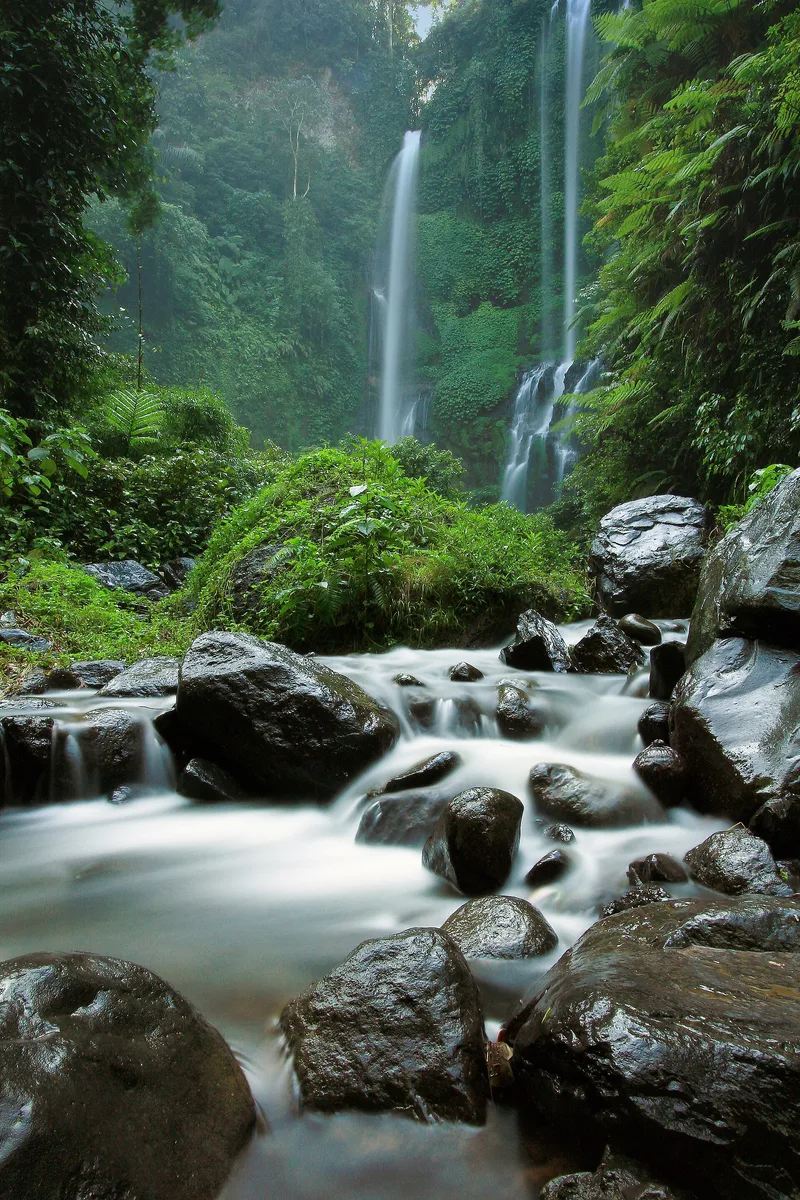
If you only do one, do this one. Sekumpul is a set of tall, narrow falls dropping into a jungle amphitheatre in Buleleng, and it is the only waterfall in Bali that genuinely stops people talking when they round the last corner. The main drop is roughly 80 metres. In the wet season there are four or five separate curtains running at once.
It is also the hardest to reach, and the descent is the real cost. You are looking at around 45 minutes down through the valley on steps and dirt path, then a river crossing, then the same climb back out in heat. People underestimate the return leg badly. If your knees are unhappy on stairs, this is not your waterfall, and we would rather tell you that now than have you find out two thirds of the way down.
Be ready for the ticketing. Sekumpul has competing entrances and a persistent guide economy, and you will be told a guide is compulsory. In practice the official ticket runs about Rp 125,000 per person and usually bundles a guide whether you wanted one or not. Agree the total price before you start walking, not at the bottom. That single habit prevents almost every complaint we hear about this place.
Go early. Arrive by 8:30am and you will have the lower pool close to yourself. By eleven the day-tour vans from the southern beach towns have arrived and the atmosphere changes completely.
Banyumala Twin Waterfalls: The Postcard Shot
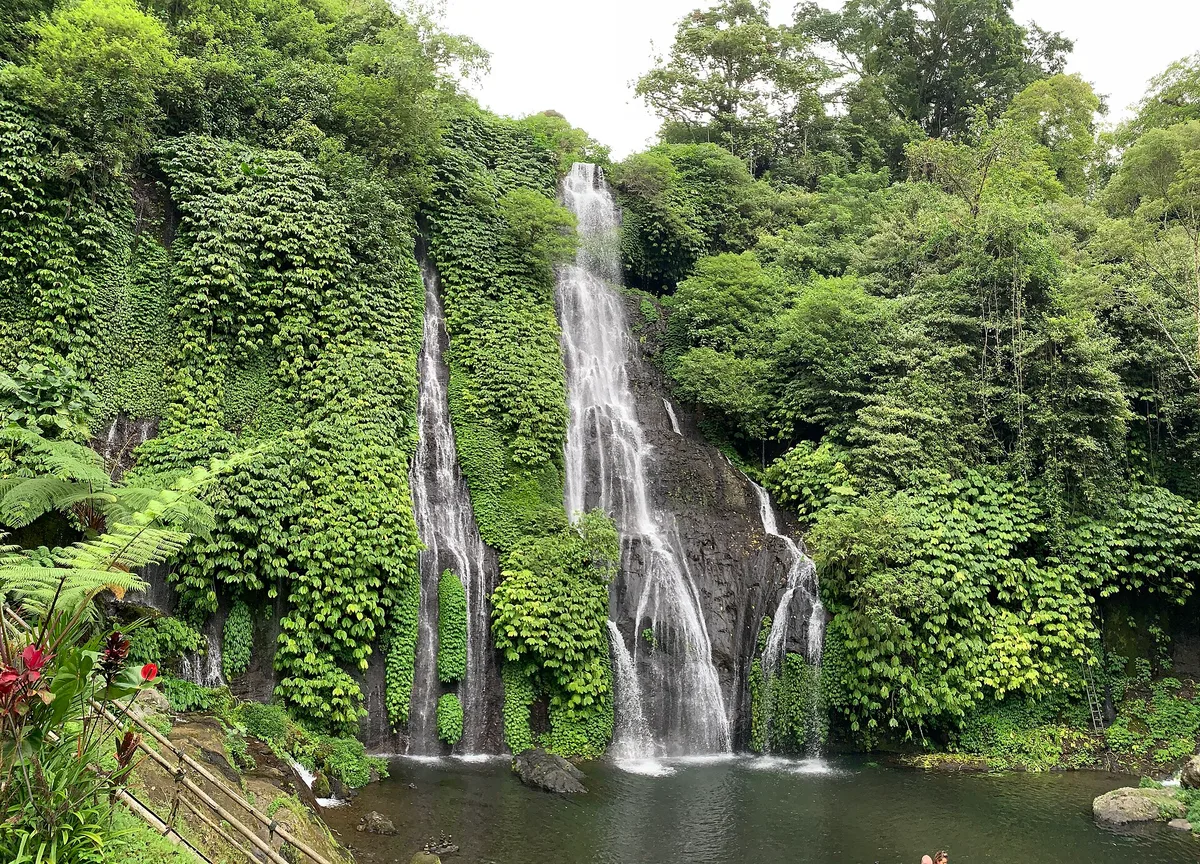
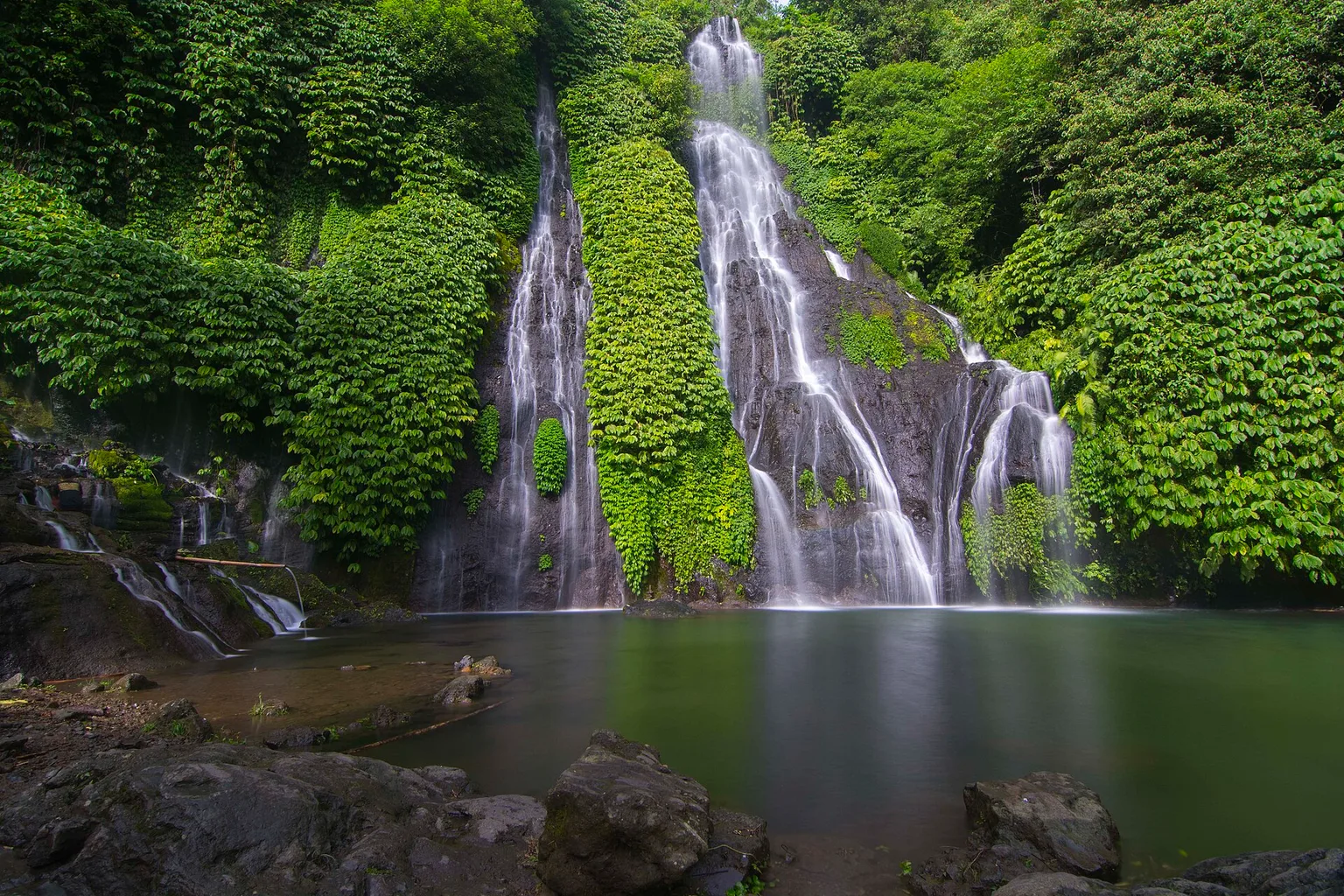
Banyumala is the one on the front of this article, and it is the most photogenic waterfall on the island. Two main streams fan down a wall of vines into a wide, shallow pool that is genuinely good for swimming, which is rarer than you would think. Most Bali waterfalls drop into water that is either too deep, too turbulent or too cold to enjoy.
The walk in is about fifteen minutes of steep concrete steps. Coming back up is the workout. Water temperature sits around 20 to 22 degrees, which after a week of 28 degree water on the Tulamben coast feels genuinely cold. Bring a towel you do not mind losing to the mud.
The pool is shallow enough to stand in across most of its width, so it suits families and weak swimmers. That said, the rocks underfoot are rounded and slick with algae. We have had two guests over the years come back with a sprained wrist from Banyumala, both from the same thing: walking into the pool while looking at the waterfall instead of their feet.
Banyu Wana Amertha: Four Falls, Almost No Crowd
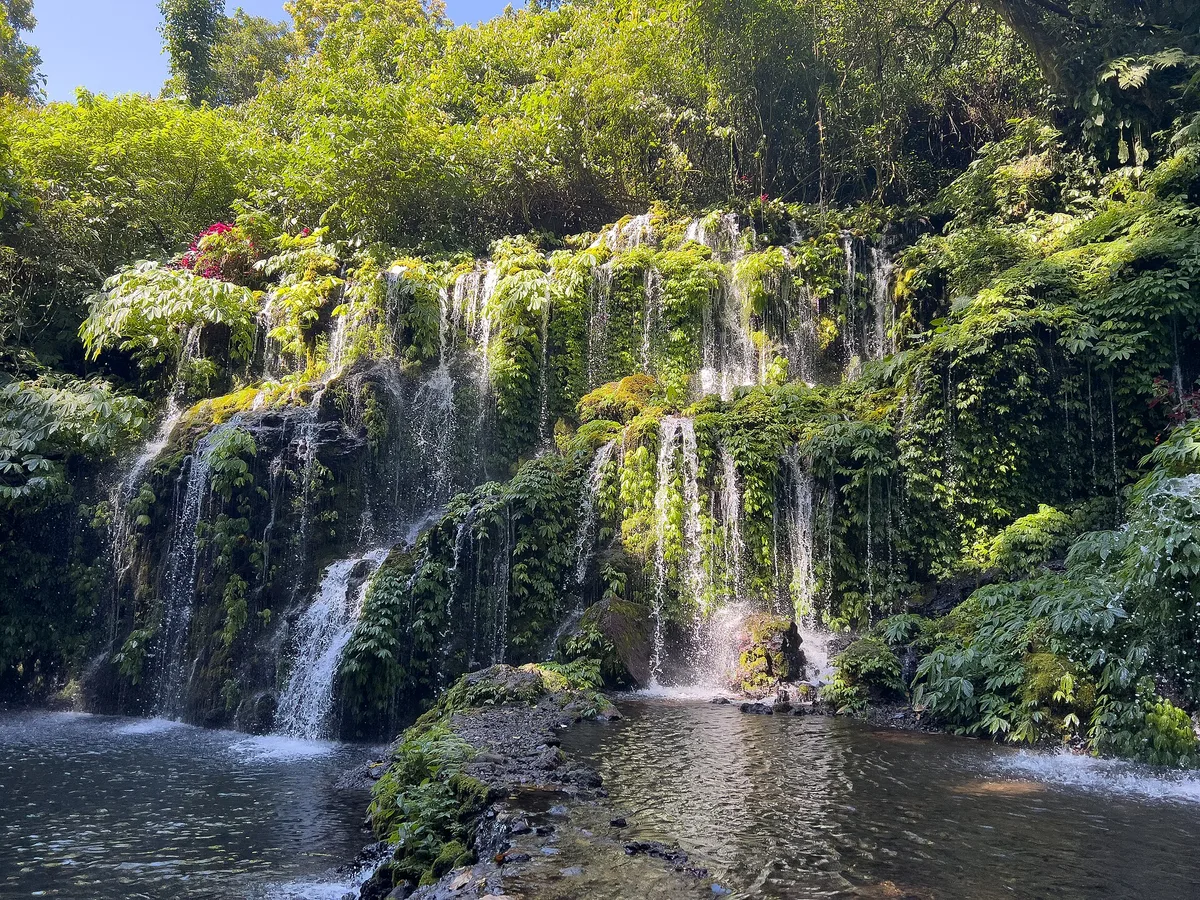
Ten minutes from Banyumala and consistently overlooked. Banyu Wana Amertha is a site with four separate waterfalls linked by a well-built path, and the pictured one, a wide curtain of dozens of small streams pouring over a moss wall, does not look like anything else in Bali.
Because it sits in the shadow of its famous neighbour you can often have it nearly to yourself on a weekday. The paths are properly maintained, with handrails in the steep sections, which makes it the most accessible of the northern falls. Allow an hour to walk all four.
Pair it with Banyumala. Same ticket run, same road, and between them you get the best two hours of waterfall walking on the island. If you are staying south and want the north Bali highlights in one trip, this pair plus a Menjangan diving day on the following morning is the itinerary we suggest most often. Our write-up on diving Menjangan Island explains why that reef is worth the northern drive on its own.
Munduk: Two Waterfalls on One Road
Munduk is a coffee-growing village strung along a ridge at about 600 metres, and the valley below it holds a cluster of falls within walking distance of each other. It is the most pleasant place on this list to simply spend a day. Cool air, clove trees, almost no scooter traffic.
Munduk Tutub
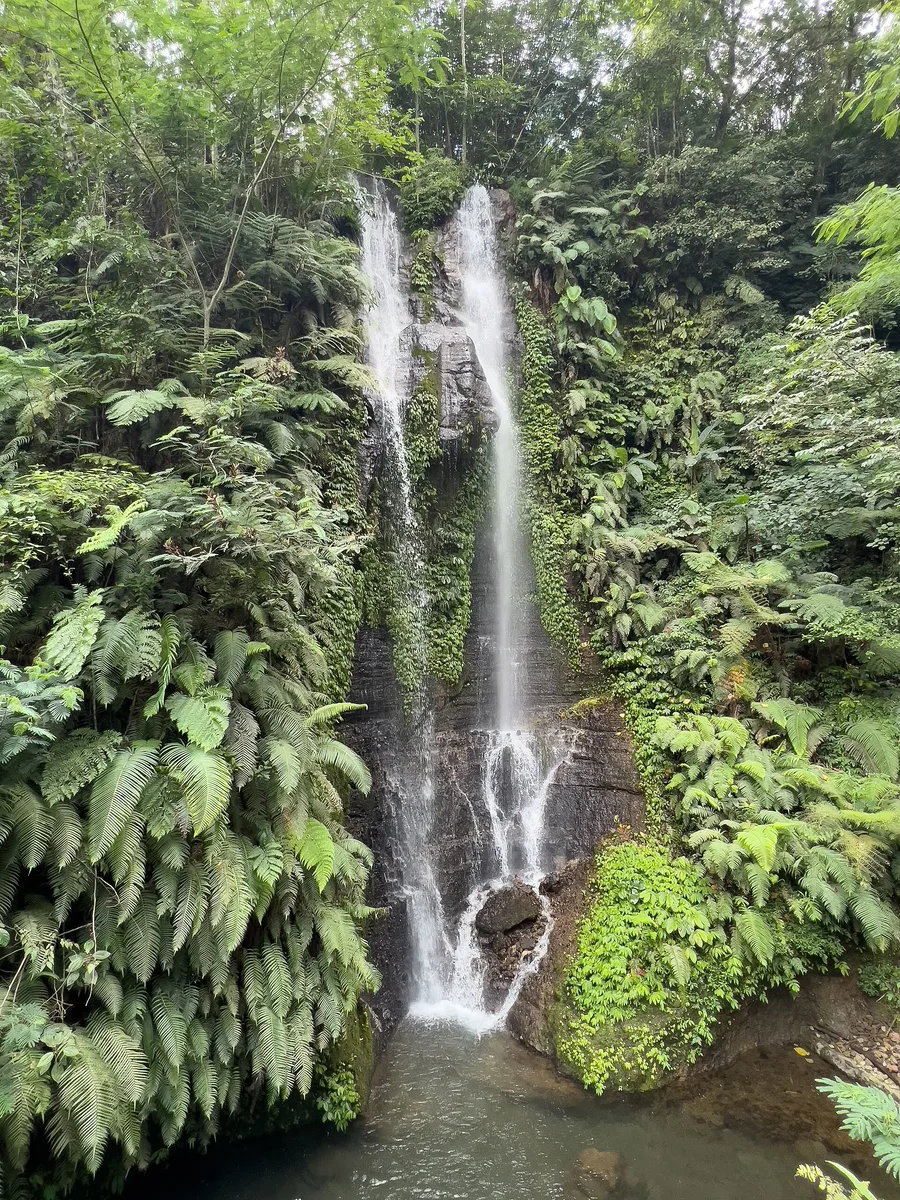
A tall, thin drop in a gorge walled with tree ferns. The approach is short and mostly shaded, and the spray keeps the whole area about three degrees cooler than the road above. This is the one to bring a camera to in the late morning when light finally reaches the bottom of the gorge.
Belong
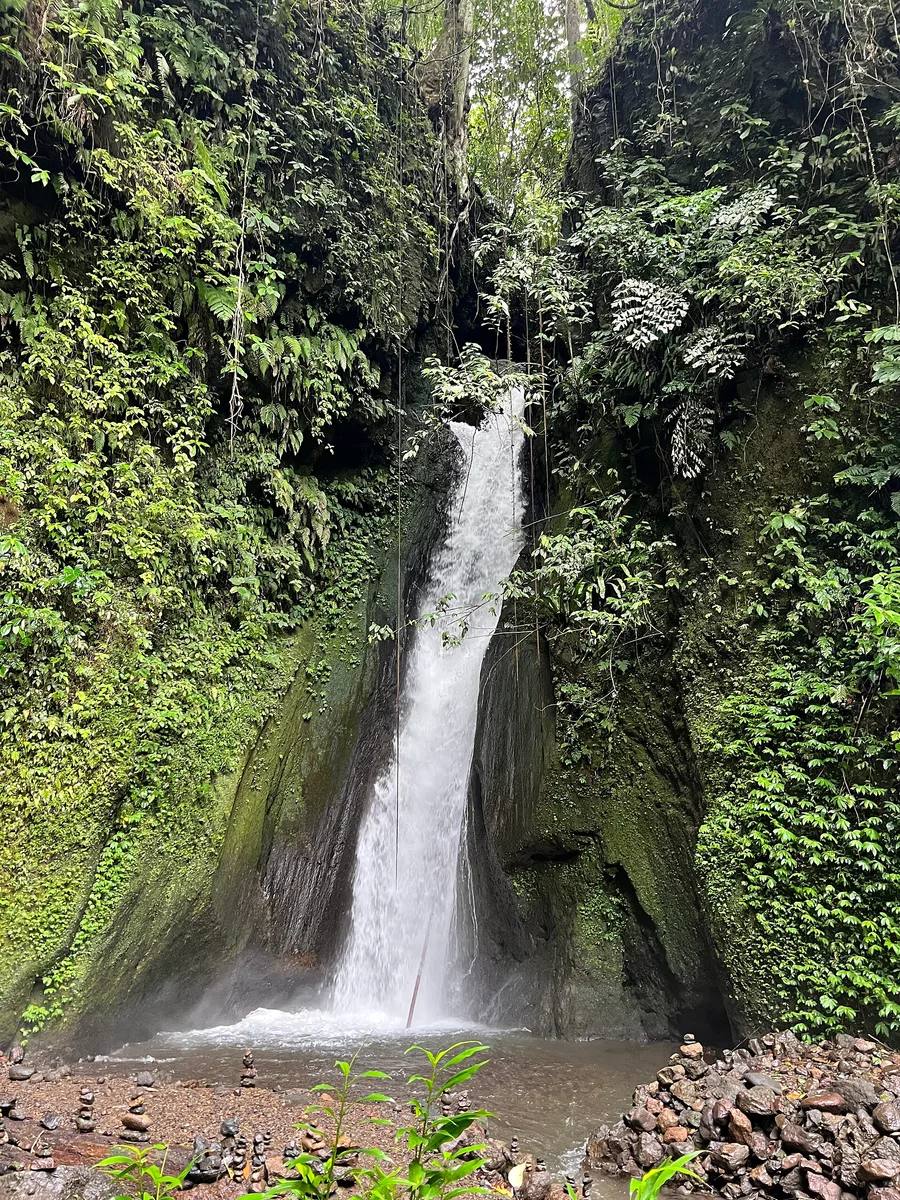
Twenty thousand rupiah at a bamboo ticket hut, and one of the best value stops in Bali. Belong drops into a mossy amphitheatre that visitors have filled with stone cairns over the years. It sees a fraction of the traffic of the southern falls. On our last visit there were four other people there on a Tuesday in July, which for Bali in high season is close to solitude.
Both Munduk falls work in the rain, which matters. When an afternoon downpour shuts down the beach plans, this valley is still perfectly good, and the falls are running at their best. Our notes on diving through the rainy season apply on land too.
Gitgit: The Easy North Bali Stop
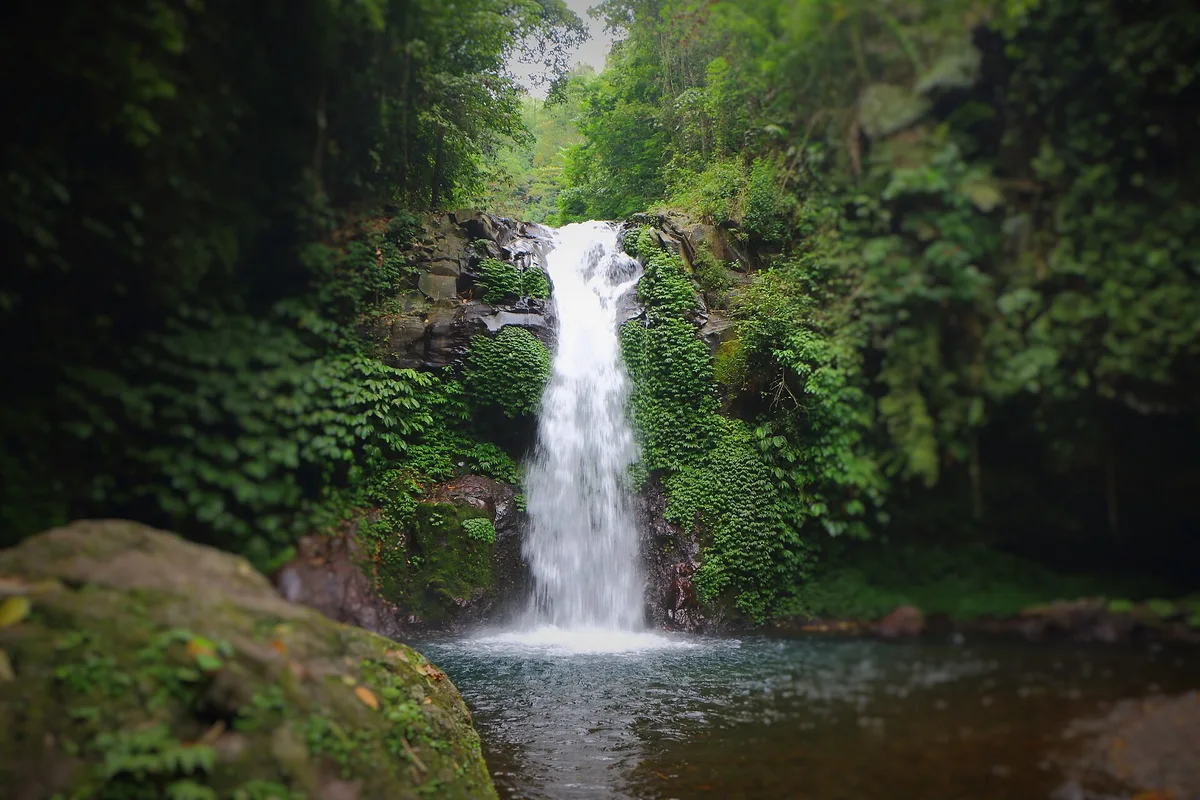
Gitgit is the oldest established waterfall stop in north Bali and it shows, for better and worse. The walk in is ten minutes on a paved path, so it is the one to pick if somebody in your group cannot manage steps. The falls themselves are a single strong column into a deep pool, and after heavy rain the volume is genuinely impressive.
The downside is the gauntlet. The path is lined with souvenir stalls and you will be spoken to by every one of them. It is good natured, not aggressive, but if you came for jungle silence you will not find it here. Go to Gitgit for convenience, not atmosphere.
It sits directly on the main road between Bedugul and Singaraja, which makes it a natural break on the drive north. Many people combine it with the drive around to Amed on the northeast coast, though that is a long day in the car.
Tukad Cepung: The Waterfall Inside a Canyon
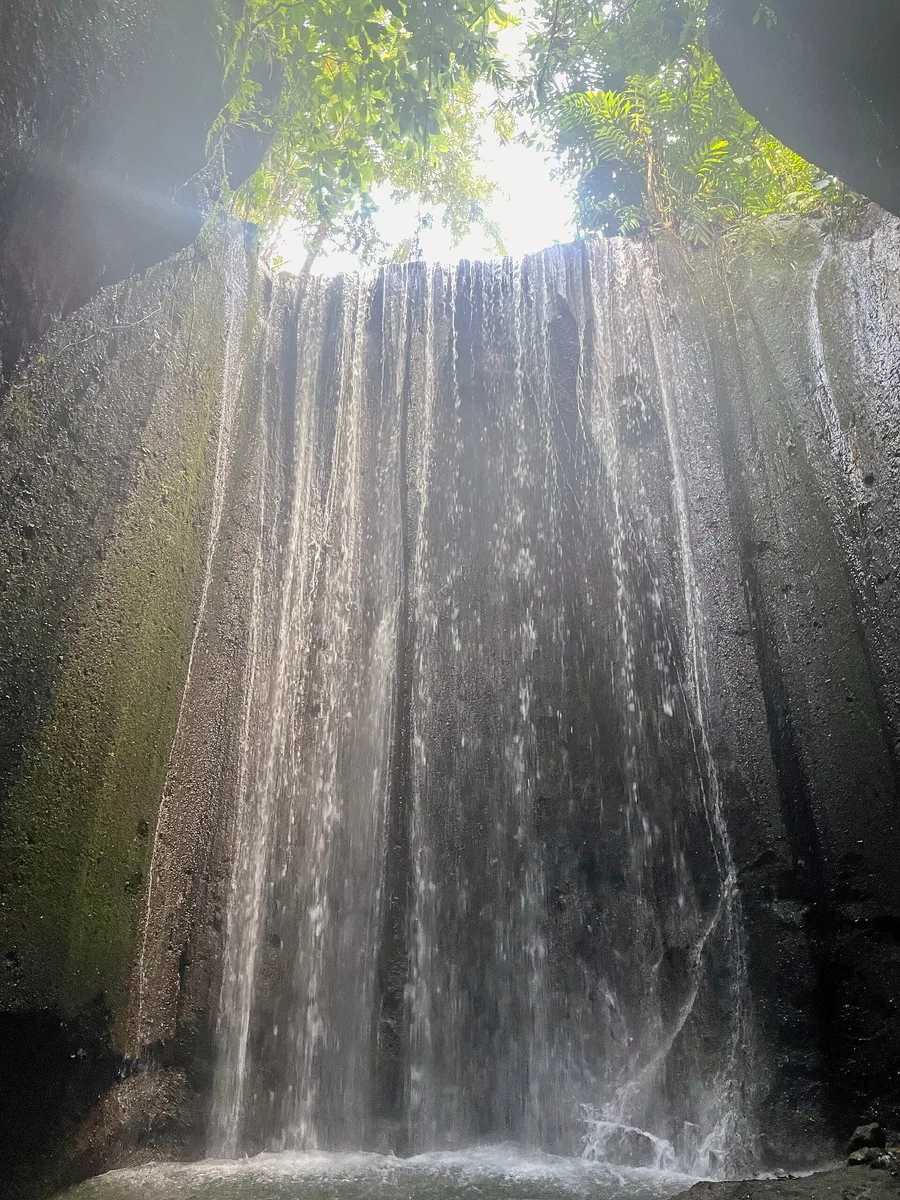
This one is a genuine novelty. Tukad Cepung falls inside a slot canyon, and for a narrow window each morning the sun drops through the opening overhead and lights the falling water in visible beams. It is the single most distinctive waterfall on the island and it photographs like nowhere else in Bali.
The window is the whole game. You want to be standing in the canyon between roughly 9am and 10:30am, and you want a clear sky. Outside that window it is a pleasant waterfall in a dark rock chamber, which is fine but not what you drove for. In the wet season the beams appear far less often because of cloud cover, so this is a dry-season target.
Getting in involves walking down steps then wading up the streambed for a few minutes. Your feet will be wet, so wear sandals with a real sole rather than flip-flops. One honest warning: after heavy overnight rain the canyon can close, and it should. Water rises fast in a slot. If the ticket staff turn you away, they are not being difficult.
The Gianyar Three: Tegenungan, Kanto Lampo and Leke Leke
These are the closest to Sanur and Ubud, the easiest to reach, and the most crowded. They are worth your time if you have half a day rather than a full one, or if you are filling the gap on a no-fly day before heading to the airport. They also slot neatly around a morning in the water, whether that is a Nusa Penida dive trip or an easy snorkelling session closer to shore.
Tegenungan
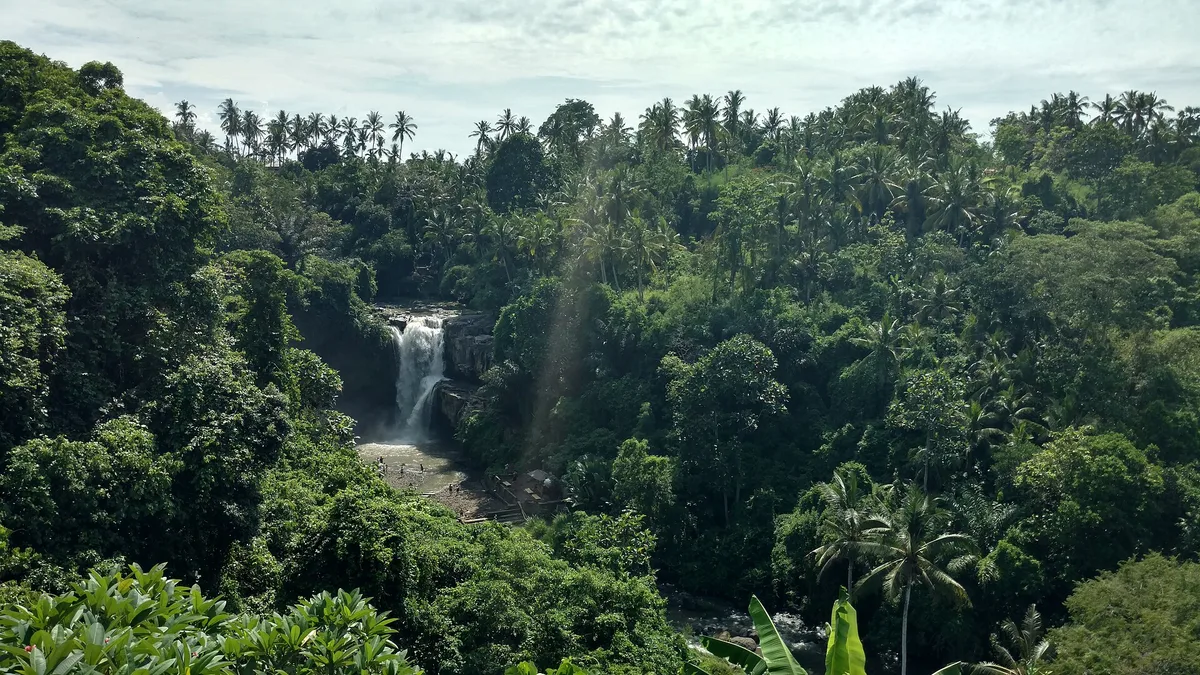
Forty-five minutes from our shop and the easiest waterfall in Bali to visit, which is precisely its problem. Tegenungan is wide, powerful and set in a beautiful palm valley. It also has a car park, a row of cafes, changing rooms, an entrance gate and, on a bad day, several hundred people.
We will be straight about this one: go for the view from the top, not the swim. The plunge pool is churny and the water quality is the poorest of the ten here, because the river drains farmland upstream. Look at it, photograph it, have a coffee on the rim, then leave. If you want to actually get in the water that day, you are better off in the sea at Padang Bai.
Kanto Lampo
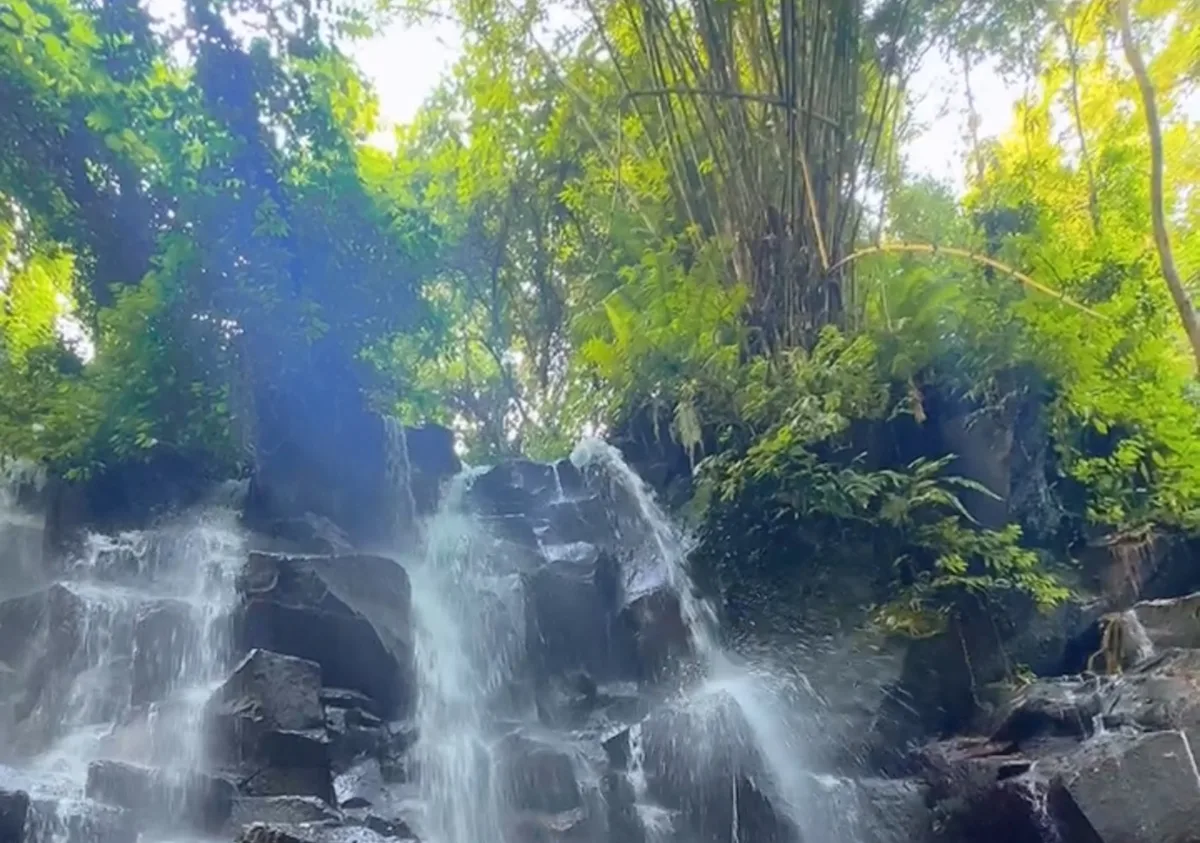
Kanto Lampo does not fall so much as spill, fanning out across a wide staircase of black volcanic rock. It is unusual and it is only about a minute's walk from the car park, down a set of steps beside a temple.
It is also, on most days, completely mobbed. There is a queue for the photograph on the rock, and we mean an actual queue with somebody managing it. The trick is timing. Get there for opening at around 8am and you will have twenty minutes of quiet before the first vans. By ten there is no point. The rock is slippery in a way that catches people out, so go barefoot or wear something with grip, and do not run on it.
Leke Leke
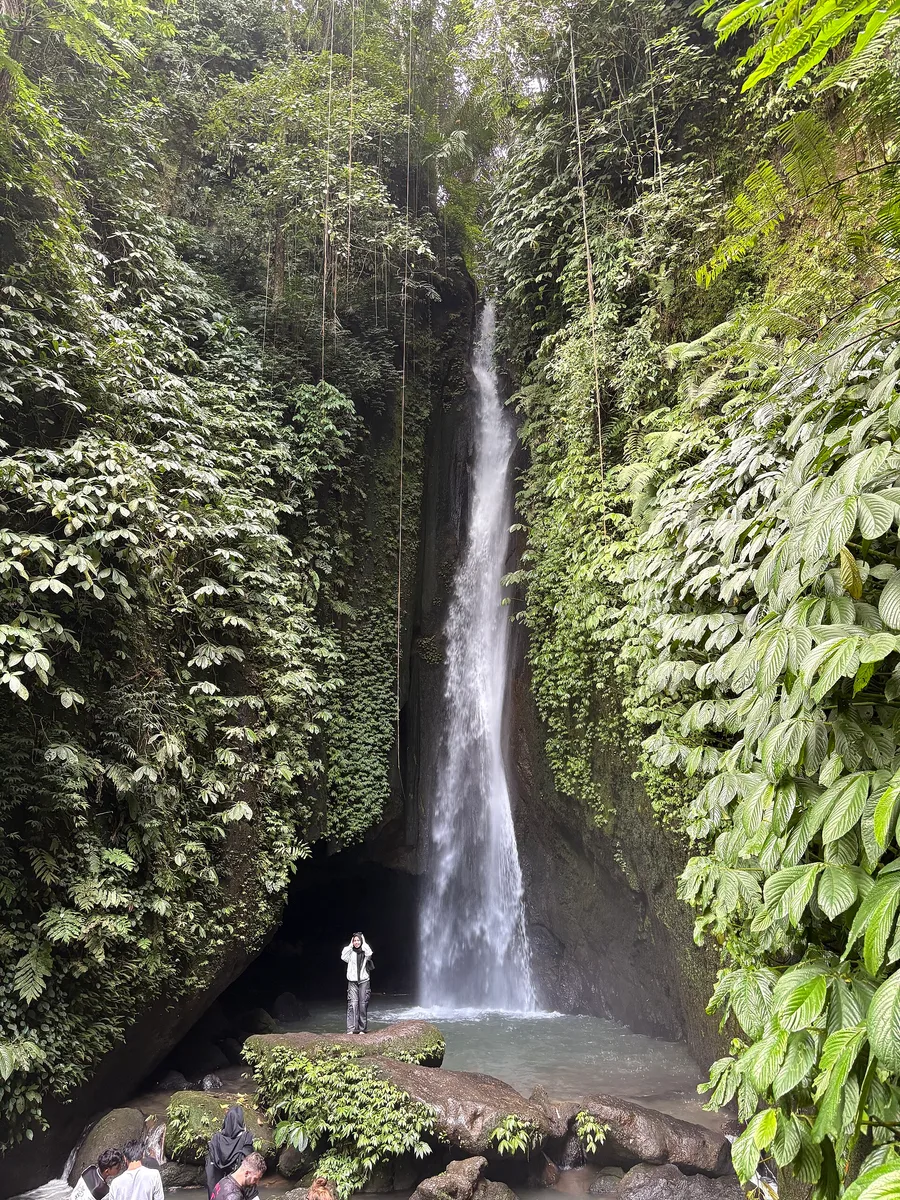
The prettiest of the southern three and the one most worth paying for. Leke Leke is a thin ribbon dropping into an extremely narrow gorge with vine-covered walls closing in on both sides. The scale only lands when somebody stands at the bottom, as in the photograph above.
It is privately managed, which explains the Rp 50,000 ticket and also the standard of the path: bamboo bridges, cut steps, handrails where you want them. The walk in takes about fifteen minutes through a garden and along a stream. Numbers at the base are limited by the sheer narrowness of the gorge, so it never feels as crowded as Tegenungan even when the car park is full.
What to Bring, What to Pay and When to Go
Cash, in small notes. Not one site on this list takes a card, and the ticket huts rarely have change for a Rp 100,000 note first thing in the morning. Budget Rp 400,000 in total for two people doing three waterfalls, including parking, which is usually Rp 5,000 for a scooter and Rp 10,000 for a car.
Footwear decides your day. Every one of these involves wet rock, and Bali's volcanic stone grows a film of algae that behaves like grease. Trainers or proper sandals with a grippy sole, never flip-flops. The single most common injury we hear about from guests on land days is a waterfall slip, and it is almost always footwear.
Bring a dry bag if you own one. You already packed one for the boat if you followed our Bali packing list, and spray at the base of these falls will soak a phone that is merely in a pocket. Add a light rain shell between November and March, a towel, and mosquito repellent for the shaded gorges at Munduk.
On timing, the dry season from May to September gives you reliable light, safer paths and the sunbeams at Tukad Cepung. The wet season from November to March gives you dramatically more water, greener everything and far fewer people, at the cost of slippery descents and the occasional closure. Both are good, for different reasons. Our guide to the best time to visit Bali breaks the seasons down in more detail.
Sarongs are not required at any of these ten, unlike temples, but Kanto Lampo sits beside an active temple and Tukad Cepung has shrines on the approach. Cover up if a ceremony is in progress and do not walk in front of anyone praying. Everything on this list also closes completely for Nyepi, the island's day of silence, so check the date before you plan around it. On safety more generally, Bali is straightforward, and our notes on staying safe in Bali cover the handful of things worth knowing.
The Altitude Problem Nobody Tells Divers About
Here is the part we care most about, and the reason a dive centre wrote this guide rather than a travel blog.
Most divers know they cannot fly straight after diving. The surface interval before a flight is 12 hours after a single dive and 18 hours after repetitive diving, and we go through it with every guest. What almost nobody realises is that the rule is not really about aeroplanes. It is about ambient pressure. Going up a mountain does the same thing to the nitrogen still dissolved in your tissues that a cabin at altitude does.
Now look at the map. Banyumala, Banyu Wana Amertha, Munduk and Gitgit all sit in the northern highlands, and the only sensible road to them from the south climbs over the Bedugul pass at roughly 1,200 to 1,400 metres. That is a real altitude exposure, reached in about ninety minutes of driving. Divers Alert Network puts the point where altitude starts to count at 610 metres, or 2,000 feet, and says plainly that any post-dive ascent to a higher altitude, ground transport included, increases your decompression stress. The Bedugul crossing is roughly double that threshold. Their guidance on flying after diving is worth reading in full.
So the practical rule we give guests is simple. Do not dive in the morning and drive to Munduk, Wanagiri or Gitgit that afternoon. Put a full night between them at minimum, and if you did three or four dives that day, treat the mountain drive exactly as you would treat a flight and wait 18 hours. The southern falls are a different matter. Tegenungan sits at about 150 metres and Kanto Lampo not much higher, so those are fine on a dive day.
This works beautifully in your favour if you plan the trip in the right order. Dive first, then do the mountains at the end. A common shape we suggest: four or five days of diving out of Sanur, then the northern waterfall loop on your no-fly day, then the airport. You get the highlands and the buffer in one move. We lay out several versions of this in our Bali dive trip itinerary, and our full write-up on flying after scuba diving explains the physiology properly.
If you are not sure how your dive days and your land days should be stacked, just ask us. Send a message through the contact page with your flight time and we will tell you what fits. We do this most weeks. It costs nothing and it has kept more than one guest from booking a sunrise trek up to Wanagiri twelve hours after a deep dive on the Liberty wreck.
Bali rewards people who slow down. The waterfalls are not going anywhere, the diving out of Sanur runs year round, and the island is small enough that you can have both without rushing either. If you would rather have the whole week costed up front, our dive packages and current prices are published in full, and you are always welcome to walk into our dive centre in Sanur and have us draw the week out on paper with you.