

Dive mask fogging ruins more first dives than cold water or ear trouble, and it is almost always preventable. Students on the PADI Open Water course learn to clear a fogged mask underwater, but the real fix happens before the mask ever gets wet. A mask that is cleaned properly once and prepared the same way before every dive stays clear for the whole hour.
The problem is worst with brand new masks, rental masks that have been handled all week, and masks that sit in the sun on a boat deck. Divers who travel without their own can rent a mask in Sanur, and the same routine works for a rental as for a mask bought at home. This guide explains why masks fog, compares the anti-fog methods, and sets out the step-by-step routine for new masks, the boat and underwater.
The advice below follows what dive instructors teach and what mask manufacturers print in their care instructions. Where methods carry a risk, such as burning a lens or using toothpaste on coated glass, the risk is stated.
How to stop your dive mask fogging
To stop a dive mask fogging, strip the factory film from a new lens once, then apply defog to clean, dry glass before every dive and rinse it lightly.
- Deep-clean a new lens
- Apply defog every dive
- Rinse lightly, do not scrub
- Keep the mask cool
- Exhale through the regulator
If the mask still fogs underwater, let in a little water, swirl it across the glass and clear it.
Divers usually learn the routine through:
- A first try dive in Bali with an instructor
- Equipment prep on Bali snorkeling trips
- A mask briefing at a Bali dive shop
In short: clean once, defog every time, rinse gently and keep warm breath out of the mask.
Why does a dive mask fog up?
A dive mask fogs because warm, humid air inside it meets glass that the water has cooled, and the moisture condenses into tiny droplets. Oils and factory residue on the lens make those droplets bead up instead of spreading into a clear film.
Temperature and humidity
The air inside the mask is warmed by the face and kept humid by skin and breath. When the glass is cooler than the dew point of that air, water condenses on it, the same way a cold drink sweats in the tropics. In Bali the air on a boat can be 30°C or more while the water is 26 to 29°C, so the glass cools quickly on entry.
The effect gets stronger when the water temperature drops suddenly. Divers at Crystal Bay and the south of Nusa Penida sometimes cross thermoclines into 20°C water or colder, and a mask that was clear at 10 metres can fog at 20. How often that happens is covered in Bali diving conditions.
Residue on the lens
New masks leave the factory with a thin film of silicone and release agent on the glass. Water does not wet that film evenly, so condensation forms as a fog of separate droplets. Skin oil, sunscreen and fingerprints do the same thing on older masks, which is why touching the inside of the lens is one of the quickest ways to make a mask fog.
What anti-fog actually does
Defog products are surfactants: they lower the surface tension of water on the glass. Instead of beading into droplets that scatter light, condensation spreads into a thin, even layer that stays transparent. That is why defog only works on clean glass, and why rinsing it all off defeats the purpose.
Why some divers fog more than others
Two divers using the same defog on the same boat can have very different results. Divers who breathe out through the nose without noticing, who have oily skin or wear sunscreen close to the eyes, or whose mask leaks slightly, all put more moisture and residue inside the mask. Nervous first-time divers also tend to exhale through the nose more often, which usually stops once they relax.
Body heat matters too. A diver who has just carried equipment down a beach in the midday sun, as at Tulamben or Amed, enters the water with a warm face and a warm mask. Giving the mask a quick dunk in the sea and waiting a minute at the surface lets the glass and the air inside it cool down together.
Which anti-fog method works best for a dive mask?
Commercial defog gel or spray is the most reliable everyday method, diluted baby shampoo is a good budget alternative, and saliva works in a pinch. Toothpaste and flame are one-off treatments for new masks, not daily defog.
| Method | What it is for | How well it works | Risks | Typical cost |
|---|---|---|---|---|
| Commercial defog gel or spray | Before every dive | Very reliable on a clean lens | Stings if not rinsed lightly | About USD 5 to 15 per bottle |
| Diluted baby shampoo | Before every dive | Reliable, slightly less than gel | Can sting eyes if too strong | Very low |
| Saliva | Emergency defog | Works for some divers, inconsistent | Hygiene on shared masks | Free |
| Non-gel toothpaste scrub | New mask, once | Removes factory film well | Can scratch coated or plastic lenses | Very low |
| Flame (lighter) | New mask, once | Burns off factory film | Can damage the skirt, frame and coatings; may void warranty | Free |
| Commercial mask cleaner | New mask and deep cleaning | Removes film and oils safely | Few, if used as directed | About USD 5 to 15 |
Prices are indicative and vary by brand and country. For most recreational divers, a small bottle of gel lasts a full trip of 15 to 20 dives.
Commercial defog
Gels cling to the glass and are easy to spread evenly; sprays are quicker but easier to over-apply. Both work best when the lens is dry before application and the product is left for a few seconds before rinsing.
Baby shampoo
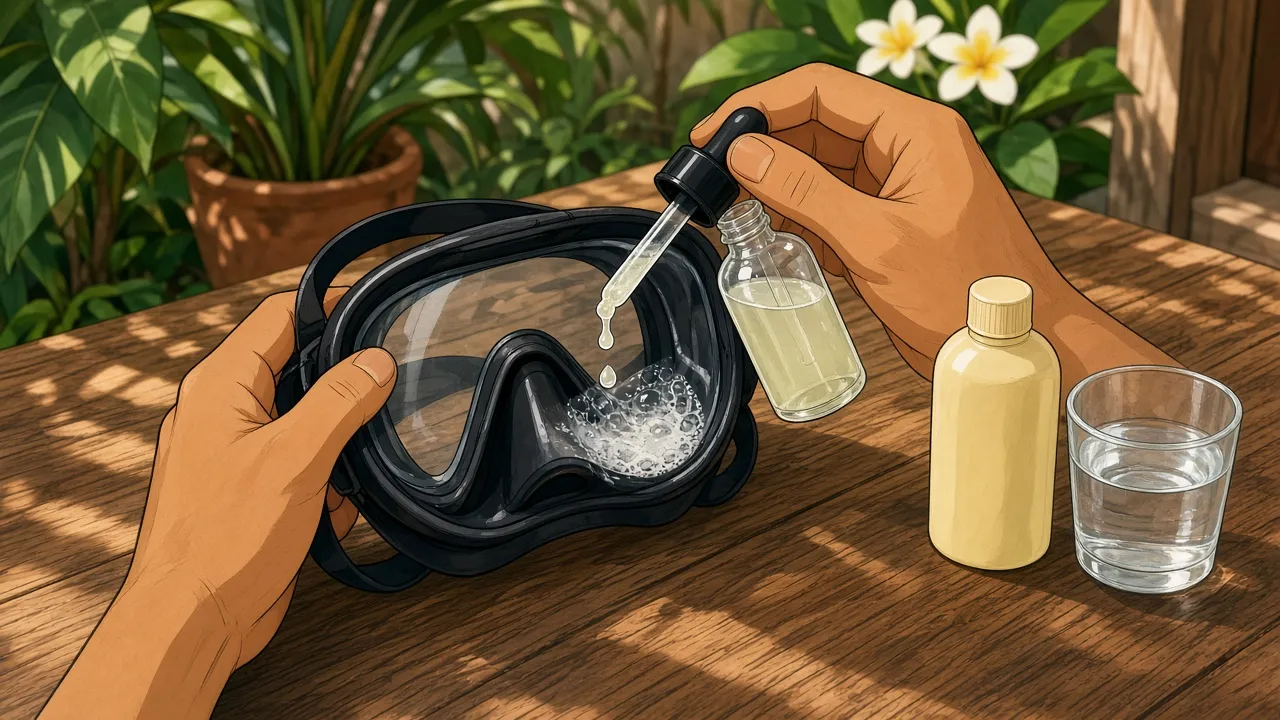
Baby shampoo is a mild surfactant designed not to sting. Divers usually mix a few drops with water in a small dropper bottle, roughly one part shampoo to five or ten parts water. Adult shampoo and dish soap work as surfactants too, but they irritate the eyes much more if any is left behind.
Saliva
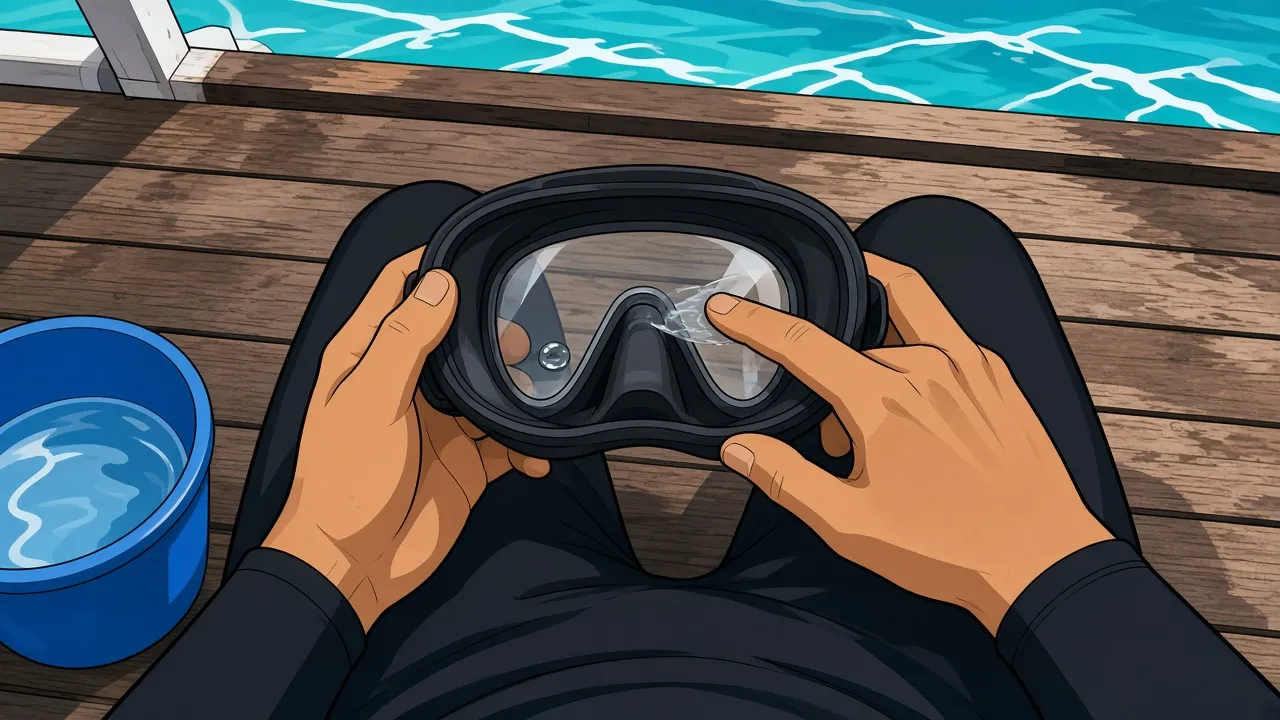
Spitting into a mask and rubbing it around is the oldest method in diving and still works for many people. It is less consistent than gel, and it should never be used on a shared or rental mask that someone else will wear next.
How do you prepare a new dive mask?
A new mask needs the factory film removed before its first dive, usually by scrubbing the inside of the lens with mask cleaner or plain non-gel toothpaste two or three times. Skipping this step is the main reason new masks fog no matter how much defog is used.
1. Check the lens type
Read the care instructions first. Plain tempered glass can be scrubbed, but lenses with anti-reflective, mirrored, tinted or factory anti-fog coatings can be ruined by toothpaste or flame. Masks sold in Europe should meet the EN 16805 standard, and most glass lenses are marked "tempered" on the glass itself.
2. Scrub the inside of the lens
Put a small amount of mask cleaner or white, non-gel toothpaste on a fingertip and rub it in small circles over the inside of the glass for one to two minutes. Gel toothpastes and whitening pastes with large abrasive particles are best avoided.
3. Rinse thoroughly
Rinse with fresh water until no paste remains, especially in the corners where the glass meets the skirt. Any residue left behind will sting the eyes and cloud the view.
4. Repeat two or three times
One scrub is rarely enough. Most instructors recommend two or three rounds, or repeating the scrub the night before each of the first few dives.
5. Test it
Breathe on the dry lens. If the condensation spreads evenly and clears quickly, the film is gone. If it forms a patchy, spotty fog, clean it again.
What about burning the lens?
Some divers hold a lighter flame to the inside of a new lens until it blackens, then wipe off the soot. It does remove the film, but it is easy to melt the silicone skirt or damage the frame, and some manufacturers say it voids the warranty. It must never be done on plastic or coated lenses. Toothpaste or mask cleaner achieves the same result with far less risk.
What is the pre-dive routine to stop mask fogging?
Before each dive, apply defog to a clean, dry lens, rinse once in seawater, and put the mask on just before entering the water. The whole routine takes under a minute.
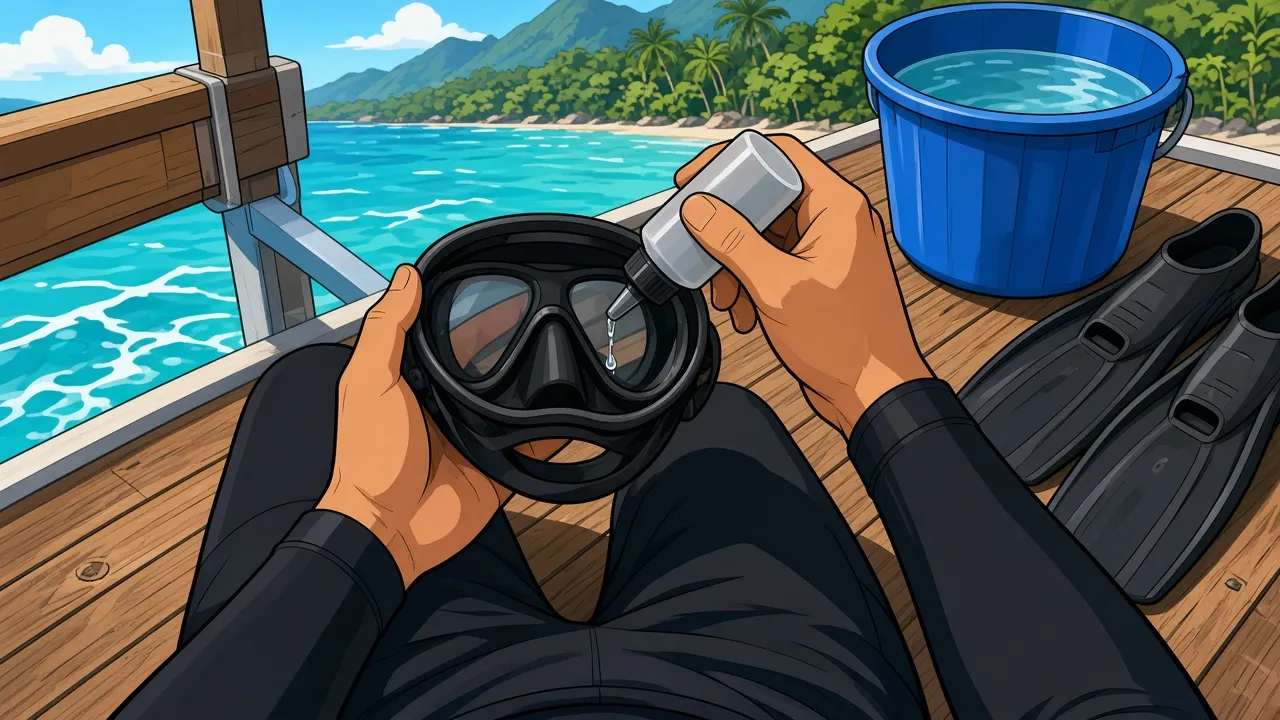
1. Start with a dry lens
Defog bonds best to dry glass. If the mask was rinsed after the last dive, shake it out and let it dry in the shade before applying.
2. Apply a small amount
Two or three drops of gel, or one short spray, is enough. Spread it over the whole inside of the lens with a clean fingertip, right into the corners.
3. Wait a few seconds
Leaving defog on the glass for 10 to 30 seconds helps it adhere. Some divers apply it at the start of the boat ride, then rinse just before the dive.
4. Rinse lightly
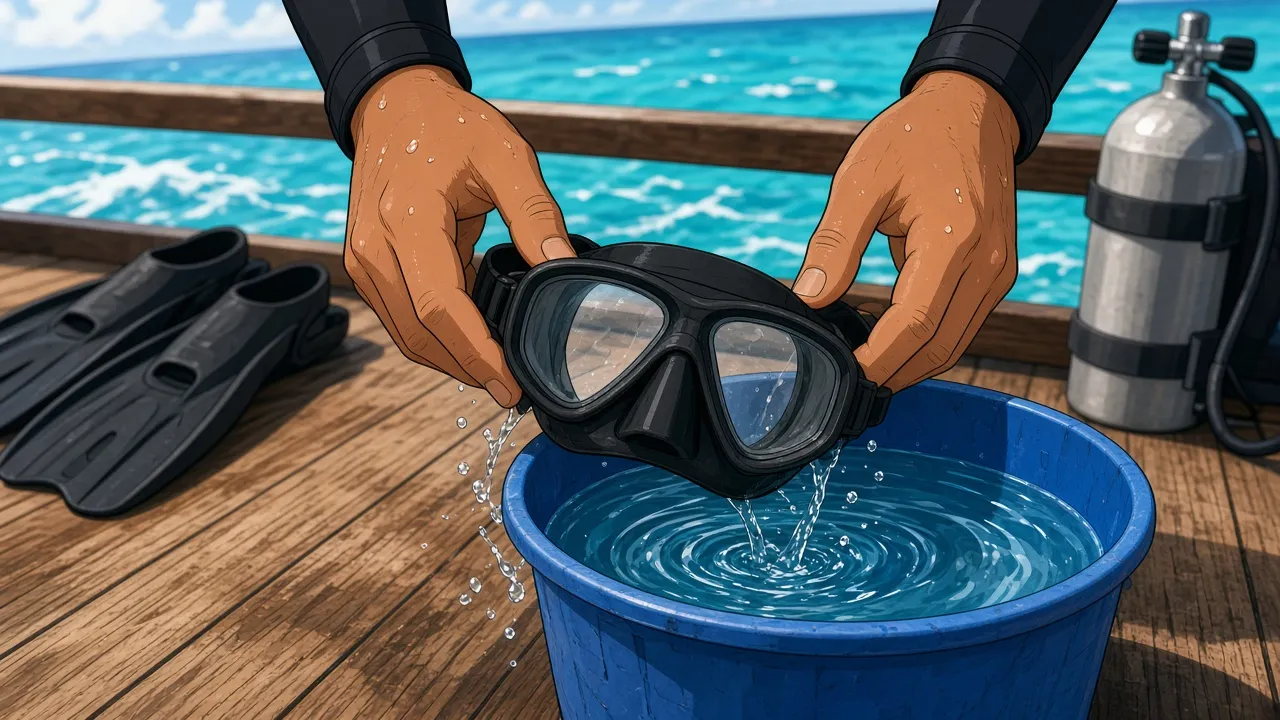
Dip the mask in the rinse bucket or the sea once and swirl it. The goal is to remove the excess that would sting, not to wash the defog away. A thin film should remain.
5. Keep it cool and on the face
Do not leave the mask in the sun on the deck, and put it on just before entry. Many instructors teach divers to keep the mask on their face at the surface; a mask pushed up on the forehead is easily lost in waves and gets warm again.
Snorkelers can follow the same routine. On choppy days at sites like snorkeling spots off Nusa Penida, a clear mask makes a big difference, and the differences between the two activities are explained in snorkeling vs diving.
How do you clear a fogged mask underwater?
To clear fog underwater, let a small amount of water into the mask, tilt the head to wash it across the glass, then press the top of the frame and exhale through the nose to push the water out. It is the same skill as clearing a flooded mask.

1. Get stable
Hover or kneel in a stable position, away from the reef. Good buoyancy makes this much easier; the drills in how to improve buoyancy and the Peak Performance Buoyancy specialty help divers hover while handling the mask.
2. Let in a little water
Lift the top edge of the skirt slightly away from the forehead, or break the seal at one side, until a small amount of water enters. Keep breathing normally through the regulator.
3. Swirl it
Tilt the head side to side so the water washes over the inside of the glass. The cooler seawater removes condensation instantly.
4. Clear the mask
Look slightly up, press the top of the frame against the forehead, and exhale steadily through the nose. The water leaves through the bottom of the skirt.
Partial and full mask flooding and clearing are required skills in the PADI Open Water course, practised first in confined water. Divers who have been away from diving for a while often find this skill rusty, which is one reason the PADI ReActivate refresher includes it. Equalising and mask skills often go together, as described in how to equalise your ears.
What mistakes make a dive mask fog more?
The most common mistakes are touching the inside of the lens, rinsing off all the defog, breathing out through the nose and leaving the mask in the sun. Each one is easy to fix once a diver knows about it.
| Mistake | Why it causes fog | Fix |
|---|---|---|
| Touching the inside of the lens | Leaves skin oil that makes droplets bead | Handle the mask by the frame and skirt only |
| Over-rinsing the defog | Removes the film that keeps condensation clear | One quick dip, then put the mask on |
| Exhaling through the nose | Adds warm, humid air to the mask | Breathe out through the regulator only |
| Mask left in the sun | Warm glass cools fast on entry and fogs | Keep it in the shade or in the rinse bucket |
| Mask on the forehead | Warms the glass and is easily lost | Keep it on the face or around the neck |
| Sunscreen near the eyes | Leaves oily residue on the skirt and lens | Apply sunscreen well before kitting up |
Hair under the skirt is another common problem. It does not cause fog directly, but it lets water seep in, and the diver then exhales through the nose to clear it, adding more humid air. Tying long hair back or using a neoprene strap cover helps.
Divers who use cameras face an extra challenge, because a fogged mask makes framing almost impossible. Practical tips for shooting in Bali are covered in underwater photography in Bali.
Caring for the mask after the dive
Good care after the dive makes the next defog more effective. Rinse the mask in fresh water at the end of the day, let it dry in the shade and store it in its box, lens side protected. Salt crystals, sun and heat all shorten the life of the silicone skirt and leave residue on the glass.
Clear silicone skirts can be stained if they are stored pressed against black rubber or neoprene, such as fins or a wetsuit. Keeping the mask in its own box avoids this and protects the lens from scratches in a crowded gear bag. Every few weeks of regular diving, a quick scrub with mask cleaner removes the build-up of defog, skin oil and sunscreen.
How to choose a dive mask that fogs less
No mask is fog-proof, but a mask that fits well, has a low internal volume and a clean tempered glass lens is much easier to keep clear. Fit matters more than brand or price.
Fit first
Place the mask on the face without the strap and inhale gently through the nose. A good fit stays in place without leaking. A mask that leaks forces constant clearing, and every nose exhale adds moisture.
Low volume
Low-volume masks hold less air, which means less humid air to condense and less effort to clear. They are popular with photographers and freedivers for the same reason.
Skirt colour
Black skirts reduce glare and help concentration; clear skirts let in more light and feel less closed in. Clear silicone yellows over time with sun exposure, which is cosmetic but signals an ageing mask.
Framed or frameless
Frameless masks bond the skirt directly to the lens, which makes them low-profile and easy to pack. Framed masks have a rigid frame around the glass and often allow lenses to be replaced. Both fog in the same way, so the choice comes down to fit and comfort rather than fog resistance.
Prescription masks
Divers who wear glasses can buy masks with corrective lenses, either standard dioptre lenses that fit common two-window frames or custom-ground lenses from an optician. Contact lenses also work under a normal mask for many divers. Prescription lenses fog like any other and are prepared the same way, but they are often coated, so the manufacturer's care instructions matter even more.
By diver level
Beginners can rent a mask for their first dives, then buy one that fits once they know they will keep diving. Divers continuing to the Advanced Open Water course or the Night Diver specialty benefit from owning a mask they know well, because fumbling with an unfamiliar fit in the dark is harder. Divers heading on a week-long trip such as the King Neptune liveaboard should pack a spare mask, as recommended in the Bali scuba diving packing list.
When to replace a mask
Replace a mask when the skirt hardens or cracks, the strap buckles slip, the lens is scratched, or it starts leaking despite a good fit. Rental masks are checked and replaced regularly at good dive centres for this reason.
Example: mask prep with Neptune Scuba Diving in Bali
Neptune Scuba Diving runs courses, dive trips and snorkeling trips from its dive center in Sanur. The example below shows how mask prep fits into one operator's day; it is not the only way to do it.
- Course students receive a full set of equipment, including a mask, on the three-day Open Water course, and practise mask clearing in the pool on day one.
- Masks are among the rentable items at the dive center, alongside snorkels, fins, BCDs, regulators and dive computers.
- Day trips to Padang Bai, Tulamben and Amed include time on the boat or beach to prepare equipment before the first dive.
- Divers who bring their own new mask should prepare it before arriving, because the scrub needs several rounds.
This format is not for everyone. It does not include prescription mask fitting, which needs an optician or a specialist retailer before the trip. Divers who want to buy a mask should compare models in person at a retailer, because fit varies so much between faces.
Divers returning to the water after a long break, or those who want to practise mask skills further, can do so on Bali dive trips with a guide, or in more depth on the PADI Rescue Diver course, where calm problem-solving underwater is the focus. The full first-day experience is described in first-time diving in Bali.
Key takeaways
- A dive mask fogs when warm, humid air inside it condenses on glass cooled by the water.
- New masks need the factory film scrubbed off two or three times with mask cleaner or non-gel toothpaste.
- Apply defog to a dry lens before every dive and rinse it once, lightly.
- Never touch the inside of the lens, and breathe out through the regulator, not the nose.
- If it fogs underwater, let in a little water, swirl it and clear the mask.
- Avoid flame and toothpaste on coated or plastic lenses, and check the manufacturer's care instructions.