
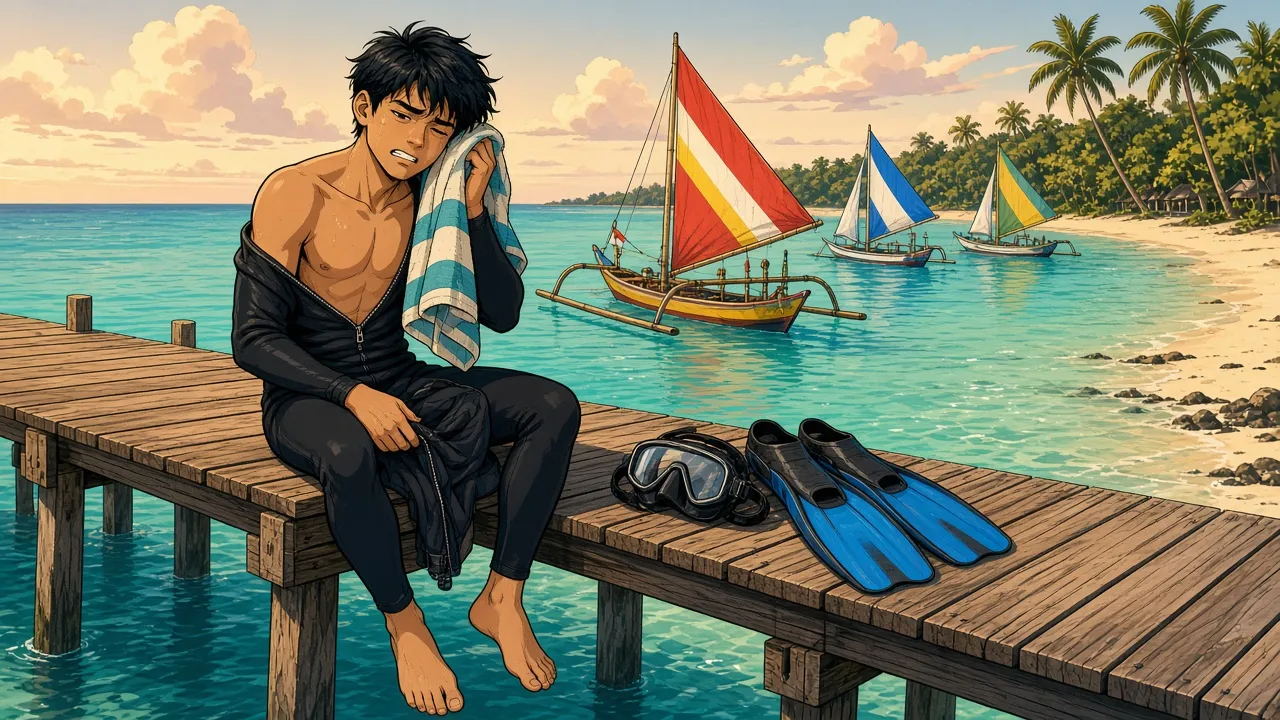
Swimmer's ear is the ear problem divers in the tropics meet most often, and it has nothing to do with pressure. It is an infection of the skin lining the outer ear canal, and it develops when that skin stays wet, warm and softened for days on end, which describes almost any week of snorkelling trips in Bali or back-to-back Bali dive trips. It starts as an itch, turns into pain when the ear is touched, and can end a diving holiday early if it is ignored.
The good news is that swimmer's ear after diving is largely preventable with a few minutes of care at the end of each dive day, and it usually responds quickly to treatment. Students in the middle of a PADI Open Water course and divers on a multi-day dive package are the most exposed, because their ears are in the water for several hours a day for several days in a row.
Swimmer's ear is often confused with the pressure injuries covered in the guide to diving barotrauma in Bali, and with the middle ear problems that follow a cold. The difference matters, because the treatment and the time out of the water are not the same.
What is swimmer's ear?
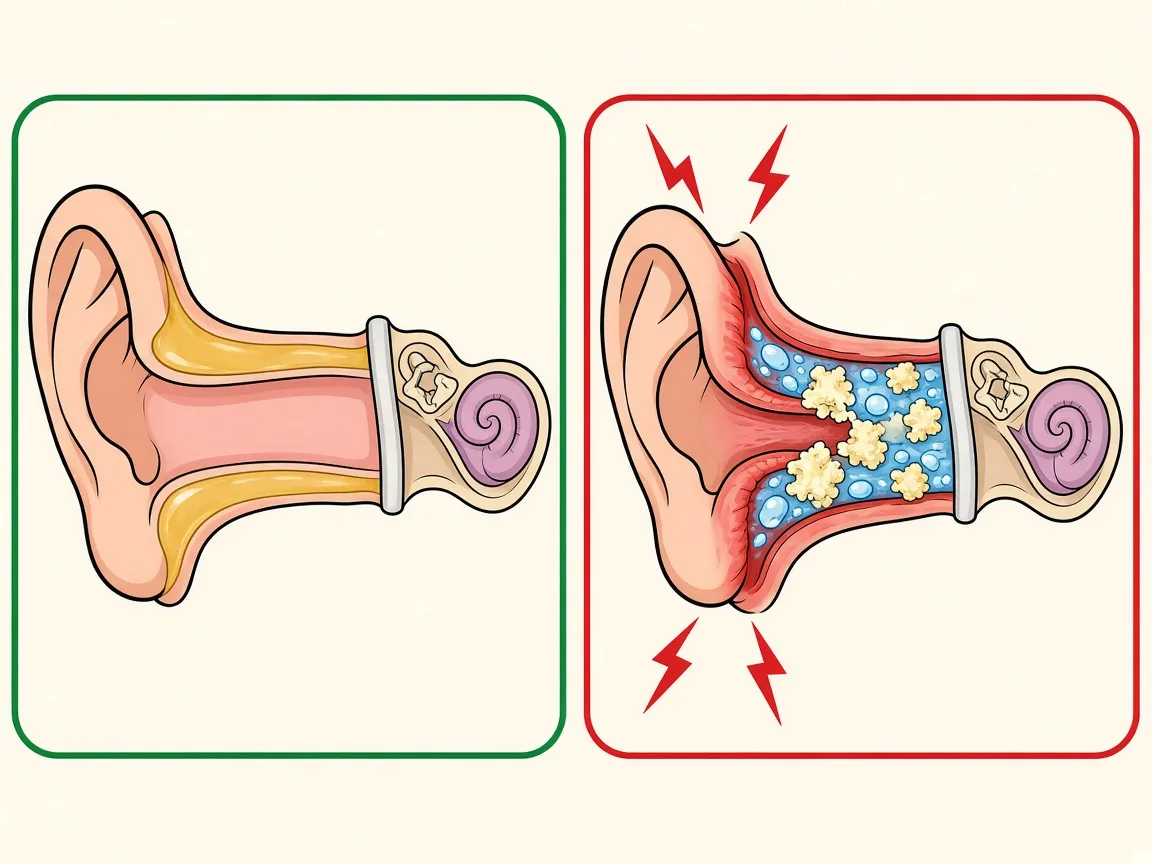
Swimmer's ear is an infection of the outer ear canal, medically called otitis externa, usually bacterial, that develops when water softens the canal skin for long periods.
- Itching inside the ear
- Pain when the ear is touched
- Swelling and a blocked feeling
- Discharge and muffled hearing
It sits in front of the eardrum, so unlike barotrauma or a middle ear infection, it can be seen and treated directly through the ear canal.
Divers most often pick it up on:
- Multi-day Tulamben diving with three dives a day
- Week-long trips such as the King Neptune liveaboard
- Daily pool and ocean training sessions
In short: swimmer's ear is a skin infection caused by wet ears, not a pressure injury.
Swimmer's ear vs middle ear infection vs barotrauma: what is the difference?
Three different ear problems affect divers, and they sit in three different places. Swimmer's ear is in the outer canal, a middle ear infection is behind the eardrum, and barotrauma is damage caused by pressure, usually to the middle ear.
| Problem | Where | Usual cause | Telltale sign | Typical treatment |
|---|---|---|---|---|
| Swimmer's ear | Outer ear canal | Wet skin, bacteria or fungus | Pain when the ear is tugged | Prescription ear drops |
| Middle ear infection | Behind the eardrum | A cold spreading up the tube | Deep ache, often fever | Pain relief, sometimes antibiotics |
| Ear barotrauma | Middle or inner ear | Failure to equalise | Pain starting during the dive | Rest, time, specialist if severe |
Swimmer's ear
Swimmer's ear builds up over hours or days after diving, not during a dive. The classic test is to pull gently on the outer ear or press the small flap of cartilage in front of the canal: if that hurts, the problem is almost certainly in the canal itself.
Middle ear infection
A middle ear infection, or otitis media, usually follows a cold, when germs travel up the Eustachian tube into the space behind the eardrum. It is more common in children, often comes with a fever, and tugging the outer ear does not change the pain. Diving with the congestion that leads to it is covered in the article on scuba diving with a cold.
Barotrauma
Ear barotrauma happens during a descent or ascent, when the diver cannot balance the pressure in the middle ear. It is felt underwater, often as pain at a few metres, and it is prevented by good technique, explained in the guide on how to equalise your ears when diving.
Key distinction:
- Pain that started underwater points to pressure; pain that builds after the dive, with itching, points to swimmer's ear.
- Pain that gets worse when the outer ear is pulled is the clearest sign of swimmer's ear.
What causes swimmer's ear after diving?
Swimmer's ear after diving is caused by a chain of small events, each of which weakens the ear canal's natural defences, until bacteria or fungi that live on the skin take hold.
1. Water softens the canal skin
The skin of the ear canal is thin and sits directly on cartilage and bone. Hours of immersion soften it, in the same way fingers wrinkle in the bath, and softened skin cracks and breaks down more easily. Water that stays trapped in the canal after the dive keeps it soft long after the diver is back on the boat.
2. The protective earwax washes out
Earwax is slightly acidic and water-repellent, and it is the canal's main barrier against infection. Repeated immersion, frequent rinsing and especially cleaning with cotton buds remove it. An ear with little wax left is an ear with little protection.
3. Warmth and humidity let germs grow
The two germs most often behind swimmer's ear are the bacteria Pseudomonas aeruginosa and Staphylococcus aureus, according to the clinical practice guideline on acute otitis externa published by the American Academy of Otolaryngology, Head and Neck Surgery Foundation. Both thrive in warm, damp conditions. Bali's sea temperature of 26 to 29°C at most sites, described in the guide to Bali diving conditions, and high year-round humidity mean the canal rarely dries out on its own.
4. Small injuries open the door
Scratching an itchy ear with a finger, a fingernail or a cotton bud makes tiny breaks in softened skin, and those breaks are where infection starts. The itch is often the first sign of trouble, so scratching it tends to make things worse quickly.
5. Some ears are more vulnerable
Narrow or hairy ear canals, eczema or psoriasis in the ear, hearing aids and a history of previous swimmer's ear all raise the risk. People with diabetes or a weakened immune system need to take ear infections more seriously, because rarely the infection can spread to the bone around the canal.
6. Worked example: five days in Tulamben
Take a diver on a five-day trip to Tulamben, making three shore dives a day of around 50 minutes each, plus rinsing off in the shower afterwards. That is 15 dives and roughly 12 to 13 hours of immersion in five days, not counting time spent snorkelling at the hotel or in the pool. If the ears are left to drain on their own each evening in humid air, the canal skin may never fully dry from day one to day five.
The pattern doctors see is typical. Mild itching appears on day two or three, the diver scratches or uses a cotton bud, and by day four the ear is sore to touch and feels blocked. With drying drops after each dive day and no cotton buds, the same diver usually finishes the trip without problems.
Swimmer's ear symptoms: how to tell how bad it is
Swimmer's ear usually starts with itching and a feeling of water in the ear, then progresses to pain, swelling and discharge over one to three days. The stage it has reached decides whether a pharmacy visit is enough or a doctor is needed.
| Stage | What it feels like | What to do |
|---|---|---|
| Early | Itch, slight redness, mild discomfort | Stop diving for the day, keep the ear dry |
| Mild infection | Pain when the ear is tugged, clear discharge | See a doctor for prescription drops |
| Moderate | Canal swelling, blocked feeling, muffled hearing | Doctor the same day, no water |
| Severe | Canal swollen shut, pain spreading to the face or neck, fever | Urgent medical care |
Early signs
Itching inside the canal, a feeling of fullness and slight redness at the opening are the first signs. Many divers mistake them for water stuck in the ear. Water that will not drain after several hours, together with itching, is a warning to stop and dry the ear properly.
Signs of infection
Pain when chewing, when lying on that side or when the outer ear is touched shows that the infection has taken hold. Some people notice a clear, yellow or cloudy discharge, and hearing on that side may sound muffled because the swollen canal narrows.
Fungal swimmer's ear
Fungal infection of the ear canal, called otomycosis, is more common in hot, humid climates and after a course of antibiotic drops. It tends to itch more than it hurts, and a doctor may see white, grey or black specks in the canal. It needs antifungal treatment, so drops that cleared a bacterial infection may not help.
Children and teenagers
Children get swimmer's ear often, because they spend long hours in pools and the sea and rarely dry their ears. Young people on a mermaid course or a junior diving programme, who may spend most of a day in the water, benefit from the same routine as adult divers: draining, gentle drying and drops if a doctor agrees. Parents should look for a child pulling at one ear or refusing to lie on one side.
Red flags
- Fever, or swelling and redness spreading behind or in front of the ear
- Severe pain that keeps the diver awake
- Sudden hearing loss, ringing or dizziness
- Any ear infection in someone with diabetes or a weakened immune system
Dizziness and sudden hearing loss are not typical of swimmer's ear and can point to an inner ear injury, which needs a specialist the same day.
How to prevent swimmer's ear when diving
The most effective way to prevent swimmer's ear is to dry the ear canals thoroughly after every dive day and to leave the earwax alone. Most divers who follow a simple routine never get it.
1. Drain and dry after every dive day
Tilt the head to each side and pull the outer ear gently up and back to let water run out. Dry the outer ear with a towel, never inside the canal. A hairdryer on its lowest, coolest setting, held at arm's length, dries the canal well in a minute.
2. Use drying drops
Drying ear drops based on alcohol, often mixed with acetic acid, evaporate trapped water and make the canal slightly acidic, which bacteria dislike. Commercial products are sold in dive shops and pharmacies, and many divers and doctors use a home mix of equal parts white vinegar and rubbing alcohol. A few drops in each ear after the last dive of the day, left for a minute and then drained, is the usual routine. Drops like these should not be used by anyone with a perforated eardrum or ventilation tubes.
3. Leave the earwax alone
Cotton buds push wax deeper, strip the protective layer and scratch the canal. The ear cleans itself, and divers should never use buds, hairpins or fingers to dig inside it, especially during a dive trip.
4. Rinse, then dry
A rinse with fresh water after a sea dive removes salt and sand, but it leaves more water in the canal. Rinse only if needed, and always follow it with draining and drying drops.
5. Think twice about earplugs
Ordinary earplugs must never be worn while scuba diving. They trap a pocket of air in the canal that cannot be equalised, which can damage the eardrum and can push the plug deeper. Vented diving earplugs and the equalisation-friendly dive masks sold for ear-sensitive divers exist, but opinions on them differ, and they should be tried in the pool first. Silicone earplugs are fine for surface snorkelling and swimming.
6. Wear a hood when it helps
A neoprene hood does not keep the ear canal dry, but it reduces the flushing of water through the canal and keeps the ear warmer. Divers already prone to swimmer's ear often find it helps, especially on multi-day trips and in the cooler water at sites such as Crystal Bay on Nusa Penida.
7. Plan dry time on long trips
Ears that are in the water morning, afternoon and evening never get a chance to dry. On trips of five days or more, a day with one or two dives instead of three, or a day out of the water altogether, gives the canal skin time to recover. Divers who want a lighter day can swap a dive for surface time, such as snorkelling at Tulamben with the head mostly above water, and finish the day with drying drops.
8. Treat the itch, not the ear
The moment the ear starts to itch, stop diving for the day, dry it well and use drying drops. Scratching is the step that most often turns an irritated ear into an infected one. These items belong on any Bali scuba diving packing list.

Can you dive or snorkel with swimmer's ear?
Doctors generally advise against diving or snorkelling with swimmer's ear, because water keeps the infection going and treatment works best in a dry ear. Most people are back in the water within about a week, once the pain is gone and the course of drops is finished.
| Situation | Dive? | Snorkel? | Why |
|---|---|---|---|
| Itch only, no pain | Rest a day | With care | Catch it before infection |
| Pain on touch, on drops | No | No | Water keeps the canal wet |
| Canal swollen, blocked | No | No | Risk of outer ear squeeze |
| Fever or spreading redness | No | No | Needs medical care |
| Pain gone, drops finished | Usually yes | Yes | Restart with drying drops |
Why the water makes it worse
Every dive rewets the canal, washes out the treatment drops and softens skin that is trying to heal. Treatment drops work best in a dry canal, and the AAO-HNSF guideline advises keeping the ear dry while it heals.
The outer ear squeeze
A canal swollen almost shut can trap a small pocket of air between the swelling and the eardrum, just like an earplug. That pocket cannot be equalised, so on descent the eardrum is pulled outward and the canal lining can bleed. It is one more reason not to dive with a swollen, blocked ear.
How long to stay out of the water
The AAO-HNSF guideline notes that most people feel better within 48 to 72 hours of starting treatment drops, and that a typical course lasts about seven days. Doctors commonly suggest staying out of the water until the pain has gone and the course is complete, and longer if a wick was placed in the canal or the eardrum was damaged. Divers who also have pain deep in the ear should have the eardrum checked before diving again.
Courses and multi-day trips
A student who gets swimmer's ear partway through a course does not usually have to start again. PADI's referral system lets a student who has finished the knowledge development and pool training complete the open water dives within 12 months, with the same or another PADI dive centre, and the remaining dives of the Advanced Open Water course can usually be moved to later in the trip. Divers on a fixed liveaboard schedule have less flexibility, which makes prevention from the first evening more important.
Going back in
The first dive back should be followed by the full drying routine, and many doctors suggest using drying drops after every dive day for the rest of the trip. Anyone who gets swimmer's ear repeatedly may need an ear specialist to check the canals and remove impacted wax.
Swimmer's ear treatment and seeing a doctor in Bali
Swimmer's ear is usually treated with prescription ear drops, together with pain relief and keeping the ear dry. Antibiotic tablets are not normally needed for uncomplicated cases, according to the AAO-HNSF guideline, because drops deliver much more medicine to the canal.
Ear drops
Doctors usually prescribe antibiotic drops, sometimes combined with a steroid to reduce swelling. If the eardrum might be perforated, they choose drops that are safe for the middle ear, such as ofloxacin or ciprofloxacin, rather than older drops containing neomycin or other aminoglycosides. Fungal infections need antifungal drops instead. A doctor can check the eardrum before choosing.
Pain relief and cleaning
Over-the-counter pain relief such as paracetamol or ibuprofen helps with the pain. If the canal is full of debris or very swollen, a doctor may clean it gently or place a small foam wick so the drops reach the infection.
What not to put in an infected ear
Home remedies can make swimmer's ear worse. Ear candles do not remove wax and can burn the ear, and the US Food and Drug Administration has warned against them. Oils, garlic and other kitchen remedies can trap moisture and irritate broken skin. Drying drops with alcohol sting badly in an inflamed canal and are for prevention, not treatment. Painkillers that let a diver carry on diving only hide the problem while the water keeps feeding the infection.
Getting seen in Bali
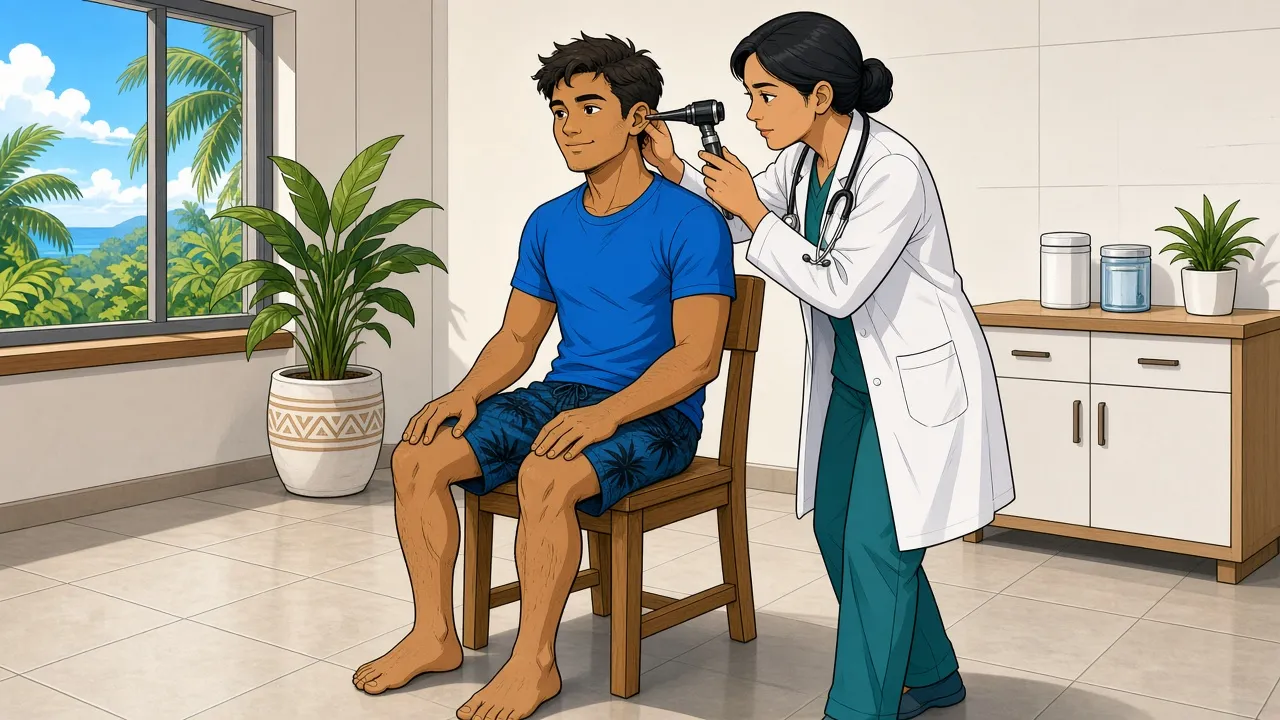
Bali has many hotel doctors, clinics and international hospitals, with groups such as BIMC and Siloam running hospitals in the south, and ear, nose and throat (ENT) specialists available in Denpasar. Hotel doctors can usually visit for straightforward cases. Antibiotic ear drops are prescription medicines in Indonesia, so a pharmacy can usually sell drying drops and pain relief but not the treatment itself. The guide to hyperbaric chambers in Bali lists the hospitals that also handle diving injuries.
Flying home with an ear infection
Swimmer's ear does not usually make flying painful, because it does not involve the middle ear. A middle ear infection can, and the normal limits after diving still apply; they are explained in the article on flying after scuba diving.
Example: a five-day Bali dive trip with ear care built in
Neptune Scuba Diving runs day trips and courses from its dive centre in Sanur, and the example below shows how ear care fits into a typical five-day plan. It is one way to organise a trip, not the only one.
- Day one and two: shore dives at Amed and Tulamben, with drying drops after the last dive each day.
- Day three: a rest or snorkelling day, which gives the ears and the body a break after six dives.
- Day four: two boat dives on a Nusa Penida day trip, where a hood helps in the cooler water.
- Day five: two dives at Padang Bai, then the full drying routine before packing.
Day trips to the sites above appear among the day trips around Bali, and multi-day plans are grouped as Bali dive packages. Beginners can start with a Discover Scuba Diving session, which goes no deeper than 12 metres, before a three-day Open Water course.
This plan is not suitable for anyone who already has ear pain, discharge or a swollen canal, who should see a doctor before booking any dives, or for divers with a known perforated eardrum, who need specialist clearance first. Divers flying home should leave at least 18 hours after the last dive, as Divers Alert Network recommends after multiple dives. Divers wanting to understand the wider risk picture can read whether scuba diving is dangerous, and those who want to handle problems on a dive trip with more confidence can look at the Emergency First Response course.
Key takeaways
- Swimmer's ear is an infection of the outer ear canal caused by wet, softened skin, not by pressure.
- Pain when the outer ear is pulled is the clearest sign that separates it from barotrauma or a middle ear infection.
- Drying the ears and using alcohol-based drops after every dive day prevents most cases.
- Never use cotton buds, and never scuba dive with ordinary earplugs.
- Treatment is usually prescription ear drops, with most people improving within two to three days.
- Stay out of the water until the pain is gone and the drops are finished, usually about a week.